

Blog
How to Choose Cue Tip Hardness

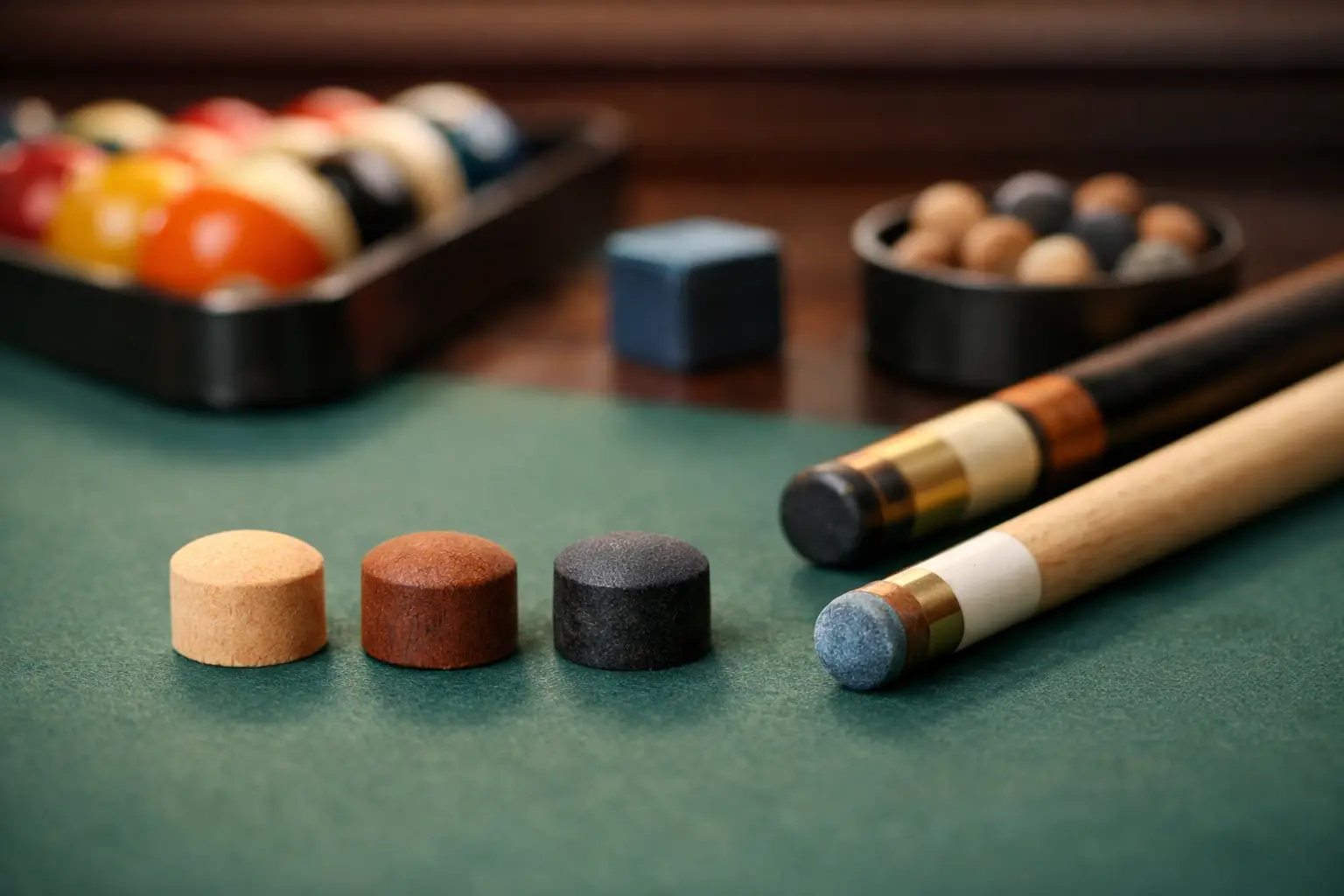
Miss a shot by a hair, overdraw the cue ball, or feel like your hit changes from one rack to the next, and the problem is not always your stroke. Sometimes the weak link is right at the front of the cue. If you want to know how to choose cue tip hardness, stop treating tip selection like a cosmetic detail. It is a performance decision that changes feel, feedback, spin response, maintenance, and confidence under pressure.
A cue tip is your final point of contact with the cue ball. That means hardness affects the only moment that really matters – impact. Players obsess over shafts, tapers, and joint systems, and they should. But the tip is where precision becomes reality. Choose the wrong hardness and a great cue can feel vague, dead, too lively, or simply out of sync with your game.
How to choose cue tip hardness without guessing
The fast version is simple. Soft tips usually give more grip and a cushioned feel. Medium tips aim for balance. Hard tips deliver a firmer hit, faster feedback, and often better durability. But that is only the surface. The right choice depends on what kind of player you are, how cleanly you strike the cue ball, and what you want to feel in your hand when the shot lands.
If you are a player who relies on touch, finesse, and heavy cue ball movement, a softer tip may feel more alive. If you want one setup that can handle a broad range of shots without getting too mushy or too stiff, medium is the classic middle lane. If your game is built on a crisp hit, lower maintenance, and direct energy transfer, hard tips start looking very strong.
That does not mean one category is best for everyone. It means every category has a performance profile.
What soft, medium, and hard cue tips actually do
Soft cue tips
Soft tips compress more at impact. For many players, that creates a grippier, more forgiving feel, especially on spin-heavy shots. The hit can seem quieter and more controlled, which is why some players love soft tips for finesse play and delicate cue ball routes.
The trade-off is maintenance. Soft tips mushroom faster, glaze differently, and usually need more shaping over time. They can also feel too spongy for players who want a clean, immediate response. If you hit firmly or break with the same shaft, a soft tip may wear out faster than you like.
Medium cue tips
Medium tips are the all-around performance class. They give enough compression to feel the ball, but not so much that the hit turns mushy. They usually offer a very playable mix of spin, control, feedback, and lifespan.
That is why medium is often the safest starting point if you are unsure. It gives you room to learn what you really want. More bite? Move softer. More speed off the face and less maintenance? Move harder.
Hard cue tips
Hard tips compress less, so the hit feels sharper and more immediate. Many advanced players like that direct feedback because it tells the truth right away. On center-ball and power shots, a hard tip can feel explosive and precise.
The usual concern is spin. Some players believe hard tips cannot generate as much English. In real play, technique matters more than that myth suggests. A quality hard tip can still move the cue ball plenty. What changes most is feel. Hard tips ask for cleaner contact and reward players who want a fast, crisp response instead of a cushioned one.
Your stroke matters more than tip marketing
If your stroke is compact, controlled, and repeatable, you can usually play well with a broader range of tip hardness. If your contact point varies or your speed control drifts under pressure, tip hardness becomes more noticeable.
Players with a smoother, touch-oriented stroke often like soft or medium tips because they can feel the cue ball linger just enough to inspire confidence. Players with a decisive, punchier delivery often prefer medium-hard or hard tips because the response is more direct and less elastic.
This is where many players get trapped. They buy the tip their favorite player uses, then wonder why it feels wrong. But your stroke speed, timing, and delivery pattern are not identical to anyone else’s. Elite gear only performs at its highest level when it matches the engine holding it.
Game type changes the answer
Pool players
For pool, medium tips dominate for a reason. They handle the widest range of shot speeds and spin demands without leaning too far in one direction. If you play a lot of rotation games and need to move the cue ball aggressively, medium or soft can feel great. If your style is more pattern-based and compact, medium-hard or hard may sharpen your cue ball control.
Break cues are a different beast. Most players prefer very hard tips on a break cue because energy transfer and durability matter more than touch. Jump cues also live on the hard end for the same reason.
Carom players
Carom players often want immediate feedback, precision, and consistency over long sessions. That pushes many setups toward harder tip options. The demands of repeated spin, rail-first precision, and exact speed control can make a firmer tip feel more connected to the shot.
Still, even in carom, there is no automatic answer. A player who values touch over a brutally crisp hit may still prefer medium.
How to test cue tip hardness the smart way
Do not judge a tip in five shots. Test it over real patterns and pressure situations. Hit stop shots, soft draw, firm draw, follow, inside English, and power shots. Pay attention to three things: how easy it is to predict cue ball movement, how the hit feels in your hand, and how often you second-guess the result.
The right tip usually does not feel magical. It feels reliable. You stop thinking about the front end of the cue and start seeing patterns sooner. That is the signal.
If possible, stay within the same shaft and only change the tip. Switching shafts, ferrules, or cue weights at the same time destroys your baseline. You are not testing hardness anymore. You are testing chaos.
Signs you chose the wrong hardness
If your tip feels too soft, you may notice excess mushrooming, a vague hit on firmer shots, or a sense that power gets absorbed instead of delivered. If your tip feels too hard, you may struggle to trust touch shots, feel less connected on spin, or notice that miscues punish you faster when your contact is slightly off.
The wrong choice is not always dramatic. Sometimes it shows up as small hesitation. You aim correctly, deliver decently, and still feel like the cue is not fully on your side. Competitive players know that tiny disconnect is expensive.
How to choose cue tip hardness by player type
If you want the cleanest starting point, think in profiles. The touch-first player who lives on spin and finesse should usually begin with soft to medium. The all-around player should start at medium. The power player, firm-stroke player, or low-maintenance player should look at medium-hard to hard.
If you are upgrading to a more advanced shaft, especially a carbon shaft with a faster, more stable response, this choice matters even more. A modern high-performance setup can amplify what your tip is doing. Pair the wrong hardness with a fast front end, and every shot feels slightly off frequency. Pair the right one, and the cue starts feeling like a weapon.
That is why serious players keep dialing in every contact point, not just the big-ticket components. At ON CYBORG, that performance mindset drives everything from shafts to cues to precision accessories because small gains stack up fast when your equipment is built to compete.
The best starting choice for most players
If you have no idea where to begin, choose medium. That is not the flashy answer, but it is the right one for most players. Medium gives you enough spin, enough firmness, and enough durability to build a real opinion from actual table time.
From there, adjust with intent. Go softer if you want more cushion and touch. Go harder if you want a sharper hit and less upkeep. The goal is not to chase a trend. The goal is to make every strike feel more exact, more repeatable, and more dangerous.
Your cue tip is small, but it controls a massive part of your game. Pick the hardness that matches how you actually play, not how you want to sound in the room. When the hit feels right, the table gets simpler, your decisions get cleaner, and the cue ball starts obeying like it should.