

Blog
Best Billiard Glove for Sweaty Hands

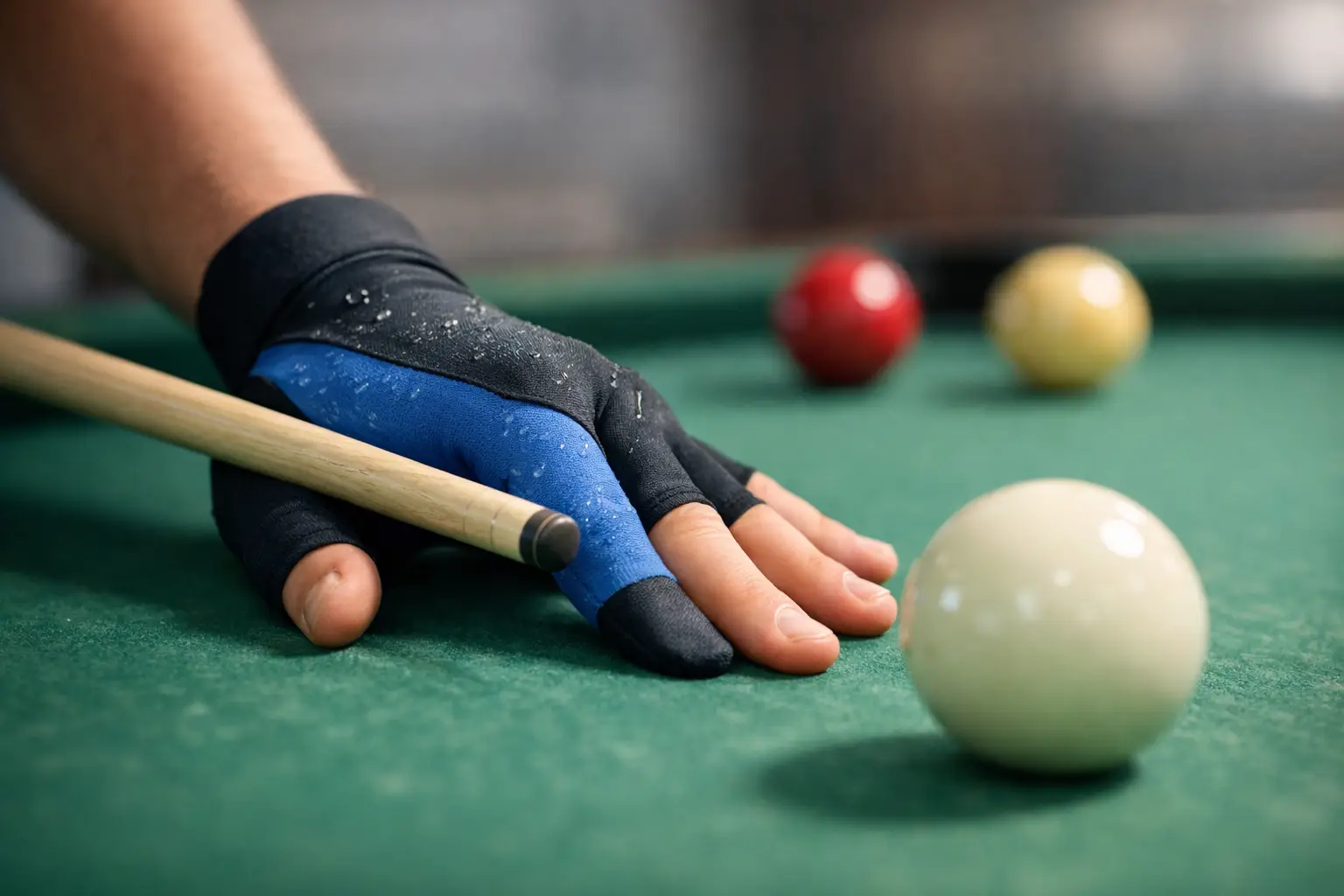
Sweaty bridge hands do not just feel annoying – they cost shots. If your cue starts dragging halfway through the stroke, your timing changes, your delivery tightens up, and simple position play gets ugly fast. That is why finding the best billiard glove for sweaty hands is not a comfort upgrade. It is a performance decision.
A glove fixes one of the most underrated failure points in cue sports: friction inconsistency. On one shot your shaft glides clean. On the next, moisture on the bridge hand creates resistance, the cue hesitates, and the hit comes out late or steered. Serious players spend big on shafts, tips, and cue balance, then tolerate a sticky bridge hand that sabotages all of it. That makes no sense.
What actually makes the best billiard glove for sweaty hands?
The answer is not just “thin fabric” or “more grip.” The best glove for sweaty hands has to do two jobs at once. It needs to reduce friction where the cue slides, and it needs to manage moisture before that sweat turns into drag.
That means material matters first. A good glove uses a slick, low-resistance fabric across the index finger and thumb channel where the shaft travels. But if that same glove traps heat in the palm, it can become a sweat chamber after a few racks. The result is a glove that starts strong and fades under pressure. The real winners balance glide with breathability.
Fit matters just as much. A loose glove bunches at the knuckles, shifts during the stroke, and creates micro resistance where you need clean travel. A glove that is too tight can feel sharp and restrictive, especially around the webbing between the thumb and index finger. For sweaty hands, that pressure can actually make heat build faster. You want a second-skin fit, not a tourniquet.
The wrist closure is another small detail that becomes a big one during long sessions. Velcro closures are common because they are adjustable and secure, but cheap ones wear out, curl, or scratch over time. Slip-on gloves feel cleaner and lighter, but if sizing is even a little off, they rotate and creep. For players who practice hard or compete deep into a set, stable fit beats convenience.
The features that matter most
If you are trying to separate a real performance glove from a basic accessory, look at the contact zones. The bridge fingers should stay slick even after extended use. Some gloves feel fast for the first hour, then absorb chalk dust, skin oil, and sweat until the shaft path loses that clean release. That is the trap. Early feel is easy. Consistent feel is what wins matches.
Breathable backs and open-finger designs help with heat management, especially in pool rooms with weak air flow or under tournament lights. Three-finger gloves are popular for a reason: they keep the cue path covered while leaving the ring finger and pinky free for table feel. That setup gives you control without wrapping the whole hand in fabric.
Palm design is worth more attention than most players give it. If the glove gets slippery against the cloth, your bridge can feel unstable. If the palm is too tacky, it may grab in ways that feel unnatural during rail shots. The best setup depends on your bridge style. Open bridge players often prioritize shaft glide above everything else. Closed bridge players usually notice seam placement and finger articulation more.
Durability is the final filter. Sweaty hands are hard on gloves. Moisture, repeated washing, and chalk exposure break down cheap stitching fast. A glove that loses shape after two weeks is not a bargain. It is a recurring tax.
Best billiard glove for sweaty hands by player type
Not every player needs the same glove, even when sweat is the core problem.
If you are a league player dealing with occasional humidity and long sessions, comfort and easy maintenance should lead the decision. You want a glove that feels natural from rack one to rack ten and does not become a hassle to clean.
If you are a tournament player or high-volume grinder, consistency under stress is the priority. That usually means tighter manufacturing tolerances, stronger stitching, and fabric that keeps the cue path stable after hours of play. This is where premium gloves justify their price.
If you play carom or favor a high-touch, precision-heavy game, sensitivity matters more. You do not want thick material muting your bridge feedback. A lighter glove with a precise fit will usually outperform a padded or overly structured model.
And if your hands run extremely hot all the time, the best choice is often not the glove with the slickest feel out of the package. It is the one with the best ventilation and moisture control over time. Fast for five minutes is useless. Fast in the last rack is what matters.
Common mistakes when buying a glove for sweaty hands
The biggest mistake is buying based on looks alone. Aggressive graphics are fine. Futuristic styling is even better. But if the cut is wrong or the fabric loads up with moisture, that glove is all signal and no output.
The second mistake is assuming any glove will solve a sweat problem. Some gloves are built mainly for reducing friction in normal conditions. That is different from handling heavy perspiration. If you sweat a lot, you need moisture management, not just a smooth surface.
Another mistake is ignoring your shaft finish. Players using ultra-slick carbon shafts may prefer a glove with slightly more structure so the cue still feels connected. Players using wood shafts, especially in humid rooms, often need maximum glide to offset changing surface conditions. The best setup is always a system, not a single product in isolation.
Sizing errors are everywhere too. Players buy too large because they hate compression, then wonder why the glove shifts during the stroke. Or they size down for a tighter feel and end up with pressure points that make the glove distracting. If the glove makes you think about the glove, it is already losing.
How to tell if your glove is hurting your game
You do not always notice glove problems immediately. Sometimes the signs show up as “bad stroke days” that seem random.
If your cue feels smooth in warm-up but sticky later in the session, the fabric is probably saturating. If your bridge starts moving on power shots, the palm may be too slick against the cloth. If you catch yourself readjusting between shots, the fit is unstable. And if your delivery feels different from one table to another, your glove may be overreacting to room conditions.
A strong glove should make one part of your game disappear from your mental load. You should not be monitoring hand moisture, wiping the shaft every few shots, or compensating with extra tension. The cue should move. Clean. Repeatable. Automatic.
What serious players should expect from a premium glove
A premium glove should do more than stop sticking. It should sharpen confidence. Your pre-shot routine gets simpler because you trust the slide. Your stroke gets freer because you stop guarding against friction. Even your speed control can improve because the cue is traveling on a more predictable path.
That is the real value. Not fashion. Not gimmicks. Repeatable performance.
This is also where a performance-first brand mindset matters. Serious players already understand that every contact point in the system changes outcomes – tip to cue ball, shaft through bridge, hand to cloth. A glove belongs in that conversation. At ON CYBORG, that same obsession with engineered advantage applies across the category: reduce drag, increase control, remove variables.
Should you always wear a glove if your hands sweat?
For most players, yes. But there is a trade-off.
Some players love the raw feel of skin on shaft, especially in casual play or dry environments. If your hands only get sweaty once in a while, a glove may feel like overkill in short sessions. But if friction changes even a few times per match, your stroke is being asked to adapt on the fly. That is where errors creep in.
The better question is not whether a glove feels more natural at first. It is whether your cue delivery stays more consistent with one. For sweaty hands, the answer is usually obvious after a serious test set.
Pick a glove that fits close, breathes well, stays stable, and keeps the cue path fast deep into the session. Not flashy fast. Match-fast. Because when your bridge hand stops fighting you, the rest of your game gets to show up at full power.
The future is not complicated – less friction, more control, and one less weakness for your opponent to exploit.