

Blog
Pool Cue Joint Types Explained Simply

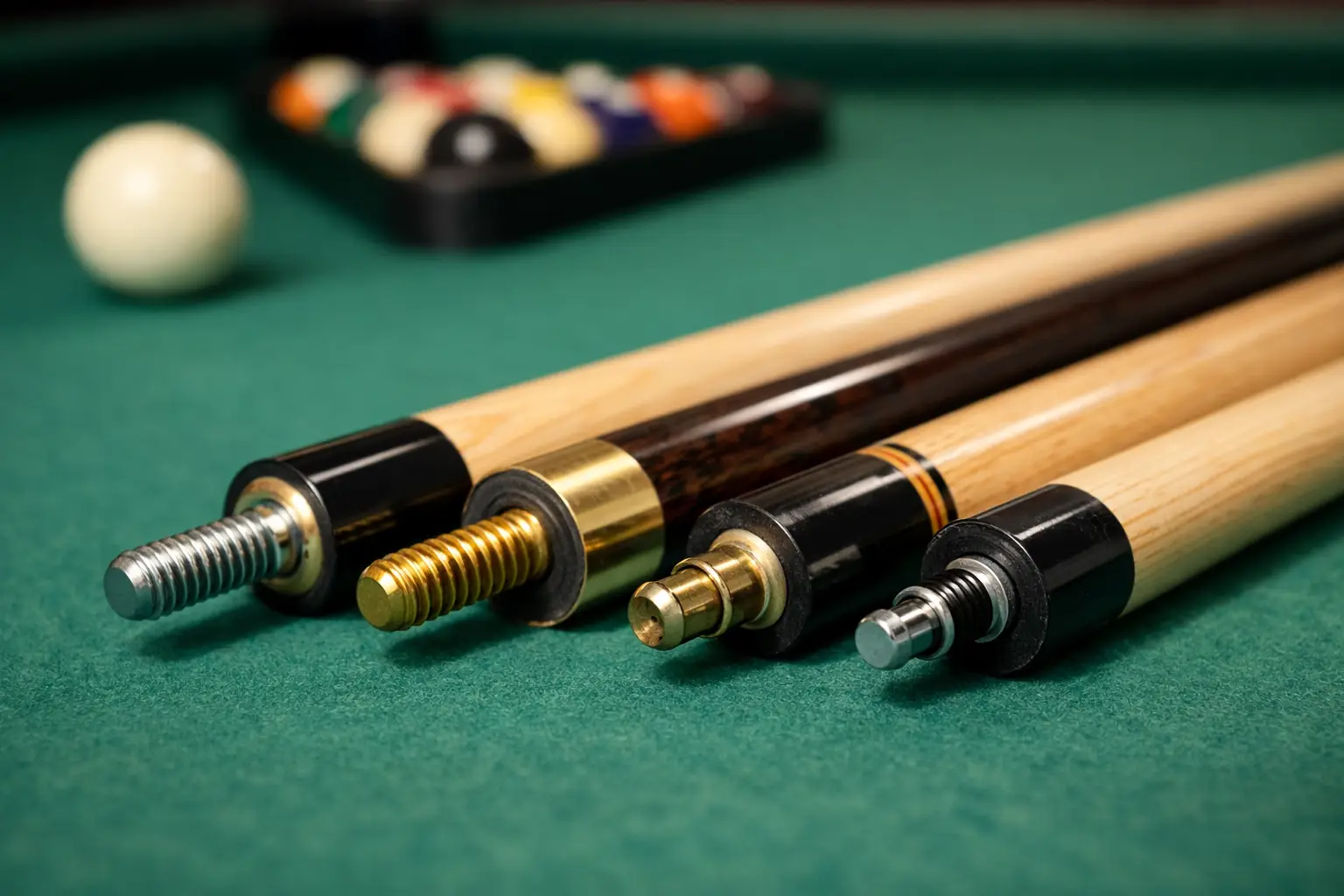
A cue can look elite, balance well, and carry premium materials from bumper to tip – but if the joint is wrong for your game, the hit will never feel fully dialed. That is why pool cue joint types explained is not a beginner-only topic. For serious players, the joint is part of the engine. It affects feedback, assembly speed, fit between butt and shaft, and how the cue delivers energy through the ball.
A lot of players buy with their eyes first, then learn later that joint choice changes the personality of the cue. Some joints feel firm and sharp. Some feel a little more muted. Some are built for fast assembly and daily convenience. Others are all about a specific hit that loyal players refuse to leave. There is no magic joint that crushes every category. There is only the right match for your stroke, your preferences, and your build.
What a cue joint actually does
The joint is the connection point where the shaft and butt meet. On paper, that sounds simple. In play, it is one of the biggest variables in how a cue feels in your hand.
The joint controls how the two halves align, how tightly they lock together, and how vibrations travel back to the player. That means the joint contributes to the hit, even though it is only one part of a much larger system that includes shaft taper, ferrule, tip, butt construction, and weight distribution.
Players often talk about joint feel in terms like stiff, solid, crisp, lively, or soft. Those words are subjective, but they matter. The right cue should give you feedback you trust. If your cue feels disconnected at impact, your confidence starts bleeding out one shot at a time.
Pool cue joint types explained by category
There are a lot of branded variations, but most cue joints fall into a few practical categories. The key is understanding the difference between pin size, thread style, and joint construction.
Radial pin joints
Radial joints are a favorite among players who want a strong, consistent connection with a solid, unified hit. The threads are designed to create broad surface contact, which often gives the cue a smooth and substantial feel.
Many players describe radial as firm without feeling harsh. It tends to suit modern performance builds, especially when paired with low-deflection or carbon shafts. It also has a reputation for good shaft-to-butt fit when manufactured well. The trade-off is simple: not every butt and shaft combination on the market supports radial, so interchangeability can be more limited than with some older standards.
3/8 x 10 joints
The 3/8 x 10 joint is one of the most recognized options in custom and production cues. It usually delivers a solid, wood-forward hit that many traditional players love.
This joint often has a little more of that classic connected feel, especially in cues that use wood-to-wood construction. If you like hearing and feeling the cue talk back on contact, this style can be a strong fit. But there is variation from maker to maker, so one 3/8 x 10 setup may not feel exactly like another. Thread tolerances and build quality still decide whether the hit feels elite or average.
5/16 x 14 joints
This is one of the old-school standards and still has a loyal base. The 5/16 x 14 joint is common in many production cues and has been around long enough that a lot of players grew up on it.
It often produces a firmer, more defined hit, especially when paired with piloted stainless steel joints. That combination can feel very crisp and precise. For some players, that is pure control. For others, it feels too rigid. If you like immediate feedback and a more traditional response, this joint deserves attention.
5/16 x 18 joints
The 5/16 x 18 is another common production-cue standard. It is often grouped near 5/16 x 14, but they are not interchangeable and do not always feel the same.
In practical terms, this style can be a reliable option for players who want broad compatibility with many off-the-shelf shafts and butts. The feel depends heavily on the cue’s overall construction, but it often lands in a balanced middle ground rather than an extreme. That makes it accessible, though maybe less distinctive for players chasing a very specific hit signature.
Quick-release joints
Quick-release joints are built for speed and convenience. A partial turn, and the cue is locked. For players who travel, practice often, or want less fuss before a match, that is a real advantage.
The big question is feel. Some quick-release joints play great and stay impressively solid. Others can feel a little more mechanical depending on the design. This is where engineering matters. A bad quick-release is a shortcut. A good one is a weapon. If assembly speed matters to you, do not dismiss this category, but judge it by execution, not by label alone.
Joint material changes the hit too
When players ask for pool cue joint types explained, they usually mean pin and thread pattern. But joint material matters just as much.
Stainless steel joints
Stainless steel joints are known for a harder, sharper hit. They tend to create a very crisp feedback profile that some players associate with precision and authority. If you like a cue that feels fast, direct, and unmistakably firm through impact, stainless can deliver that edge.
The downside is that not everyone wants that much feedback. Some players feel stainless adds too much hardness, especially on touch shots.
Wood-to-wood joints
Wood-to-wood joints often feel more natural and more blended. The hit can come across as warmer or more organic, with less metallic sharpness. This style has a huge following among players who want the cue to feel like one continuous piece rather than two parts locked together.
That does not automatically mean soft. A well-built wood-to-wood cue can still feel powerful and extremely clean. It just tends to present feedback differently.
Phenolic and composite elements
Modern cues increasingly use composite materials in the joint area to control durability, weight, and vibration. For players who want a high-tech build and repeatable performance, these materials can be a smart move.
This is where modern cue design keeps pushing forward. Advanced materials are not there for looks alone. They can help tune response, reduce inconsistency, and support more aggressive performance goals.
Piloted vs flat-faced joints
This is another detail that changes feel more than many buyers expect.
A piloted joint uses a centered male or female section that helps align the shaft and butt precisely. This design is common in traditional stainless-joint cues and often contributes to a tight, exact, stiff hit.
A flat-faced joint brings the shaft and butt together over a broader flat contact surface. This style is common with radial and 3/8 x 10 setups, especially in wood-to-wood designs. Many players like the more unified feel it can create. Neither is better in every case. If you want sharper definition, piloted may fit. If you want a more blended hit, flat-faced often wins.
How to choose the right joint for your game
Start with feel, not hype. If your ideal cue hit is crisp, rigid, and highly defined, you will probably lean toward a stainless or piloted setup with a traditional pin. If you want a more connected, modern, or natural response, radial or 3/8 x 10 with a flat-faced build may feel better.
Next, think about compatibility. If you switch shafts often, the best joint is not just the one that feels good. It is the one that works with your setup. Some players want a cue system they can customize fast. Others want one perfect match and never plan to change it.
Then consider how you play under pressure. Break-heavy players and power strokers usually want a joint that feels locked in and stable. Finesse players may care more about touch feedback and a less rigid response. There is overlap, of course, but your stroke tells the truth faster than marketing ever will.
If you are buying a modern high-performance cue, especially one built around carbon technology, pay close attention to how the joint supports that design. Advanced shafts and engineered butts deserve a joint that does not bottleneck performance. At brands pushing next-generation billiards gear, including ON CYBORG, joint options are part of the customization story because serious players do not all want the same hit.
The biggest mistake players make
They chase a joint type as if it exists in isolation. It does not. A radial joint on one cue may feel incredible and average on another. A 5/16 x 14 on a poorly built cue will not become special because the spec sheet says it should.
The real move is to evaluate the full build – shaft material, taper, tip, ferrule, butt construction, weight system, and joint working together. The joint is critical, but it is still part of a machine. And if you are serious about performance, every part of that machine has to earn its place.
The best cue joint is the one that disappears in your hands and leaves nothing between your intent and the shot. When that happens, you stop thinking about hardware and start taking over the table.