

Blog
Best Cue for Advanced Players: What Wins

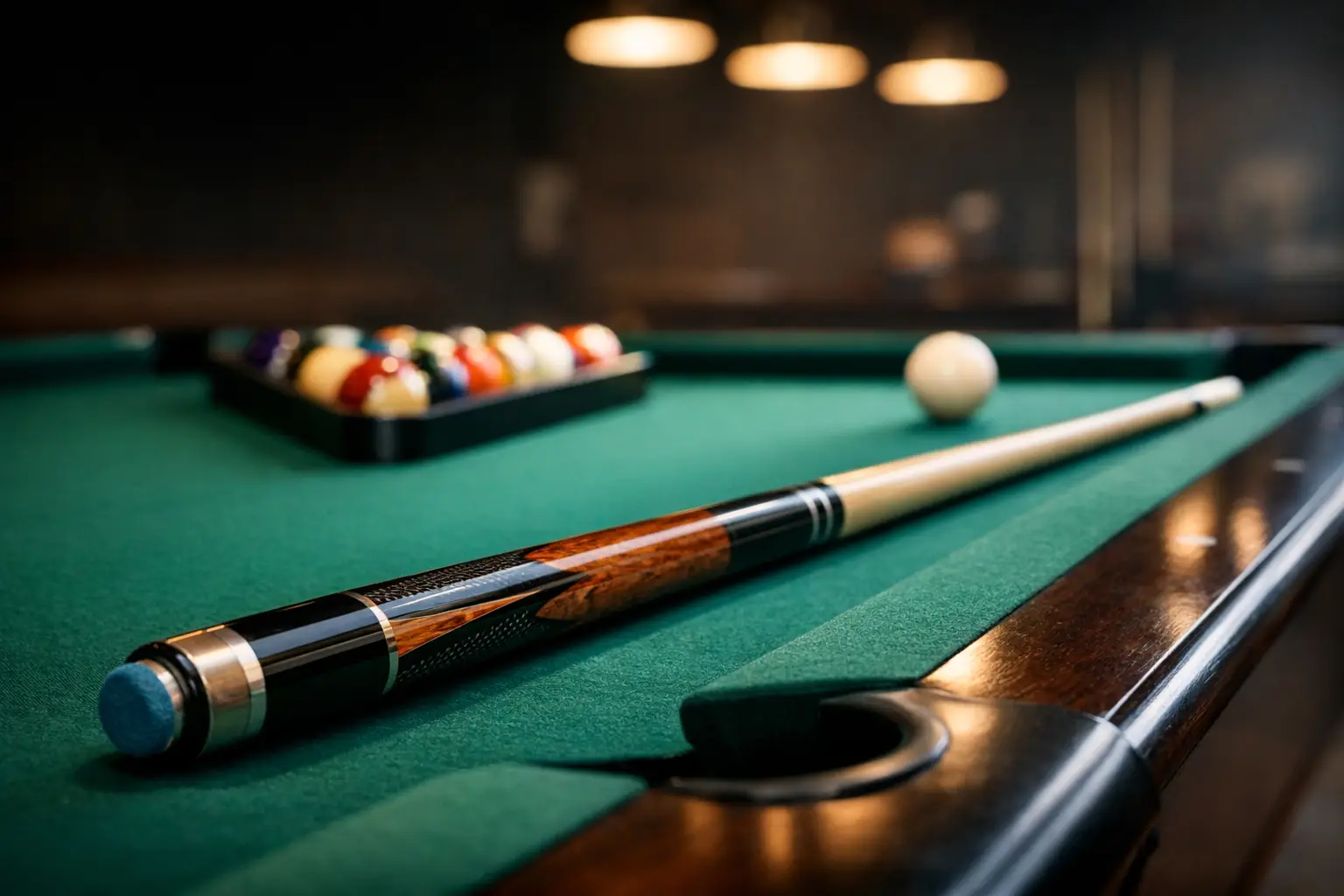
If you are hunting for the best cue for advanced players, stop looking at decals, hype, and recycled beginner advice. At an advanced level, the wrong cue does not just feel off – it costs you cue ball control, speed accuracy, spin transfer, and confidence under pressure. The right cue becomes part of your timing. The wrong one keeps reminding you it exists.
Advanced players do not need a cue that simply looks premium. They need one that stays stable through power, stays honest on touch shots, and gives predictable feedback on every strike. That is a different standard entirely.
What the best cue for advanced players actually means
There is no single magic model that automatically becomes the best cue for advanced players. Skill level matters, but so does playing style. A player who leans on heavy cue ball movement and aggressive position routes may want a different setup than a shotmaker who values a cleaner hit and tighter speed control.
Still, elite-performance cues tend to share the same core traits. They reduce unwanted deflection, keep the hit consistent across shot speeds, and hold their balance through long sessions. They also give enough feedback to stay connected to the shot without feeling harsh or noisy in the hands.
That last part matters more than many players admit. A cue can have great specs on paper and still feel dead, too stiff, or disconnected. At the advanced level, feel is not a soft factor. It is how your stroke reads the hit.
Shaft technology decides more than the butt
Most experienced players already know this, but it deserves a hard reset: the shaft does more to define performance than the butt. Butt construction affects balance, comfort, and visual confidence. Shaft design affects the hit, the front-end mass, the cue ball reaction, and how much adjustment you need on spin shots.
That is why so many serious players now move toward carbon fiber shafts or highly engineered low-deflection shafts. Carbon changes the game because it is less vulnerable to humidity, resists warping, stays cleaner, and delivers a very stable response over time. For players who compete in different rooms and climates, that consistency is not a luxury. It is a competitive edge.
But carbon is not automatically right for everyone. Some players still prefer the softer, more organic feedback of wood, especially in games where finesse and touch dominate. The trade-off is maintenance and long-term consistency. Wood can feel beautiful. Carbon usually feels more repeatable.
If your game is built on precision under pressure, repeatability tends to win.
Low deflection is not optional anymore
For advanced players, low deflection is no longer a nice bonus. It is the baseline. When you are loading up with side spin, you need the cue to minimize cue ball squirt so your aiming adjustments stay small and manageable.
This does not mean every player should chase the lowest possible deflection number. Go too far into ultra-light front ends and some cues can start to feel overly crisp or less natural depending on your stroke. What you want is efficient deflection control without sacrificing hit quality. The best cues get both right.
Tip and taper still change everything
A strong shaft can still underperform with the wrong tip or taper. Tip hardness shapes how the cue delivers energy and how clearly it communicates the strike. Medium and medium-hard tips are popular for advanced play because they keep a strong balance of spin access, precision, and durability. Softer tips can feel great on touch shots but may compress too much for players who hit firm and demand sharper feedback.
Taper matters just as much. A pro taper often gives a smoother bridge feel and more freedom through the stroke. A more conical profile can offer a different sense of control and stiffness. Neither is universally better. It depends on whether you want the shaft to feel fast, firm, flexible, or planted.
Cue balance separates serious equipment from showroom pieces
The best advanced cues do not just hit well. They balance correctly for the player using them. This is where many off-the-rack cues fall apart. They may have premium branding, but the balance point feels generic, the weight distribution feels lazy, and the cue never fully disappears into your stroke.
A well-balanced cue helps you stay level through delivery and recover cleaner on delicate shots. It also affects how confidently you accelerate. If the cue feels butt-heavy, some players start steering. If it feels too front-loaded, others lose rhythm and touch.
This is why adjustable weight systems matter. Not because heavier is better or lighter is better, but because advanced players need tuning. A cue that lets you dial in total weight and preserve the right feel is far more valuable than one locked into a fixed identity.
Build quality shows up when the pressure does
Anyone can love a cue on a few easy racks. The real test comes in a long match when your hand gets warm, the room changes, and the shot demands stack up. That is when construction quality shows itself.
Joint fit should feel exact, not merely acceptable. The cue should assemble cleanly, stay solid, and transmit a consistent hit. Ferrule, tip install, shaft finish, and butt construction all need to hold their standard over time. Even small flaws become loud at an advanced level.
This is where engineered materials and modern manufacturing start to separate serious performance brands from legacy names living on reputation. Advanced players are not buying nostalgia. They are buying precision.
What to look for in the best cue for advanced players
The best cue for advanced players usually has a low-deflection shaft, consistent build tolerances, a tip that matches your tempo, and a balance profile you can trust deep into a session. Beyond that, your game should decide the final spec.
If you are a rotation player who leans on spin and route creativity, prioritize front-end efficiency and cue ball predictability. If you are more pattern-driven and value pure line control, focus on feedback, hit integrity, and balance. If you play both pool and carom variations, stiffness and shaft response become even more critical because imprecision gets exposed fast.
One more thing: do not confuse expensive with advanced. Plenty of high-priced cues offer status more than performance. The smarter buy is a cue built around engineering, customization, and repeatable results. That is where modern premium billiards brands have started taking ground from traditional luxury makers.
Why advanced players keep moving toward carbon
Carbon shafts have become the performance standard for a reason. They stay straight, play clean, and deliver a more consistent experience across changing conditions. They also reduce the small maintenance headaches that interrupt serious practice.
For advanced players, this matters because the goal is not romance. The goal is execution. If a carbon setup gives you a cleaner release, lower deflection, and less day-to-day variance, it earns its place.
That does not mean every carbon shaft feels the same. Some feel too rigid. Some feel muted. The best ones preserve precision without becoming sterile. They give you a fast, modern hit with enough signal coming back through the cue.
A cue should match your game, not your ego
A lot of players buy up instead of buying correctly. They choose the stiffest, flashiest, most expensive cue in the room and expect their game to rise to meet it. That is backwards.
The right advanced cue should support your current strengths and sharpen your weak points without forcing a rebuild of your stroke. If your timing is built around smooth acceleration and touch, a brutally stiff setup may fight you. If your game is power-driven and direct, an overly soft or vague hit may leave you guessing.
That is why spec matching matters more than brand mythology. Joint type, shaft diameter, tip hardness, taper, wrap feel, butt geometry, and weight tuning all shape whether a cue performs like a weapon or just another purchase.
For players who want a next-generation setup without luxury-brand pricing, this is exactly where performance-focused brands like ON CYBORG have changed the conversation. The shift is clear: engineered materials, aggressive cue design, and customization are no longer extras. They are what serious players expect.
The real standard
The best cue is the one that keeps your stroke honest when the shot gets thin, the speed gets touchy, and the table starts asking harder questions. Choose the cue that gives you repeatable answers, not the one that wins the display case. The takeover starts when your equipment stops asking for adjustment and starts delivering command.