

Blog
How to Clean Carbon Cue Shaft Right

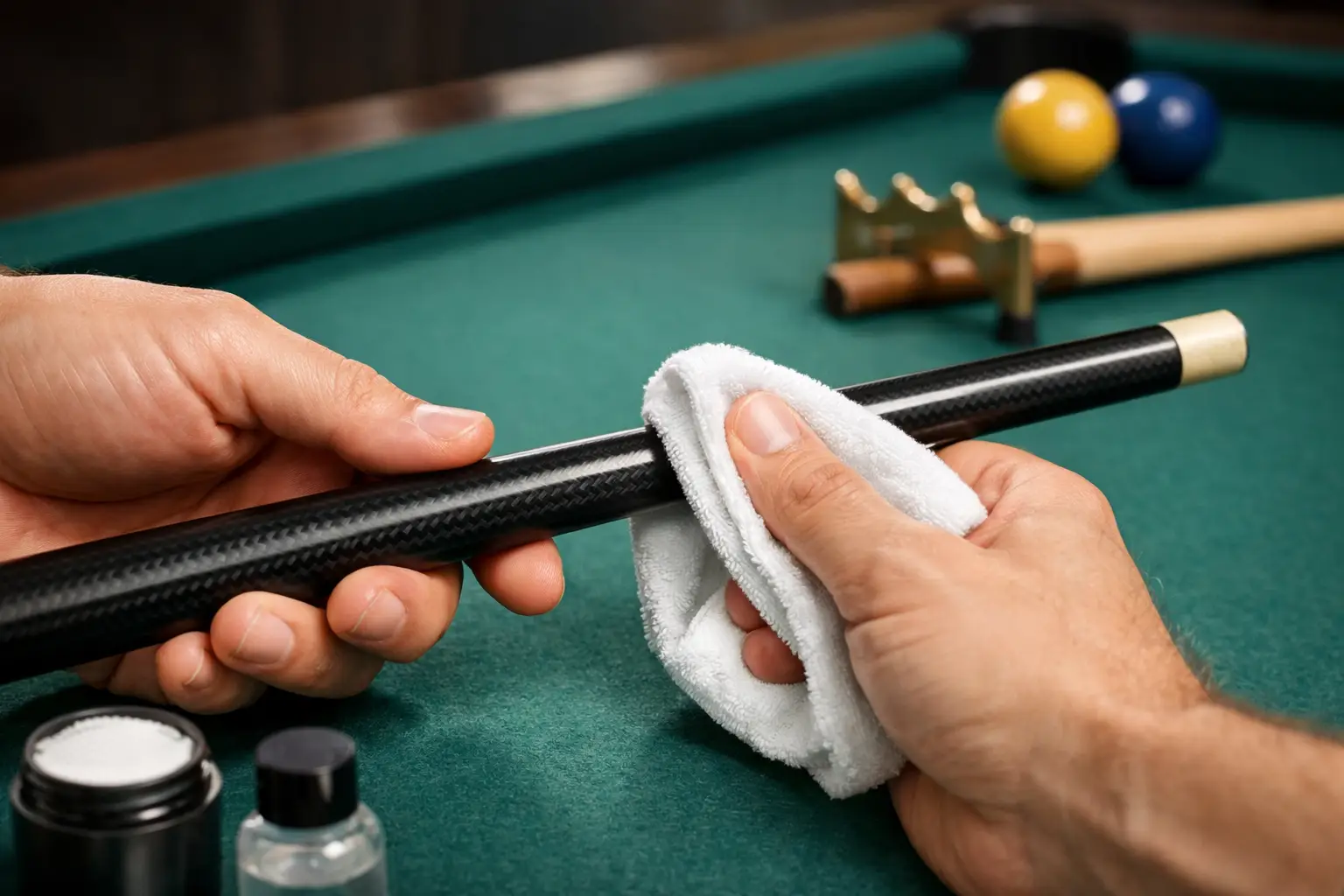
A carbon shaft does not need babying, but it does need respect. If your bridge hand starts feeling drag, your stroke loses that clean glide, or chalk haze keeps building up near the shaft and ferrule, it is time to fix it. Knowing how to clean carbon cue shaft surfaces the right way keeps the hit consistent, the finish smooth, and the performance where serious players expect it.
Why carbon shafts still need cleaning
Carbon fiber shafts are built for stability, low maintenance, and a cleaner feel than traditional wood. That does not mean they stay perfect on their own. Chalk dust, hand oils, sweat, skin residue, and table grime still collect on the surface, especially in the area your bridge hand touches every rack.
The result is not usually dramatic at first. It is subtle. The shaft starts feeling tacky instead of fast. Your hand does not slide the same way. On humid days, that buildup becomes even more obvious. For players who care about repeatable delivery, that is lost performance.
A clean carbon shaft is not just about looks. It is about friction control. Less drag means a more predictable stroke. That matters whether you are playing rotation, straight pool, or high-speed carom.
How to clean carbon cue shaft without damaging it
The good news is that cleaning a carbon shaft is simple. The bad news is that a lot of players overdo it. You do not need aggressive abrasives, heavy chemicals, or some mystery garage solution. Carbon shafts are advanced equipment. Treat them like performance gear, not shop tools.
What you need
For routine cleaning, keep it tight and simple. A clean microfiber cloth, a lightly damp cloth with water, and if needed, a small amount of isopropyl alcohol are enough for most jobs. If your shaft has heavier buildup, a cue-safe carbon shaft cleaner can help, but it should be made for this material.
Avoid anything rough enough to alter the finish. That means no sandpaper, no magic erasers unless the manufacturer specifically approves them, and no random household cleaners with added polish, ammonia, or oil.
The basic cleaning process
Start with a dry microfiber cloth and wipe the shaft from joint to ferrule. This removes loose chalk and surface dust before you spread grime around. Do not scrub like you are stripping paint. Use steady pressure and multiple passes.
Next, slightly dampen a clean section of cloth with water or a small amount of isopropyl alcohol. Wipe the shaft again, rotating as you go so you cover the full circumference. Focus on the bridge area because that is where most residue builds up.
Immediately dry the shaft with another clean microfiber cloth. Do not leave moisture sitting on the surface. Carbon fiber handles humidity better than wood, but a clean, dry finish feels better and stays more consistent.
That is it for regular maintenance. Fast, controlled, effective.
When water is enough and when alcohol makes sense
This is where some players get sloppy. Water is fine for light cleaning and routine wipe-downs. If your shaft only has fresh chalk dust or light hand residue, you usually do not need anything stronger.
Isopropyl alcohol is useful when the shaft has oil buildup, stubborn grime, or that sticky feeling that does not go away with water alone. Use a small amount, not a soak. You want the cloth barely damp, not dripping.
If your shaft manufacturer has specific care instructions, follow those first. Some finishes and coatings vary slightly by brand. The smart move is always to clean with the least aggressive method that gets the job done.
The mistakes that ruin the feel
A carbon shaft is built for high-level play, but bad cleaning habits can still wreck the experience. The biggest mistake is using abrasive material to chase a smoother feel. If you wear down or alter the outer finish, you may get a temporary change, but you are also changing how the shaft was engineered to perform.
Another mistake is using waxes, silicone sprays, or furniture polish. That might make the shaft feel slick for a minute, but it also attracts residue and can create uneven buildup. What feels fast today can feel gummy tomorrow.
Then there is overcleaning. If you wipe the shaft aggressively after every few shots with strong chemicals, you are not maintaining it. You are obsessing past the point of benefit. Most players need a quick wipe after play and a deeper clean only when buildup is noticeable.
How often should you clean a carbon cue shaft?
It depends on how hard you play, how much your hands sweat, and how much chalk dust you generate. A tournament player or league grinder who is on the table several times a week will need more frequent attention than a casual weekend player.
As a rule, wipe the shaft down with a dry microfiber cloth after every session. Give it a more thorough cleaning with a damp cloth when you start noticing drag or visible residue. For many players, that means once every week or two. For heavy use in warm conditions, it may be more often.
The key is not the calendar. It is the feel. If the shaft stops gliding like it should, clean it before bad feedback creeps into your stroke.
What about the ferrule and tip area?
When players ask how to clean carbon cue shaft setups, they often mean the whole front end. That includes the ferrule area, where chalk and contact marks collect fast. You can wipe the ferrule gently with the same damp cloth, but stay controlled around the tip.
Do not saturate the tip with alcohol or water. Tips are layered performance components, and too much moisture is a bad idea. Clean around them carefully. If the tip itself needs shaping or scuffing, that is a separate job with the right tool.
Keep your cleaning focused. The shaft needs a clean, even surface. The tip needs proper maintenance. They are connected, but not handled the same way.
Storage matters more than players admit
You can clean a shaft perfectly and still ruin the feel by storing it badly. If you toss it into a dirty case, leave it in a hot car, or handle it with chalk-covered hands before packing up, grime comes right back.
Use a clean case interior. Wipe the shaft before it goes in. Keep a microfiber cloth in your case so maintenance is automatic, not occasional. Small habits protect expensive performance.
This is where serious players separate themselves. The best gear in the room means less if you treat it like afterthought equipment.
Performance is in the details
Carbon shafts are built for speed, consistency, and reduced maintenance, but reduced maintenance is not zero maintenance. The cleaner the surface, the cleaner the stroke. That is not hype. That is table truth.
If you play enough to notice tiny changes in cue ball response, bridge friction, and stroke confidence, then you already know this is not a cosmetic issue. A dirty shaft costs feel. And feel is everything when the pressure climbs.
At ON CYBORG, that performance-first mindset is the whole point. Advanced gear should stay advanced in your hand, not just on the spec sheet.
A simple routine that wins
Keep the process sharp. Wipe with a dry microfiber cloth after play. Use a lightly damp cloth for deeper cleaning when needed. Add a small amount of isopropyl alcohol only for stubborn residue. Skip abrasives, skip oily products, and skip anything not made for cue care.
That routine is not flashy. It is just effective. And effective is what serious players actually need.
Your shaft does not need complicated maintenance. It needs disciplined maintenance. Keep it clean, keep it fast, and let your stroke do the damage.