

Blog
How to Improve Cue Ball Control Fast

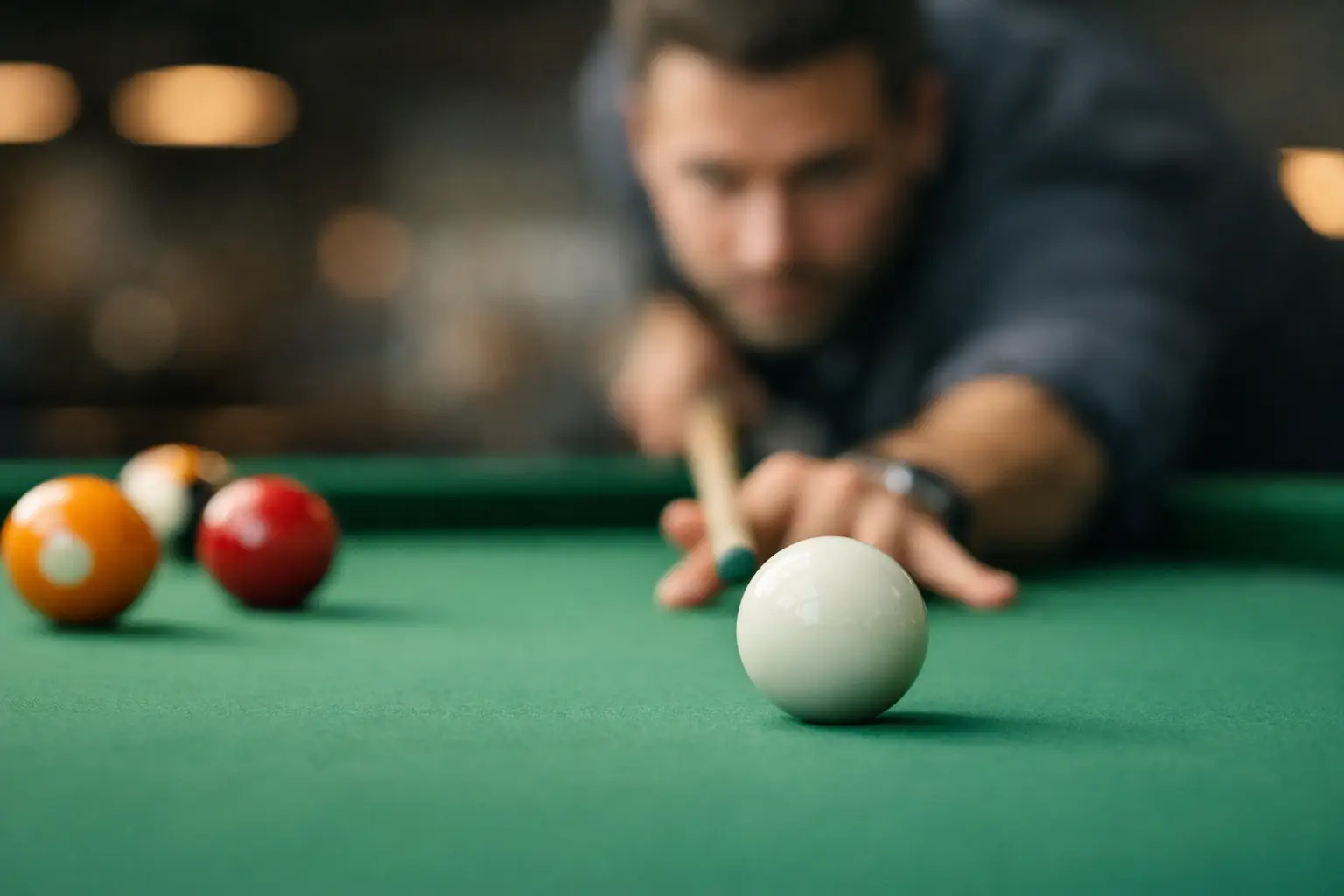
Missed position by three inches again? That is not bad luck. That is cue ball control breaking down at the exact moment the table asks for precision.
If you want to know how to improve cue ball control, stop thinking of it as a feel-only skill. Great position play is built on repeatable mechanics, clean contact, speed command, and smarter pattern choices. The cue ball is not random. It is a response system. Hit it clean, send it with purpose, and it starts obeying.
How to Improve Cue Ball Control Starts With Contact
Most players blame spin first. The real issue is usually contact quality. If your tip is not striking the cue ball exactly where you think it is, every plan after that is compromised.
Start with your tip placement. Center ball has to be truly center. A slight drift above center adds follow. A slight drift below center adds drag and sometimes unintended draw. A slight drift left or right changes the line, especially when speed increases. On thin cuts, that tiny mistake gets magnified.
This is why advanced players look boring in practice. They are not guessing. They are calibrating. They know what one tip of left does at medium speed, what half-tip below center does off a stun shot, and how much the cue ball opens after contact. Precision begins before the stroke ever starts.
The fastest fix is simple. Set up straight-in shots and hit the cue ball with center, then low, then high, all at the same pocketing speed. Watch the cue ball finish. If it does not react the way you expected, you are learning something valuable. Your eyes and your tip are not synced yet.
Build a Stroke the Cue Ball Can Trust
Cue ball control is impossible without a stable delivery. You can own premium gear, know every spin route on paper, and still lose shape if your stroke decelerates or your tip wobbles through contact.
A reliable stroke has three parts. The cue travels straight. The tip accelerates smoothly through the ball. The body stays quiet enough to let that happen. Any extra movement in the shoulder, grip hand, or head introduces noise. Noise is the enemy.
The biggest mistake is trying to force action. Players jab at draw shots, steer follow shots, and overhit side spin because they want the cue ball to move more. Usually the opposite happens. The hit gets less efficient, the cue ball grabs unpredictably, and shape gets wider instead of tighter.
A better move is to shorten your ambition and sharpen your strike. Practice sending the cue ball one diamond with draw. Then two. Then three. Do the same with follow. Learn the smallest stroke that produces the result. That is where real control lives.
There is also a trade-off here. A looser stroke creates touch, but too loose can become sloppy. A firmer grip can stabilize the cue, but too firm kills feel. It depends on your tempo and fundamentals. The goal is not one universal style. The goal is repeatable delivery under pressure.
Speed Is the Hidden Engine
Players love talking about spin because it looks advanced. Speed is what actually runs the table.
The cue ball reacts differently at soft, medium, and firm speeds even with the same tip position. A soft stun may turn into roll before contact. A firm draw may hold its line longer. Side spin grabs rails differently depending on pace. If you do not control speed, spin becomes a gamble.
Train speed in layers. Start with stop shots at different distances. Then move to stun-follow and stun-draw shots where the cue ball travels only one to two diamonds after contact. That zone matters because most position routes in real games are not huge. They are small corrections. Elite players are not always moving the cue ball farther. They are moving it less, with more accuracy.
One of the cleanest tests is the lag drill. Send the cue ball up-table and back, trying to stop on the head string or as close to your tip as possible. No object ball. No pocket. Just raw speed control. It looks basic. It is not. It exposes every flaw in your stroke and every bad habit in your tempo.
Use Less Spin Than You Think
Many players asking how to improve cue ball control are actually asking how to make the cue ball stop overreacting. The answer is usually less side spin, not more.
English is powerful, but it adds variables. Deflection changes aim. Throw changes the object ball path. Rail reaction changes off cushions. If you are learning position routes, excessive side spin makes the lesson harder to read.
Start with center, high, and low. Build your control around natural angles first. When the tangent line, follow path, and draw line are clear in your mind, then side spin becomes a weapon instead of a rescue attempt.
That does not mean avoid english forever. It means earn it. Use it when it shortens the route, avoids traffic, opens the right rail line, or holds the cue ball on a better side of the table. Use it because the shot demands it, not because it feels flashy.
The Three Core Cue Ball Paths
To improve faster, you need to see three routes immediately after impact.
A stun shot sends the cue ball down the tangent line. A rolling cue ball follows the object ball line more. A drawing cue ball bends back from the tangent line. If you cannot predict those three paths, your position play will always feel late.
This is where practice should get more visual. Set up the same cut shot and hit it with stun, then rolling follow, then draw. Watch how the cue ball exits. Repeat until the differences are obvious, not theoretical. Once you own those base lines, shape starts looking simpler.
Pattern Play Makes Cue Ball Control Easier
Sometimes the cue ball is not the real problem. The route you chose is.
Strong players make cue ball control look automatic because they do not ask the cue ball to do unnecessary work. They pick patterns that accept natural angles, larger position zones, and simpler speed windows. Weak patterns demand perfect spin and exact landing spots. Good patterns give you room.
If you keep landing short or long, look at your route choice before blaming execution. Could you take one more rail instead of forcing a tight check-side line? Could you play for a bigger zone instead of a six-inch target? Could you stay below the next ball instead of crossing position and risking traffic?
This is competitive table management. Not every flashy route is the percentage route. Sometimes the strongest play is the plain one that keeps the cue ball in open space and your stroke in neutral.
Equipment Matters, But Only If It Helps You Repeat
Serious players know the truth. Equipment does not replace skill, but bad equipment absolutely sabotages it.
Cue ball control depends on feedback. If your shaft is inconsistent, your tip mushrooms too fast, or your cue feels unstable in your hand, your stroke starts making compensations. That is where precision leaks out. The best setup is not about hype. It is about predictability.
A quality shaft can reduce unwanted variance. A tip matched to your style can improve contact confidence. Weight balance can change how naturally you deliver smooth speed. Even glove feel and chalk cleanliness can affect how freely you stroke through the shot. Details matter because cue ball control is a detail skill.
That is why performance-focused players pay attention to materials and build quality. Precision is easier when your gear behaves the same way every session. ON CYBORG was built around exactly that mindset – engineered consistency for players who expect more from every hit.
Practice for Transfer, Not Just Repetition
Hitting balls for two hours is not the same as training cue ball control. Repetition without purpose grooves comfort, not improvement.
Better practice has constraints. Land the cue ball in a one-diamond zone. Run the same pattern three different ways. Shoot stop, stun, draw, and follow off one setup. Score yourself on position, not just pocketing. The table should give you feedback, not just entertainment.
Pressure matters too. It is easy to control the cue ball when nothing is on the line. Add consequence. If you miss your zone three times, restart the drill. If you overrun shape, the rack is over. Competitive players need practice that tightens decision-making and execution together.
One more thing – film your stroke. Most players are shocked by what they see. The cue may be rising through contact. The grip may be tightening early. The head may be lifting before the hit is complete. Video cuts through guesswork fast.
How to Improve Cue Ball Control Under Match Pressure
The table changes when adrenaline shows up. Speed gets harder to judge. Stroke tempo gets faster. Players overhit simple shape because they want certainty, then lose the angle completely.
Your answer is not more aggression. It is simpler decisions and cleaner commitment. Pick the route. Pick the speed. Pick the exact contact point. Then deliver. Half-committed strokes create ugly cue ball paths.
When nerves rise, trust stun and natural roll more than exotic side spin. Trust bigger zones more than heroic windows. Trust the stroke you have trained, not the miracle shot your ego wants.
Cue ball control is not magic hands. It is measured input. Better contact. Better speed. Better choices. Keep stacking those pieces, and the cue ball starts traveling like it has orders. That is when the table gets smaller, the game gets slower, and your next shot starts showing up exactly where you need it.