

Blog
Low Residue Billiard Chalk That Plays Clean

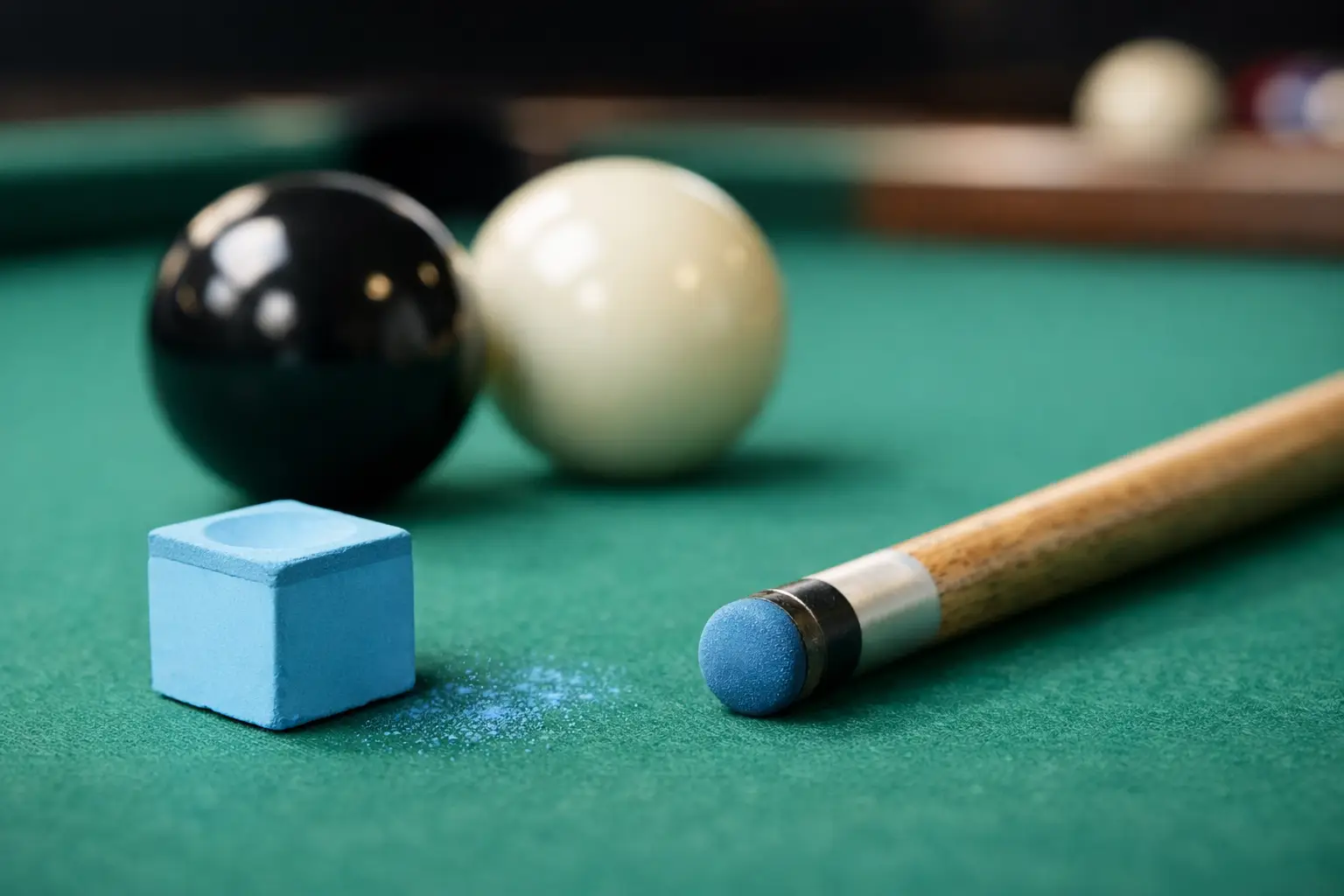
That blue haze on your bridge hand, your shaft, and half the table is not a badge of honor. It is wasted material, extra maintenance, and one more variable between your cue and the shot. Low residue billiard chalk matters because serious players are not chasing mess. They are chasing repeatable contact, cleaner equipment, and fewer distractions over long sessions.
For casual players, chalk is chalk until it starts coating the rail, staining a glove, or building up on a shaft that should feel fast and consistent. For competitive players, the standard is higher. You want grip at the tip without turning every rack into cleanup duty. That is where low residue formulas separate themselves from old-school cubes that dust everywhere and leave the table looking like it survived a sandstorm.
What low residue billiard chalk actually changes
The job of chalk is simple. It increases friction between tip and cue ball so you can apply spin with more confidence and reduce miscues. The problem is that many traditional chalks do that inefficiently. They shed too easily, break down into visible dust, and transfer onto cloth, balls, shafts, ferrules, gloves, and hands.
Low residue billiard chalk aims to tighten that equation. You still get the grip you need, but with less loose particulate flying off the tip and spreading across your setup. That sounds minor until you play for hours, practice draw drills, or compete in a room where table conditions matter. Cleaner gear stays more consistent. A cleaner shaft keeps the stroke feeling more predictable. A cleaner cloth keeps the table looking sharp and reduces the sense that everything is slowly getting contaminated between games.
That does not mean every low residue product feels identical. Some formulas lean harder into cleanliness and feel slightly firmer or less creamy on application. Others try to keep that familiar soft texture while cutting the mess. The right choice depends on your tip, your stroke, and how much you value absolute grip versus reduced transfer.
Why strong players care about residue
If you play enough, you learn that tiny annoyances become performance leaks. Chalk on the shaft changes feel. Chalk on your bridge hand can add drag. Chalk on the cue ball changes how cleanly you believe you are striking it, even if the effect is partly mental. And in cue sports, confidence is not decoration. It is part of execution.
This is why low residue billiard chalk has become more attractive to players using premium equipment. When you invest in a carbon shaft, a carefully chosen tip hardness, or a glove designed for friction control, it makes no sense to pair that setup with a chalk that leaves debris everywhere. Precision gear deserves a cleaner system.
There is also the maintenance angle. Less residue means less wiping, less deep cleaning, and less buildup around the tip and ferrule area. Over time, that can help preserve the look and feel of your gear. It is not magic, and it will not eliminate all cleanup, but it reduces the constant grind of managing chalk dust after every serious session.
The trade-off: clean play still has to grip
A chalk can be spotless and still fail if it does not hold under pressure. That is the line no serious player will cross. If a formula looks clean but forces you to baby your English or second-guess power spin shots, it is not doing the job.
The best low residue billiard chalk is not just less messy. It stays on the tip well, applies evenly, and supports aggressive cue ball action without making you over-chalk every other shot. That balance is what separates premium engineering from marketing noise.
It also depends on your game. A player with a compact, center-ball heavy style may tolerate a cleaner but slightly less sticky chalk. A player who lives on spin, draw, and power position routes usually wants maximum confidence at contact. That player may accept a little more transfer if the hit feels locked in. The sweet spot is finding a formula that keeps the table cleaner without asking you to compromise your shot menu.
How to judge a low residue chalk the right way
Do not judge it by one rack. Test it over a real session.
Start with application. Does it go on evenly, or does it cake and clump? A strong formula should coat the tip with control, not crumble off in chunks. Then watch the table and your gear after thirty to sixty minutes. Check your shaft, ferrule, glove, bridge hand, and the cue ball. If you are still seeing heavy transfer, the chalk may not be as low residue as advertised.
Next, pay attention to frequency. How often do you feel the urge to re-chalk? Some products feel great on the first shot but fade quickly, pushing you into constant reapplication. That can erase some of the cleanliness advantage because more applications often mean more total dust. A better chalk holds longer and keeps the tip ready without turning your pre-shot routine into a ritual.
Finally, evaluate confidence under stress. Shoot inside English, power draw, and long spin shots. If the chalk keeps you aggressive without making a mess, that is a serious performer. If it plays clean only when you stay conservative, that is not enough for tournament-minded players.
Low residue billiard chalk and modern equipment
Modern cue sports gear is more advanced than ever. Carbon shafts have changed expectations for consistency, deflection management, and surface feel. Precision tips are tuned for specific response windows. Gloves are built for stable slide. In that environment, messy chalk feels old.
A cleaner chalk fits the modern performance mindset because it respects the entire system. It is not just about the tip. It is about preserving the shaft finish, reducing grime on the glove, and keeping the table presentation professional. Players who care about equipment synergy understand this immediately.
That is also why anti-allergenic and low-dust formulas are getting more attention. For some players, chalk residue is not only annoying but physically irritating over long sessions. Cleaner application and reduced airborne dust can make practice more comfortable, especially in busy pool rooms where the air already carries enough debris.
For a brand like ON CYBORG, this category makes perfect sense. High-performance billiards is not only about power and spin. It is about reducing drag across the entire experience. Cleaner chalk is part of that takeover.
Who should switch and who might not need to
If you play once in a while at home and do not care about cloth marks, hand residue, or shaft cleanup, you may not feel a huge need to upgrade. Traditional chalk can still get the job done.
But if you practice seriously, compete regularly, use premium shafts, or hate seeing blue dust on everything you own, low residue chalk is an easy decision. It brings a visible quality-of-life improvement without requiring any change to your stroke. For many players, that alone is worth it.
There is one caveat. Some players are deeply attached to the exact feel of a legacy chalk they have trusted for years. If that is you, switching may take an adjustment period. The answer is not to reject cleaner formulas immediately. Give them enough time under real conditions to see whether the performance is there once the feel becomes familiar.
What to look for before you buy
Ignore flashy claims unless they connect to actual play. The real signs of a strong low residue chalk are consistent tip coverage, solid adhesion, lower visible dust, and reliable action on spin shots. Clean hands and a cleaner shaft are part of the package, but performance has to come first.
You should also think about your environment. In humid rooms, some chalks behave differently than they do in dry conditions. Tip hardness matters too. Softer tips may interact with chalk application differently than medium or hard tips. There is no universal answer, which is why experienced players test combinations instead of chasing hype.
Price matters, but not in the way many players think. A premium chalk that lasts longer, stays cleaner, and supports confident cue ball control can easily justify a higher cost than a cheap cube that creates constant mess and inconsistency. Serious players do not buy consumables by sticker price alone. They buy by total performance.
Low residue billiard chalk is not a gimmick category. It is a smarter response to what competitive players actually need – grip without fallout, control without contamination, and a cleaner path from setup to shot. If your standards are rising, your chalk should rise with them. The table is cleaner. The cue feels better. The game gets tighter. That is the kind of upgrade you notice every time you pull the trigger.