

Blog
Carbon Break Cue Review: Power or Hype?

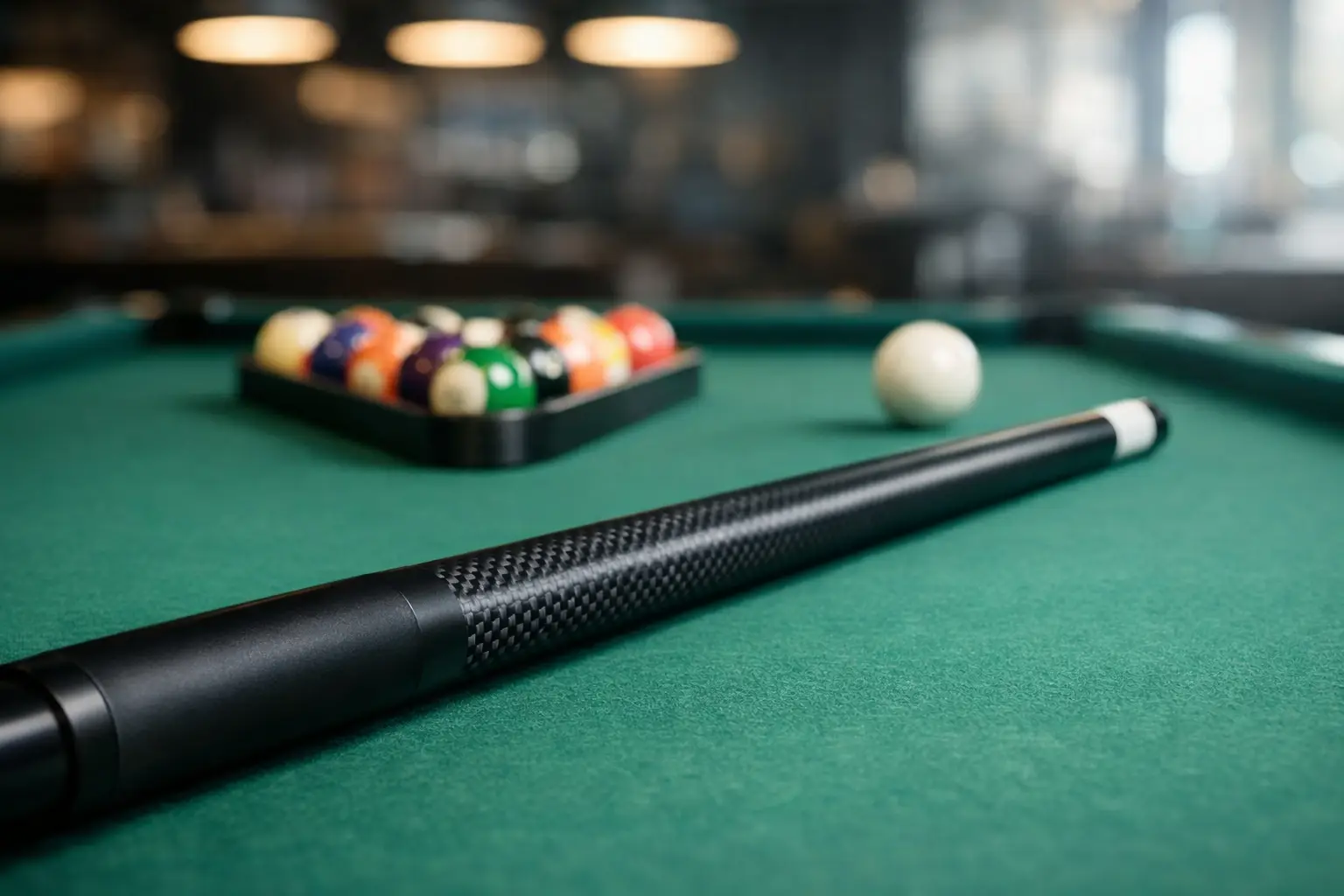
If your break feels violent but the rack still sits there half-awake, the problem may not be your timing. It may be your gear. That is where a real carbon break cue review matters – not hype, not showroom talk, but whether the cue actually transfers force, stays stable, and gives you a repeatable hit under pressure.
A break cue lives in a different world than a playing cue. Feel still matters, but feel is not the mission. The mission is controlled destruction. You want speed, a solid strike, and a cue that does not twist, flutter, or waste energy on impact. Carbon construction has stormed into that lane for one reason: efficiency. The best carbon break cues are built to turn more of your swing into action at the rack.
Carbon break cue review: what really matters
A lot of players buy a break cue after falling for one number – cue ball speed. That matters, but it is not the whole story. In a serious carbon break cue review, you need to look at how the cue loads up through the stroke, how stiff it feels at contact, and how predictable it stays across multiple breaks.
Carbon fiber changes the equation because it is naturally rigid and highly resistant to small inconsistencies in construction. A wood break cue can still be great, especially in skilled hands, but carbon usually wins on stability. Less flex means less energy bleed. The hit feels sharper, more immediate, and often more explosive.
That said, stiffer does not automatically mean better for every player. If your break timing is loose or your hit point wanders, an ultra-stiff carbon cue can feel unforgiving. It tells the truth fast. For advanced players, that honesty is a weapon. For newer players, it can expose mechanics they are not ready to fix.
Why carbon changes the break
The biggest advantage is direct energy transfer. When you accelerate through the cue ball, you want the cue to behave like a machine, not a compromise. Carbon shafts and butts are designed to stay structurally tight under force. That means less unwanted vibration, less mush at impact, and more of your stroke going straight into the rack.
There is also a durability angle. Break cues take abuse. They are hit harder, used more aggressively, and often leaned against tables or packed into travel cases without much ceremony. Carbon handles that lifestyle better than traditional wood in a lot of environments. It is less sensitive to temperature swings, humidity, and the small warps that slowly ruin consistency.
Then there is confidence. This part gets dismissed because it sounds soft, but it is real. A cue that feels brutally solid can make you commit harder to your break. And commitment matters. Hesitation kills more breaks than raw lack of strength.
What a good carbon break cue should feel like
The hit should be crisp, not hollow. Powerful, not wild. You want immediate feedback in the hand, but not a harsh shock that makes every break feel like punishment. A strong carbon break cue usually has a clean, high-feedback impact with very little wobble after contact.
Balance is huge here. Some break cues are rear-weighted to help players whip through the stroke. Others feel more neutral and let the player create speed without the cue doing too much of the work. Neither approach is automatically superior. If you rely on timing and a long acceleration path, a balanced cue may give you better control. If you like to explode from the back hand and generate fast acceleration, a slightly rear-biased cue can feel dangerous in the right way.
Tip choice matters too. Most dedicated break cues use very hard phenolic or specialized hard break tips. That creates a sharper hit and helps preserve energy at contact. The trade-off is touch. You are not buying softness or finesse here. You are buying authority.
The trade-offs most reviews skip
Here is the part too many sellers gloss over: carbon is not magic. It is a performance material, and performance materials come with personality.
First, the hit can be too rigid for players who like more feedback through flex. If you grew up on wood and love a slightly livelier feel, some carbon break cues can seem sterile. Not weak – just less organic.
Second, the extra stiffness can punish bad contact. A poor hit with a stiff break cue does not get softened by the shaft. It gets exposed. Miscuing, unwanted cue ball hop, and off-center energy loss can all show up more clearly.
Third, price can climb fast once brands start layering in premium joints, weight systems, and cosmetic upgrades. The good news is that carbon has pushed more performance into mid-range pricing than ever before. You no longer need flagship money to get serious breaking power.
How to judge a carbon break cue without getting fooled
Start with repeatability. Anybody can crush one rack. The better question is whether the cue gives you the same launch, same hit feel, and same cue ball behavior over ten breaks in a row.
Next, watch cue ball control. A huge break means less if the cue ball flies off the table or drifts straight into trouble. Strong break cues are not just powerful. They are stable enough to help you square the rack and keep the cue ball in play.
Also pay attention to vibration. Some cues feel loud and hard but waste energy in the process. Others feel compact and dense, with a shorter, tighter feedback signature. That second type usually signals better structural efficiency.
Finally, look at adjustability. Changeable weight systems and multiple joint options are not gimmicks when they are done right. They let you tune the cue to your stroke instead of forcing your stroke to adapt to the cue. For serious players, that matters.
Carbon break cue review for different player types
If you are an advanced league player or tournament shooter, a carbon break cue can be a legitimate edge. You are likely consistent enough to benefit from added stiffness, and you will notice the gains in rack spread, hit clarity, and durability.
If you are a developing player, the decision depends on your mechanics. A carbon break cue may accelerate your progress by giving you cleaner feedback. Or it may feel too sharp if your break fundamentals are still unstable. In that case, the cue is not wrong. It is just less forgiving.
If you are already breaking well with a solid wood cue, the move to carbon is about margin. You are not searching for a miracle. You are hunting extra efficiency, cleaner transfer, and less long-term maintenance. That is usually where carbon earns its keep.
Where the best models separate from the pack
The strongest carbon break cues are not just stiff. Plenty of cues are stiff. The best ones are engineered as complete systems. Joint fit, butt construction, taper, tip hardness, weight distribution, and finish all work together.
That is where premium billiards brands have an opening. When the construction is intentional, the cue stops feeling like a blunt instrument and starts feeling like a calibrated weapon. This is the zone where players start talking about instant acceleration, explosive contact, and a break that feels like it is one step ahead of their competition. That performance-first mindset is exactly why brands like ON CYBORG resonate with players who want technology to do more than look futuristic.
Still, do not buy on attitude alone. Buy on fit. The right break cue should amplify your natural motion, not fight it.
Is a carbon break cue worth it?
For many serious players, yes. If your goal is maximum power with modern materials, high structural stability, and less maintenance, carbon is the real deal. It is not a trend anymore. It is a proven category.
But worth depends on what you need. If you break only a few racks a week and your current cue already produces solid spreads, the upgrade may feel incremental. If you compete, travel, or care about every performance edge you can stack, the difference becomes easier to justify.
The smartest way to frame it is simple. A carbon break cue will not fix bad timing, poor contact, or weak fundamentals. What it can do is remove equipment limitations from the equation. It gives your break a harder edge, a more modern response, and a better chance to show what your stroke can actually produce.
That is the real verdict in any honest carbon break cue review. Not whether carbon sounds advanced, but whether it turns your power into results you can trust when the match gets tight. If your break is the first punch you throw, make sure your cue hits like it means it.