

Blog
Best Cue Tip for English: What Wins

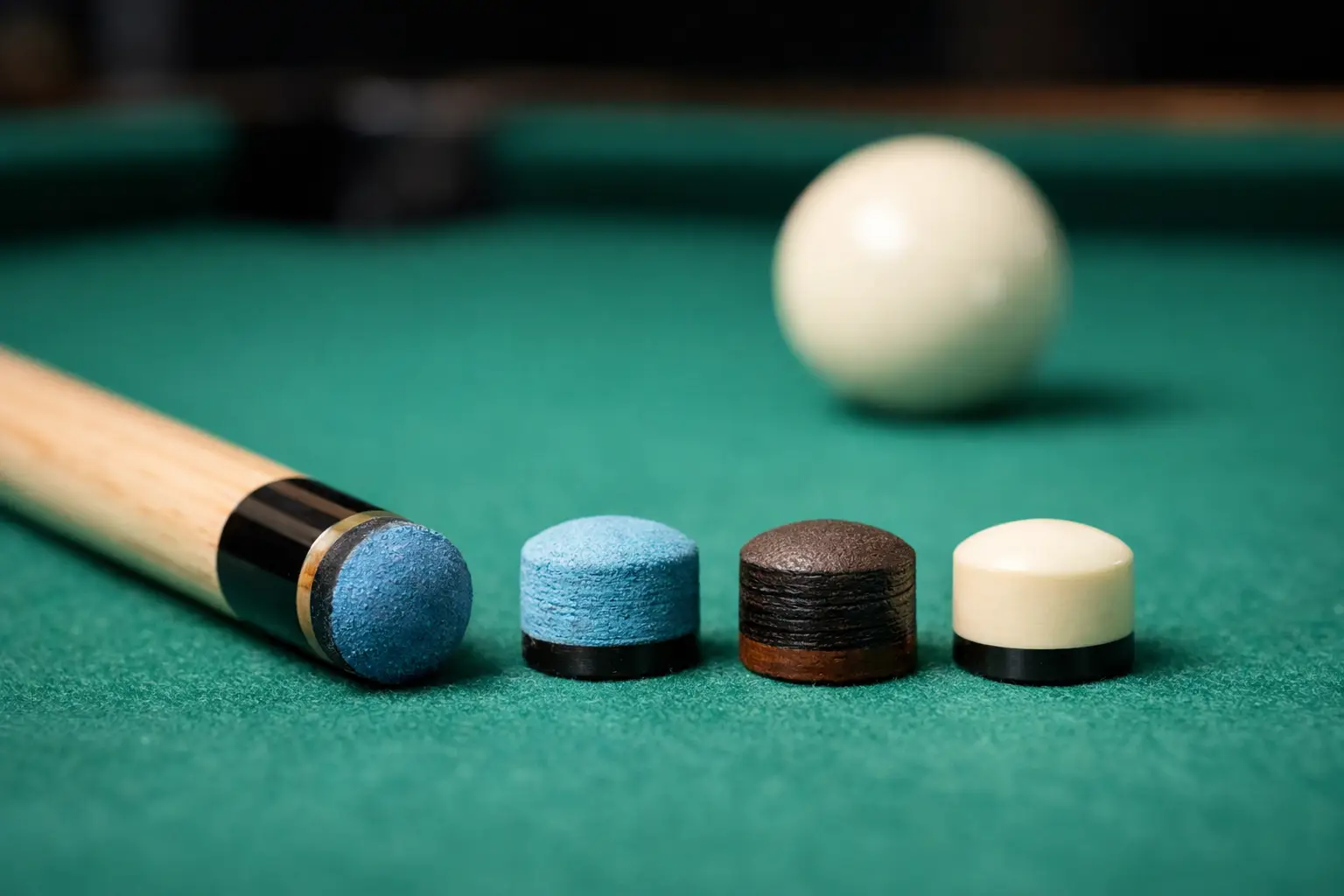
If your cue ball keeps slipping off line when you load up side spin, the problem might not be your stroke. It might be your tip. Finding the best cue tip for english is less about hype and more about how the tip grips the cue ball, holds its shape, and responds under pressure when the shot actually matters.
Players love to argue about shafts, tapers, and chalk, but the tip is still the final contact point. That tiny piece of leather decides how cleanly spin transfers, how much feedback reaches your hand, and how much trust you have when you move away from center ball. Get it wrong, and english feels risky. Get it right, and the cue starts feeling like a weapon.
What makes the best cue tip for english?
The short answer is grip plus consistency. A tip that grabs the cue ball well gives you more confidence to apply left or right without miscues creeping into the picture. But raw grip alone is not enough. If the tip mushrooms, glazes over too fast, or changes feel every few sessions, your results will drift.
That is why the best cue tip for english usually sits in the soft-to-medium range for most players. Softer tips tend to bite the cue ball more easily and create a slightly longer contact feel. That can make side spin feel easier to access, especially on finesse shots and touch position play. Medium tips give up a little of that plush feel, but they often return better shape retention, cleaner feedback, and more predictable long-term performance.
Hard tips have their place. If you hit firm, break hard, or want a crisp, direct response, a harder tip can feel incredibly precise. But for pure side spin generation, hard tips ask more from your technique. The margin for error gets tighter. For a lot of English pool players and spin-heavy cue sport players, that trade-off is real.
Soft, medium, or hard for english?
If your game is built on touch, check side, drag shots, and heavy cue-ball movement, a soft tip will usually feel the most generous. It compresses more at impact, which many players interpret as extra grab. The downside is maintenance. Soft tips can mushroom faster, need more trimming, and lose their crispness sooner.
Medium tips are the performance middle ground, and for many serious players, they are the smartest choice. You still get strong spin potential, but with better durability and a more stable hit. If you compete often or hate constant tip maintenance, medium is where control and practicality meet.
Hard tips are a specialist option. They can be excellent for players with elite delivery and a preference for a sharp, fast response. On power shots and long straight pots, they often feel extremely accurate. But if your main goal is to make english easier and safer under match pressure, hard is rarely the first answer.
For most players, the real choice is soft versus medium. If you are still searching, medium is the safer starting point. It gives you enough bite without turning tip upkeep into a side job.
Layered vs single-layer tips
This is where opinion gets loud. Some players swear by single-layer tips because they feel natural, simple, and direct. Others will not touch anything but layered tips because they want uniform density and longer-lasting performance.
For english, layered tips usually have the edge in consistency. A well-built layered tip tends to hold its shape better and respond more predictably over time. That matters because side spin is unforgiving. If the surface gets uneven or the hit changes week to week, you start second-guessing shots you should be owning.
Single-layer tips can still be excellent, especially if you love a traditional hit and know exactly how to maintain them. They often deliver strong feel and can be very lively when installed well. But they are more variable from tip to tip. If you want repeatable performance, layered construction is usually the modern choice.
That fits the direction serious equipment is already moving – more engineering, less guesswork.
The real factors that affect english the most
A lot of players blame the tip when the full setup is fighting them. The tip matters, but it works inside a system.
Tip radius is one of the biggest variables. A properly shaped tip helps you access side spin more cleanly. If it is too flat, moving off center can feel clumsy. If it is too rounded, you may lose some stability on standard shots. Most players do best with a balanced dome that supports both center-ball accuracy and confident side spin.
Chalk retention matters too. The best tip for english is useless if it will not hold chalk well between shots. Surface texture plays a major role here. A tip that glazes quickly can turn aggressive spin into a guessing game.
Then there is cue delivery. If your stroke is steering, jabbing, or decelerating, no tip will save you. Great tips increase your usable range. They do not erase bad mechanics.
Finally, there is shaft behavior. Low-deflection shafts can make english easier to manage because cue-ball squirt is reduced. Pair a spin-friendly tip with a shaft built for control, and the whole package starts to make sense. That is when the cue stops feeling ordinary and starts feeling engineered.
How to choose the best cue tip for your style
If you are a finesse player, lean soft or soft-medium. You will probably appreciate the extra grip and slightly cushioned response. This setup suits players who win with precision, touch, and heavy cue-ball manipulation rather than pure force.
If you are an all-around competitor, go medium. It is the best blend of spin access, shot feedback, and durability. Medium tips are easier to live with over a full season, especially if you train hard and expect your equipment to stay stable.
If you hit firm and favor a punchy stroke, a medium-hard tip could work, but only if your contact is clean. This kind of setup rewards confidence and punishes laziness. It is not the forgiving option, but in the right hands it can feel razor sharp.
If you are changing tips often because nothing feels right, stop chasing extremes. Many players bounce from very soft to very hard and miss the sweet spot in the middle. The best cue tip for english is often the one that gives you confidence on your worst day, not just fireworks on your best one.
Signs your current tip is holding you back
If side spin feels inconsistent from one session to the next, your tip may be changing shape too fast. If you are miscuing on shots you used to trust, the surface may be too slick or too hard for your game. If the hit feels dead, disconnected, or harsh, you may be fighting the wrong hardness.
Pay attention to maintenance frequency. A tip that constantly needs shaping or scuffing can become a distraction. Serious players want gear that performs, not gear that begs for attention every weekend.
There is also the issue of mental drag. When you stop trusting your tip, you start babying shots. You avoid the cue-ball routes you should take. You play smaller than your actual ability. That is a performance problem, not just an equipment problem.
What serious players usually prefer
Among experienced players who rely on english as a core part of position play, medium layered tips are often the safest bet. They deliver enough bite to move the cue ball with authority, but they also stay stable over time and offer a cleaner, more controlled hit than many very soft options.
That does not mean every medium layered tip is elite. Build quality still matters. Leather quality matters. Compression consistency matters. Installation matters. A great tip installed badly becomes an average tip fast.
This is where premium billiards brands have started separating themselves. The new standard is not just leather glued to a ferrule. It is performance tuning – material quality, density control, shape retention, and reliable feedback built for match conditions.
For players who want a modern performance setup, a high-quality medium layered tip is usually the first place to look. If your priority is maximum spin feel on touch shots, a premium soft layered tip can still be the right call. Just understand the maintenance trade-off before you commit.
The smartest answer
There is no single best cue tip for english for every player on earth. That is the truth. But there is a strongest category for most serious players: a premium layered tip in the soft-medium or medium range.
That is where spin potential, control, shape retention, and long-term consistency line up. It is the zone where confidence grows instead of fading. For players who treat cue sports like a performance game, not a casual hobby, that matters.
If your cue ball needs to obey instead of negotiate, start with the tip. The smallest part of the cue can change the entire fight at the table.