

Blog
Carom Cue vs Pool Cue: What Changes?

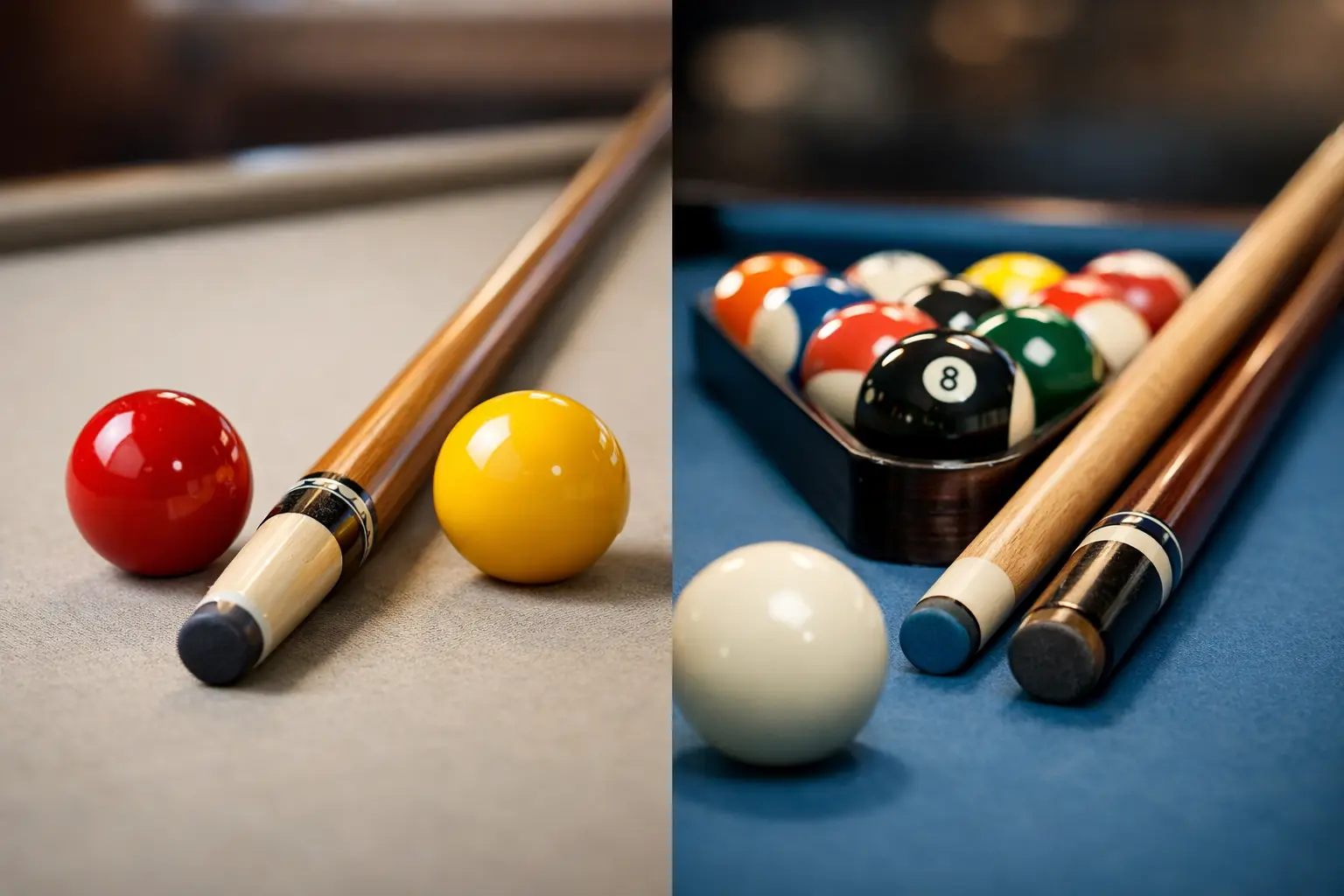
If you have ever tried three-cushion with your regular pool cue, you felt it fast. The hit is different. The feedback is sharper. The margin for error gets smaller. That is where the real carom cue vs pool cue conversation starts – not with looks, but with performance under pressure.
A lot of players assume a cue is a cue until they start chasing tighter cue ball paths, cleaner contact, and more predictable spin. Then the equipment starts talking back. Carom and pool cues may share the same DNA, but they are built for different combat environments. If you play both games, or you are thinking about crossing over, choosing the right weapon matters.
Carom cue vs pool cue: the core difference
The biggest difference between a carom cue and a pool cue is what each one is engineered to do. A pool cue is built around pocket play. You need shot variety, speed control across longer table routes, and forgiveness on cut shots, banks, draw, and side spin. A carom cue is built for precision cue ball contact and ultra-controlled spin transfer on pocketless tables where the entire game is position, angle, and rebound.
That change in mission affects almost every part of the cue. Tip diameter, taper, shaft stiffness, ferrule style, joint feel, overall balance, and even how the cue loads energy through the stroke all shift to match the game.
At a glance, a carom cue often feels stiffer and more direct. A pool cue usually feels a little more versatile and familiar to players raised on eight-ball, nine-ball, or ten-ball. Neither is better in every situation. Better depends on the table, the balls, the shot demand, and how much precision you expect from your gear.
Tip size changes everything
If you only compare one spec in the carom cue vs pool cue debate, make it tip diameter. It has a massive effect on contact.
Most pool cues land around 12 to 13 mm, depending on whether the setup leans toward all-around play, low-deflection precision, or a more traditional feel. Carom cues usually come in smaller, often around 11.5 to 12 mm. That smaller tip gives many carom players a more exact strike point on the cue ball, which matters when spin and micro-adjustments decide the shot.
There is a trade-off. Smaller tips can feel surgical, but they demand cleaner delivery. If your stroke gets loose, the cue will expose it. Larger pool tips can offer a little more forgiveness and a fuller hit, especially for players who like power and varied shot making.
Tip hardness also plays a role. Carom setups often lean harder because the game rewards crisp transfer, durability, and direct feedback. Pool players vary more. Some want soft feel for touch shots, others want medium or hard for consistency and reduced mushrooming. The right answer depends on your stroke and the pace you play.
Shaft taper and stiffness separate the feel
This is where serious players start paying attention. A pool shaft and a carom shaft can look similar in the rack and feel completely different in the hand.
Carom shafts are typically stiffer. That stiffer build supports the compact, controlled, spin-heavy strike common in carom disciplines. It creates a more immediate response at contact and can make cue ball action feel more exact, especially on short, technical routes. Many carom players want that no-nonsense feedback. No lag. No softness. Just truth.
Pool shafts, especially modern low-deflection models, are built around a more varied shot menu. You may need to load up with draw, feather a safety, power through a break shot in rotation practice, or throw side spin with confidence on a long pot. That means pool shafts often balance stiffness with some level of cueing comfort and forgiveness.
Material matters too. Advanced carbon shafts have changed expectations in both categories. Carbon construction can deliver tighter consistency, cleaner maintenance, stronger resistance to warping, and a more stable response from shot to shot. For players who hate equipment drift, this is where next-gen gear starts pulling away from old-school wood setups.
Weight and balance are not the same fight
Players love talking about cue weight, but balance can matter more. Two cues can weigh the same and perform completely differently because the mass is distributed in different places.
Pool cues commonly fall into a familiar range around 18 to 21 ounces. Many players settle around 19 ounces because it gives them a strong middle ground between touch and power. Carom cues are often a bit lighter overall, though not always by much, and they can feel more forward-tuned or more neutral depending on the builder and discipline.
Why does that matter? Because carom is all about cue ball command after contact. You are not shooting into pockets. You are managing angle chains and rail behavior. A cue that feels too loose or too back-heavy can fight that rhythm. Pool, on the other hand, rewards adaptability. You may want a cue that handles soft cue ball kills just as comfortably as a long power draw.
This is why adjustable weight systems are not just marketing fluff when they are done right. Serious players benefit from tuning balance to their stroke tempo and preferred contact feel.
Ferrule, joint, and butt design all influence the hit
The hit is not one part. It is the system.
Ferrule length and material affect front-end feel. Joint style changes how energy transfers through the cue. Butt construction influences vibration, stability, and the sense of authority in the stroke. In a true carom cue, these parts are usually tuned toward a compact, crisp, highly communicative hit. In a pool cue, there is more range. Some players want soft and quiet. Others want stiff and explosive.
That is why trying to force one cue to dominate both disciplines usually ends in compromise. You can get away with crossover play, especially as a casual player, but once your standards rise, the mismatches show up. You start missing by less, but missing more often. The cue feels close, just not complete.
Modern cue engineering changes the equation here. Carbon shafts, precision joints, and advanced butt construction can tighten response and reduce inconsistency across a wider range of shots. That is exactly why performance-focused brands push technology so hard. Players do not need more decoration. They need repeatability.
Can you use a pool cue for carom?
Yes. The better question is how long you want to tolerate the compromise.
If you are learning carom for fun, a pool cue can absolutely get you started. You will still build stroke fundamentals, understand table geometry, and learn spin behavior. But once you begin demanding cleaner english, sharper contact, and more confidence on technical patterns, a dedicated carom cue starts making sense.
The reverse is also true. You can use a carom cue for pool, but many players will find it less forgiving on pocket shots. The smaller tip and stiffer feel can be excellent for cue ball control, yet they may punish slight delivery mistakes more harshly during long cuts or touchy pocket-speed shots.
This is the heart of the decision. One cue can be serviceable across both games. A purpose-built cue gives you a stronger edge inside the discipline it was designed for.
Which players should choose each cue?
If you mainly play eight-ball, nine-ball, ten-ball, straight pool, or one-pocket, start with a true pool cue. You want range, comfort, and enough front-end performance to handle spin without making pocketing feel overly demanding.
If you play three-cushion, artistic billiards, or carom-focused disciplines regularly, choose a real carom cue. The tighter spec profile is not cosmetic. It is built for the way carom shots load and release energy.
If you split time between both, your best move depends on how serious you are. Casual crossover players can survive with one versatile setup. Competitive players should stop pretending compromise is efficient and build a two-cue lineup.
That is where modern performance gear earns its keep. A dedicated pool cue plus a dedicated carom cue gives you cleaner specialization. Pair that with advanced shaft materials, tuned weight options, and the right tip setup, and your equipment stops holding back your game.
The smart way to choose
Do not buy based on looks alone. Buy based on your shot profile.
Ask yourself where you miss. If you struggle with precise cue ball strike and spin repeatability in carom, your current pool cue may be part of the problem. If your pocketing confidence drops with a stiffer, smaller-tip setup, then a carom cue may be asking too much from your pool stroke.
The strongest players know this: feel is personal, but performance is measurable. Better contact. Better consistency. Better control under match pressure. That is the standard.
At ON CYBORG, that performance-first mindset drives the entire category forward. Whether you are building for pocket precision or carom domination, the right cue should not just look advanced. It should hit like the future.
If your game is getting more demanding, let your equipment keep up. The wrong cue can still play. The right cue can change the table.