

Blog
Adjustable Weight Pool Cue: Worth It?

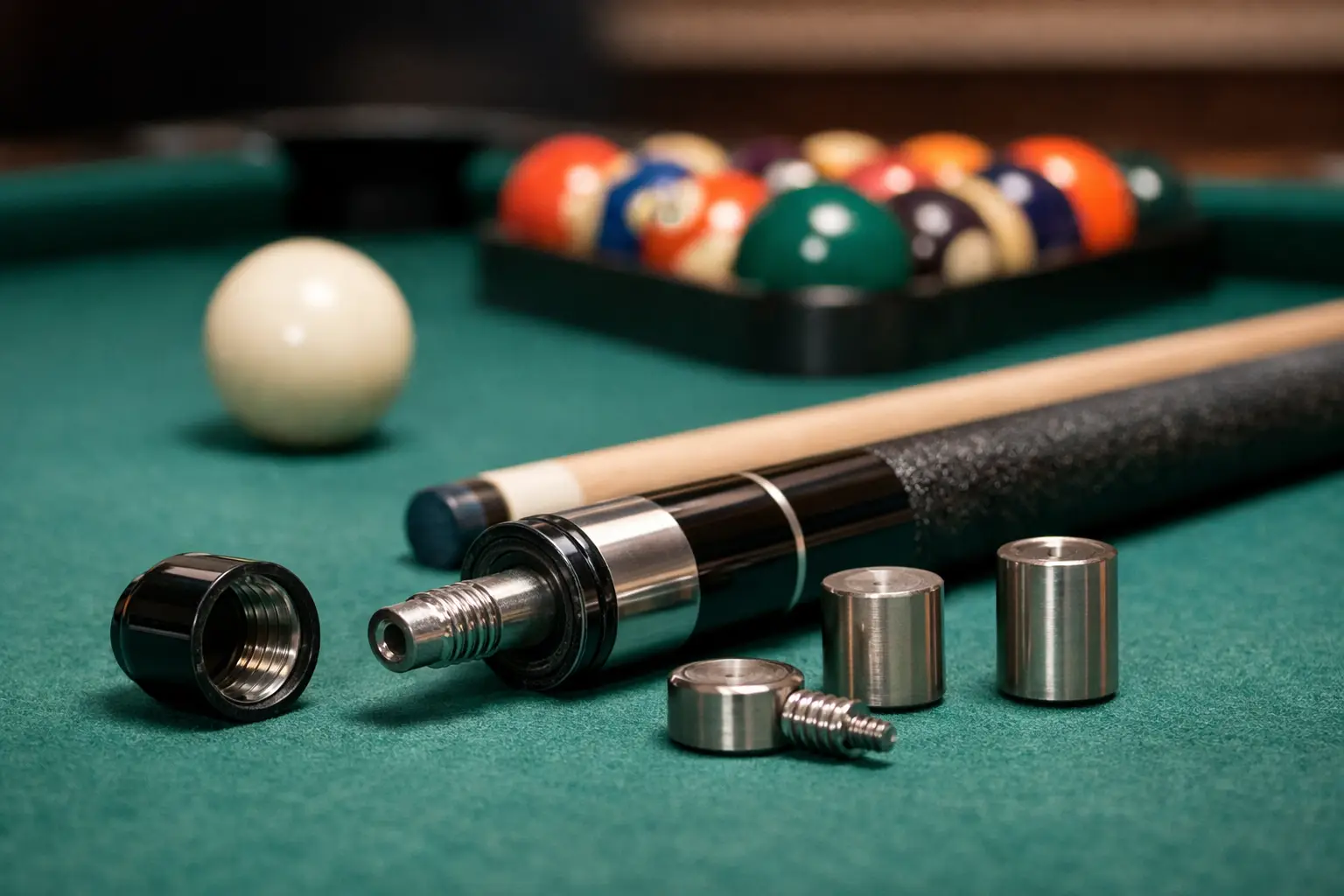
One ounce can change everything. If your timing feels late, your stroke gets jumpy under pressure, or the cue just never seems to sit right in your hand, an adjustable weight pool cue is not a gimmick. It is a performance tool. For serious players, cue weight is not just a number on a spec sheet. It affects tempo, cue ball control, fatigue, and confidence on every shot.
The real question is not whether adjustable weight matters. It is whether you know how to use it to your advantage.
What an adjustable weight pool cue actually changes
An adjustable weight pool cue lets you add or remove internal weight bolts so the cue can be tuned to your preferred total weight. On paper, that sounds simple. In play, the effect is bigger than most players expect.
A heavier setup can feel more planted through the cue ball. Some players like that extra mass on draw shots, power shots, or long straight shots where they want the cue to stay on line. A lighter setup can feel faster, more responsive, and easier to accelerate smoothly. That often helps players who rely on touch, finesse, and quick cue speed.
But total weight is only part of the story. The feel of a cue also depends on balance point, shaft stiffness, taper, tip hardness, and butt construction. That is why two cues with the same listed weight can play completely differently. Adjustable weight gives you one more control point, not a magic fix for every problem.
That trade-off matters. If your shaft feels too whippy, changing butt weight may not solve it. If your tip is too hard for your touch game, dropping half an ounce will not suddenly make the cue more forgiving. Smart players treat cue weight like part of a full performance system.
Who benefits most from an adjustable weight pool cue
If you are still building a repeatable stroke, adjustable weight can help you experiment without buying multiple cues. You can start with a neutral setup, then test slightly heavier or lighter configurations until your timing settles in. That alone can save money and shorten the learning curve.
If you compete regularly, the benefit is even more obvious. Table speed changes. Match pressure changes. Your physical condition changes too. Some days you want a cue that feels locked in and solid. Other days you want a faster, lighter response. An adjustable setup gives you room to tune for the conditions instead of forcing the same feel every session.
Advanced players often get the most from it because they can actually feel small changes. They notice whether the cue is lagging in transition, whether the front end feels disconnected, or whether the butt is doing too much work in the stroke. For that player, weight tuning is not cosmetic. It is precision setup.
That said, not every player needs constant adjustment. If you already know your ideal weight and never deviate from it, an adjustable system may be something you set once and forget. That is still useful. It means the cue can be dialed in from day one instead of forcing you to adapt to a fixed build.
Heavier vs lighter: what really happens on the table
There is a lot of bad advice around cue weight because players talk in absolutes. Heavy is not automatically more powerful. Light is not automatically better for control. What matters is how the cue matches your stroke mechanics.
A heavier cue often feels calmer during the delivery. It can reduce the sense that the cue is flying around in your hand, especially for players with a long backswing or aggressive acceleration. Some players also feel that a bit more weight helps them stay down and finish the stroke instead of steering the cue.
The downside is that too much weight can slow your natural timing. Your arm starts working harder. Touch shots can get clumsy. If you have to force the cue through the ball rather than let it flow, the added weight is costing you more than it gives.
A lighter cue can feel explosive. It is easier to move, easier to accelerate, and often better for players with smooth mechanics who generate cue speed naturally. A lighter setup can also reduce fatigue during long sessions. That becomes a serious advantage in league play and tournaments where the last few racks matter most.
The drawback is stability. Go too light and the cue may feel nervous, especially under pressure. Your rhythm gets too quick, your transition gets jerky, and the hit starts feeling thin. That is why weight tuning should happen in small steps. Half an ounce can be enough to shift the whole personality of the cue.
How to find your ideal cue weight
Start with honesty. Do not chase what a pro uses. Do not copy your teammate’s setup because it felt good for three shots. Build around your own stroke.
First, pay attention to where your misses come from. If you are decelerating, steering, or feeling like the cue outruns your arm, a slightly heavier setup may help settle the motion. If the cue feels sluggish, hard to accelerate, or tiring late in a session, try going lighter.
Second, test one change at a time. Adjust the weight, then play enough racks to let your body adapt. A few warm-up shots are not enough. You need to see how the cue behaves on draw, follow, stun, touch safeties, rail shots, and pressure shots. Real performance shows up across patterns, not just in one favorite drill.
Third, keep your reference points simple. Focus on three things: timing, cue ball response, and comfort over time. If the cue feels better for ten minutes but worse after an hour, that matters. If you gain power but lose touch, that matters too.
The best setting is usually not the most dramatic one. It is the one that disappears in your hand and lets your mechanics take over.
Adjustable weight pool cue setups and balance
This is where serious gear gets separated from entry-level hardware. An adjustable weight pool cue should not just accept bolts. It should maintain a clean, consistent feel as the weight changes. If the cue turns dead, overly butt-heavy, or disconnected after adjustment, the system is doing the job on paper but not on the table.
Good cue engineering keeps the hit stable while giving the player tuning range. That means the butt construction, joint, shaft pairing, and internal weight system need to work together. Premium builds do this better because they are designed as complete performance platforms, not generic cues with removable screws.
This is exactly why advanced players care about materials and design language. Carbon technology, precision-machined components, and modern butt construction are not there for looks alone. They help protect consistency while the cue is being customized.
For players chasing a more exact feel, balance point matters almost as much as total weight. Two cues can both weigh 19 ounces, but if one carries more mass toward the rear, it may feel slower and more anchored. If the weight distribution sits more neutral, the cue may feel faster and more alive. The best adjustable systems respect that difference.
What to watch for before you buy
Not every adjustable cue is worth the label. Some are built around the feature instead of around performance.
You want a cue with a reliable weight system, solid construction, and a hit profile that already suits your game before any tuning happens. Weight adjustment should refine the cue, not rescue it. If the cue feels cheap, inconsistent, or poorly balanced in its base setup, extra bolts will not save it.
You should also think about the rest of your equipment. A low-deflection carbon shaft paired with the right tip may change your perception of ideal cue weight. So can wrap choice, cue length, or extension use. Players who use extensions regularly often need to revisit weight and balance because the whole rear-end feel changes.
If you are investing in performance gear, look for brands that build with purpose instead of nostalgia. The new generation of billiards equipment is about tunability, repeatability, and engineered response. That is where brands like ON CYBORG have pushed the market – toward cues and components that feel built for competition, not just tradition.
Is it worth it?
For the player who wants one cue locked to one familiar feel forever, maybe not. For everybody else, an adjustable weight pool cue is one of the smartest upgrades in modern billiards. It gives you room to tune your setup, adapt to your game, and stop fighting equipment that was never truly matched to you.
The edge is not in owning more features. The edge is in building a cue that fires the way you do. Find the weight that makes your stroke feel automatic, and let the table feel the difference.