

Blog
Low Deflection Shaft Review for Serious Players

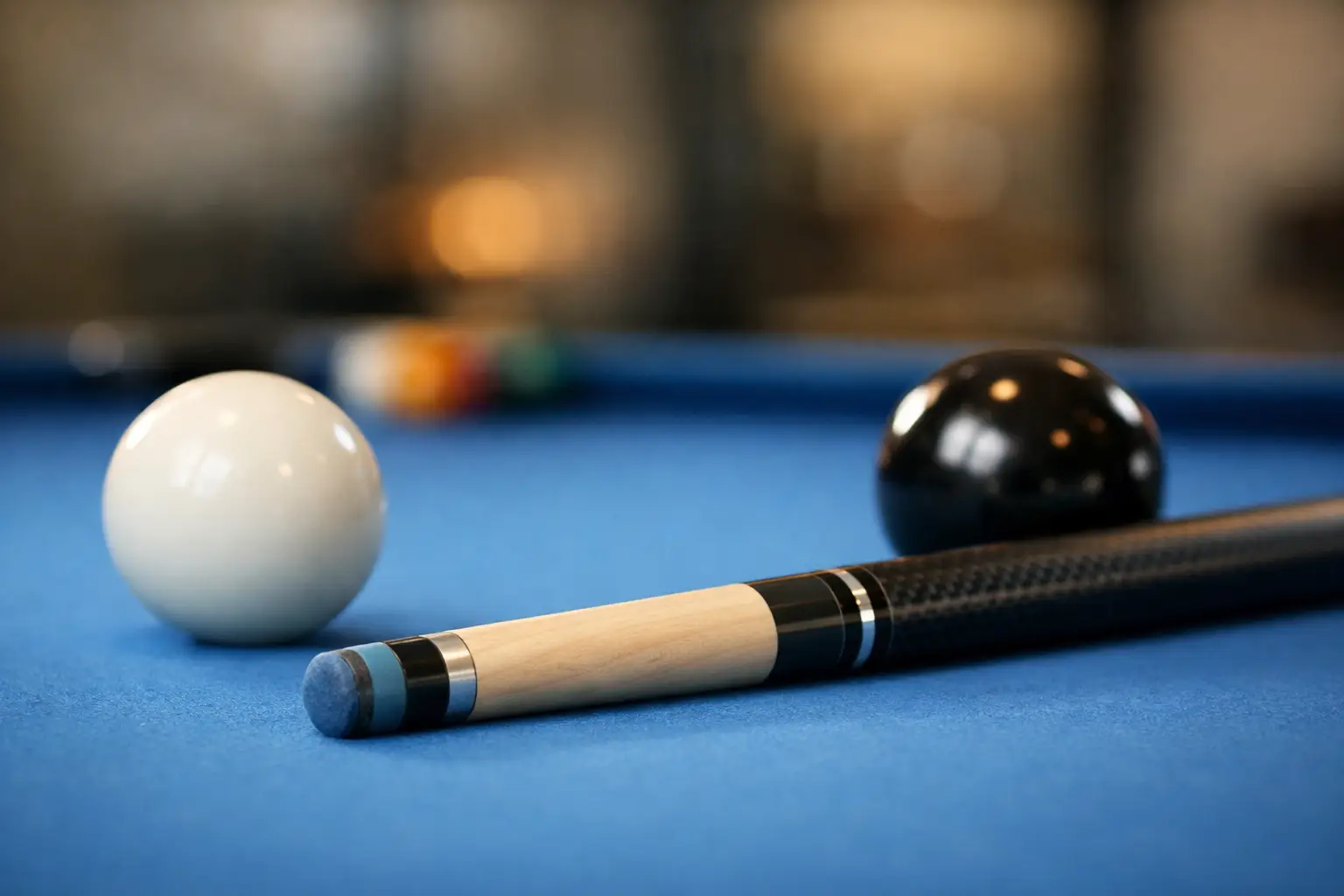
You do not notice shaft deflection when you are center-ball cruising. You notice it when the shot matters – long cut, inside english, tight window, match on the line. That is where a real low deflection shaft review has to start. Not with marketing slogans, but with what happens when you load up spin and still expect the cue ball to obey.
Low deflection shafts exist to reduce cue ball squirt. Hit off center and the cue ball wants to veer off the aiming line before spin takes over. A lower deflection design cuts that initial sideways push, which means less compensation, cleaner aim, and more confidence when you are moving the cue ball with purpose. For advanced players, that is not a small upgrade. It changes how aggressive you can be.
What a low deflection shaft review should actually test
A lot of players buy the category before they test the result. That is backwards. The point is not owning a trendy shaft. The point is getting predictable cue ball behavior under pressure.
A proper review should look at four things. First, how much the shaft reduces squirt on real off-center hits. Second, how stable it feels through the stroke. Third, how much feedback it gives back to the hand. Fourth, whether the performance holds up across power, finesse, and touch shots.
That last point matters more than most players admit. Some shafts feel brilliant on smooth medium-speed shots, then get twitchy on power draw or feel too muted on soft spin. Others stay composed no matter what you ask from them. Serious players need the second type.
Low deflection shaft review: the real performance gains
The biggest gain is simpler aiming with english. If you are used to a traditional maple shaft, you have probably built compensation into your game. You see the shot, adjust a little, and fire. A low deflection shaft reduces how much you need to make that adjustment.
That does not mean instant perfection. It means less guesswork.
On thin cuts with outside spin, the cue ball starts closer to your intended line. On inside-spin routes, the shot feels less like a negotiation. On long table position play, your misses tend to shrink. That is why players who switch often say the table feels bigger. It is not magic. It is reduced error stacking.
There is also a tempo benefit. When you trust the shaft, you spend less time steering and second-guessing. Your pre-shot routine tightens up. Your stroke gets more decisive. For competitive players, that mental speed matters almost as much as the physics.
The trade-off nobody should ignore
Not every low deflection shaft feels better just because it deflects less.
Some are extremely stiff and brutally efficient, but they can feel cold or overly sharp. Others are softer and more forgiving, but may not deliver the same laser-straight response on firm spin shots. That is the trade-off. The best shaft for one player can feel dead in someone else’s hands.
If you came up on old-school maple, the first thing you may notice is not lower deflection. It may be the change in feedback. Some modern shafts, especially carbon models, transmit a cleaner and more uniform hit, but less of that organic wood variation many players grew up with. For some, that is progress. For others, it takes an adjustment period.
Neither reaction is wrong. Equipment should fit your stroke, not your ego.
Material matters more than hype
When players talk low deflection, they are usually comparing advanced maple construction against carbon fiber. Both can perform at a high level, but they do it differently.
Engineered maple shafts often use cored fronts, lightweight ferrule systems, or laminated structures to reduce end mass. The upside is a more familiar hit and a traditional look. The downside is that consistency can vary more over time due to climate, wear, and build quality.
Carbon fiber shafts push harder into precision engineering. They are typically more stable, more resistant to temperature and humidity changes, and more uniform from one shaft to the next. They also tend to stay cleaner and require less maintenance. That matters if you play often, travel for events, or just hate babying your gear.
The hit, though, is where opinions split. A great carbon shaft can feel explosive, crisp, and brutally honest. A poor one can feel hollow and disconnected. Material alone does not win. Execution wins.
How the best shafts separate themselves
The best low deflection shafts do not just reduce squirt. They balance three things at once – front-end mass, stiffness profile, and feel.
Front-end mass drives the core low deflection effect. Reduce weight near the tip and the cue ball gets pushed off line less on off-center hits. But if the build chases low mass too aggressively, the hit can become unstable or overly pingy.
Stiffness profile shapes how the shaft loads and releases through the stroke. Too stiff, and touch players may hate it. Too soft, and power players may feel the shaft lag or wobble under pressure. There is a sweet spot, but it depends on your game.
Feel is the closer. If the shaft gives you clean information on contact, you trust it faster. If it feels vague, no spec sheet can save it.
That is why the strongest products in this category are not just low deflection on paper. They are complete performance systems. Precision in. Confidence out.
Who benefits most from a low deflection shaft
If you use side spin frequently, you will notice the difference fastest. Rotation players who move the cue ball three rails, one-pocket players who live on touch and angle control, and aggressive pattern players who attack position windows all stand to gain.
Intermediate players can benefit too, but only if they are developing sound fundamentals. A low deflection shaft can help simplify spin compensation, but it will not fix a crooked stroke or poor tip placement. If anything, advanced equipment can expose those flaws faster.
Beginners are the trickiest case. Some improve sooner with lower deflection gear because they are learning cleaner cue ball reactions from the start. Others benefit more from a simpler, cheaper setup until their mechanics stabilize. It depends on how serious they are and how often they play.
What to look for before you buy
Start with your own priorities, not the loudest claim on the page. Ask whether you want maximum spin precision, a more natural wood-like feel, better durability, or the most consistent hit possible across conditions.
Then look at tip diameter, taper, joint compatibility, and overall shaft balance. A player used to a slim, fast front end may hate a thicker shaft even if it performs well. A player who prefers a firmer break-style feedback may dislike a shaft built for a softer, more elastic hit.
Price matters, but value matters more. A premium shaft should give you repeatable performance, stable construction, and a hit you can trust in competition. If it only gives you branding, it is overpriced. If it gives you control, consistency, and durability, that is where the money starts making sense.
For players chasing next-level precision without luxury-brand pricing, this is exactly why performance-first brands like ON CYBORG have traction. Serious players want engineering, not excuses.
The verdict in this low deflection shaft review
Low deflection technology is real. The performance gain is real. But the right choice still comes down to how you play, how you deliver the cue, and how much feedback you want from the hit.
If your game leans heavily on spin, pattern control, and shotmaking under pressure, a quality low deflection shaft is not a gimmick. It is a competitive advantage. You get straighter cue ball launch on off-center hits, less mental compensation, and a cleaner relationship between what you see and what the cue ball does.
The catch is simple. Not every low deflection shaft deserves the category. The weak ones chase a number and forget the hit. The strong ones combine reduced squirt with stability, feel, and repeatability. That is the standard.
Buy the shaft that makes the table simpler, not the one that sounds the most futuristic. When your equipment starts turning high-pressure spin shots into normal work, you will know you chose well.