

Blog
Best Pool Cue Tips for Control and Power

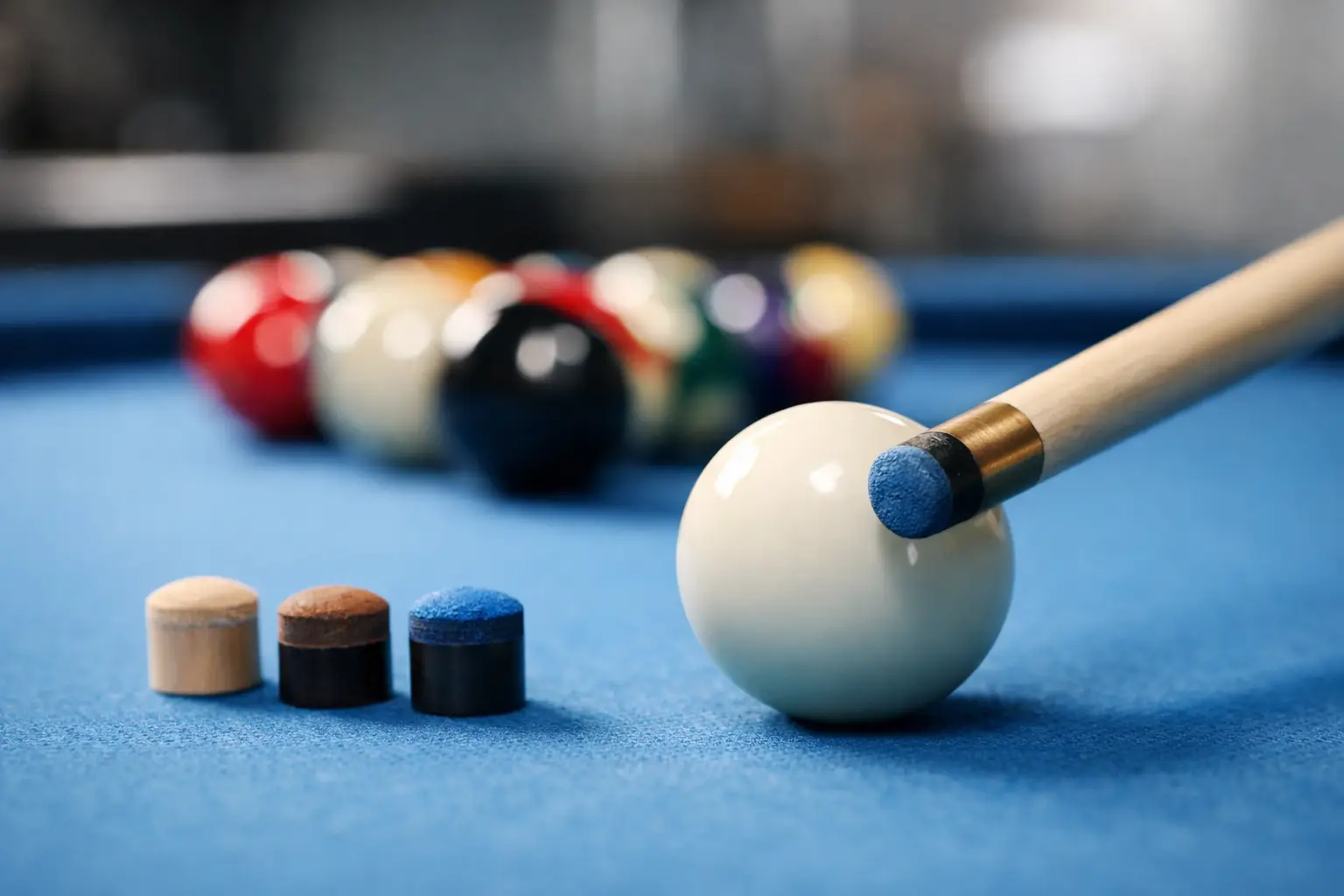
Miss a key shot by half a tip, and suddenly the cue tip is not a tiny detail anymore. It is the contact point that decides whether your draw bites, your break explodes, or your touch shot floats off line. If you are chasing the best pool cue tips, stop thinking in generic terms. The right tip is not just “good.” It matches your stroke speed, your shaft, your game, and the kind of pressure you actually play under.
For serious players, cue tips are performance parts. They shape feel, spin transfer, launch consistency, and how much trust you have when the match gets tight. A lot of players waste money chasing magic, when the real answer is fit. Hardness matters. Construction matters. Maintenance matters. And yes, your favorite tip on a bar box might feel wrong on a tight 9-foot table.
What makes the best pool cue tips actually better?
The best pool cue tips do three things at once. They hold chalk reliably, compress in a predictable way, and recover well enough to stay consistent over time. That sounds simple, but this is where cheap tips usually fall apart. They glaze too fast, mushroom too easily, or feel different from one session to the next.
A better tip gives you repeatable feedback. On soft speed shots, you feel the hit instead of guessing at it. On power shots, the tip stays stable instead of turning mushy or overly springy. That repeatability is what competitive players pay for. Not hype. Not branding. Results.
Construction plays a major role here. Single-layer tips often deliver a clean, natural hit and can feel great if you know exactly what you like. Layered tips are built for tighter consistency and often hold their shape better over time. Neither category wins automatically. A polished straight-stroke player may love the direct response of a quality single-layer tip. A player who wants controlled feedback across many shot speeds may lean layered.
Best pool cue tips by hardness
If you only change one variable, make it hardness. This is where most of the real performance difference shows up.
Soft tips
Soft tips grip the cue ball longer and generally make spin feel easier to access. If you play a finesse-heavy game with lots of side spin, soft draw, and touch-position routes, they can feel dangerous in a good way. The cue ball seems to stay on a string.
The trade-off is durability and stability. Soft tips can mushroom faster, require more maintenance, and feel less precise on hard hits. On breaks or firm power strokes, some players feel they lose definition at impact. If your stroke already has plenty of action, a soft tip can start to feel like too much of a good thing.
Medium tips
For most players, medium is the performance sweet spot. You still get strong chalk retention and spin access, but with more structure and cleaner feedback than a soft tip. That is why medium tips dominate among serious all-around players. They work for rotation, league play, and long sessions where you need one cue to handle everything from soft safeties to power draw.
If you are unsure where to start, start here. Medium tips are the least risky choice because they expose fewer weaknesses and create fewer surprises.
Hard tips
Hard tips are about speed, crispness, and control under force. They compress less, which often makes the hit feel faster and more direct. Many players love hard tips for break cues, and some use them on playing cues because they prefer a sharp, efficient transfer of energy.
The trade-off is feel on finesse shots. Hard tips can seem less forgiving if your touch game is inconsistent. They also demand better chalk habits, because if the surface gets slick, miscues become less theoretical and more immediate.
How your playing style changes the right answer
There is no universal champion because different players ask different things from their tip.
If you are a spin-heavy player, your best pool cue tips will usually land in the soft-to-medium range. You want grab, dwell, and confidence when moving the cue ball off center. If you are a straight-line shotmaker who values a firm hit and clean stop-shot response, medium-hard to hard may fit better.
Break and jump specialists are a separate conversation. For break cues, harder tips are usually the move because they maximize energy transfer and keep the hit explosive. Jump cues also tend to benefit from firmer tips because a fast, direct hit helps get the cue ball airborne with less wasted motion.
Table conditions matter too. On slick cloth and lively rails, a very soft tip can make the cue ball feel overactive. On slower cloth, that same tip can help you create the action you need without forcing the stroke. The tip that feels elite in one room may feel average in another.
Layered vs single-layer tip performance
This debate never really dies, and for good reason. Both options can play at a high level.
Layered tips are engineered for consistency. Because they are built from stacked leather layers, they tend to offer more predictable density and shape retention. That can be a major advantage if you practice hard and want the hit to stay stable through long use. They are often preferred by players who are dialed into feedback and want fewer surprises.
Single-layer tips are simpler and often more traditional in feel. Many players describe the hit as more natural or more connected. A great single-layer tip can be outstanding, but quality control matters more, and wear can vary from one tip to another. If you know the exact model and preparation you like, single-layer can still be a weapon.
For most performance-focused players, layered tips have the edge in consistency. That is not marketing fluff. It is about reducing variables.
Tip shape, maintenance, and why your “bad tip” might be a setup problem
A lot of tips get blamed for problems caused by neglect. Even premium tips play badly when they are glazed over, flattened out, or shaped wrong for the player using them.
A dime-radius shape usually helps players who like more spin access and a more precise contact feel. A nickel-radius shape can feel slightly more stable and forgiving to others. Neither is automatically better. It depends on your stroke and visual comfort at address.
Scuffing matters, but over-scuffing is a mistake. You want the surface to hold chalk, not to look like it lost a fight. Constant aggressive maintenance shortens tip life and can make performance less consistent. Light upkeep done on time beats heavy rescue work after the tip has already gone slick.
Installation matters just as much. A great tip installed poorly will hit badly, mushroom faster, and possibly delaminate. Serious players obsess over shaft specs and taper, then sometimes let a rushed tip install sabotage the entire setup. That makes no sense.
Choosing the best pool cue tips for your cue setup
Your shaft and cue build affect tip feel more than many players admit. A low-deflection carbon shaft paired with a hard tip can feel incredibly fast and efficient, but for some players it becomes too crisp. The same shaft with a medium tip may deliver a better balance of feedback and control.
Wood shafts often pair well across a wider hardness range because they already bring their own flex and feel into the hit. Carbon setups tend to expose tip differences more clearly. That is not a flaw. It is just a more revealing platform.
If your current setup feels dead, disconnected, or too pingy, do not rush to replace the whole cue. The tip may be the faster fix. Changing hardness can completely alter how the cue talks back to your hand.
So what should most serious players buy?
If you want the safest high-performance answer, choose a premium medium layered tip for your playing cue and a hard tip for your break cue. That setup covers the broadest range of conditions and shot demands without forcing major compromise. It gives you spin, feedback, and shape retention on the playing cue, then pure transfer and authority on the break.
If your game is built on touch and spin artistry, move softer. If you attack the table with a firmer stroke and prioritize crisp response, move harder. The right choice is the one that makes your cue ball behavior more predictable, not more exciting for two practice sessions.
The strongest players do not buy cue tips based on internet mythology. They match the tip to the mission. That is the real edge. One smart change at the point of contact can transform the entire cue, and when every shot starts there, that is not a small upgrade. That is where the takeover begins.