

Blog
Pool Cues That Actually Change Your Game

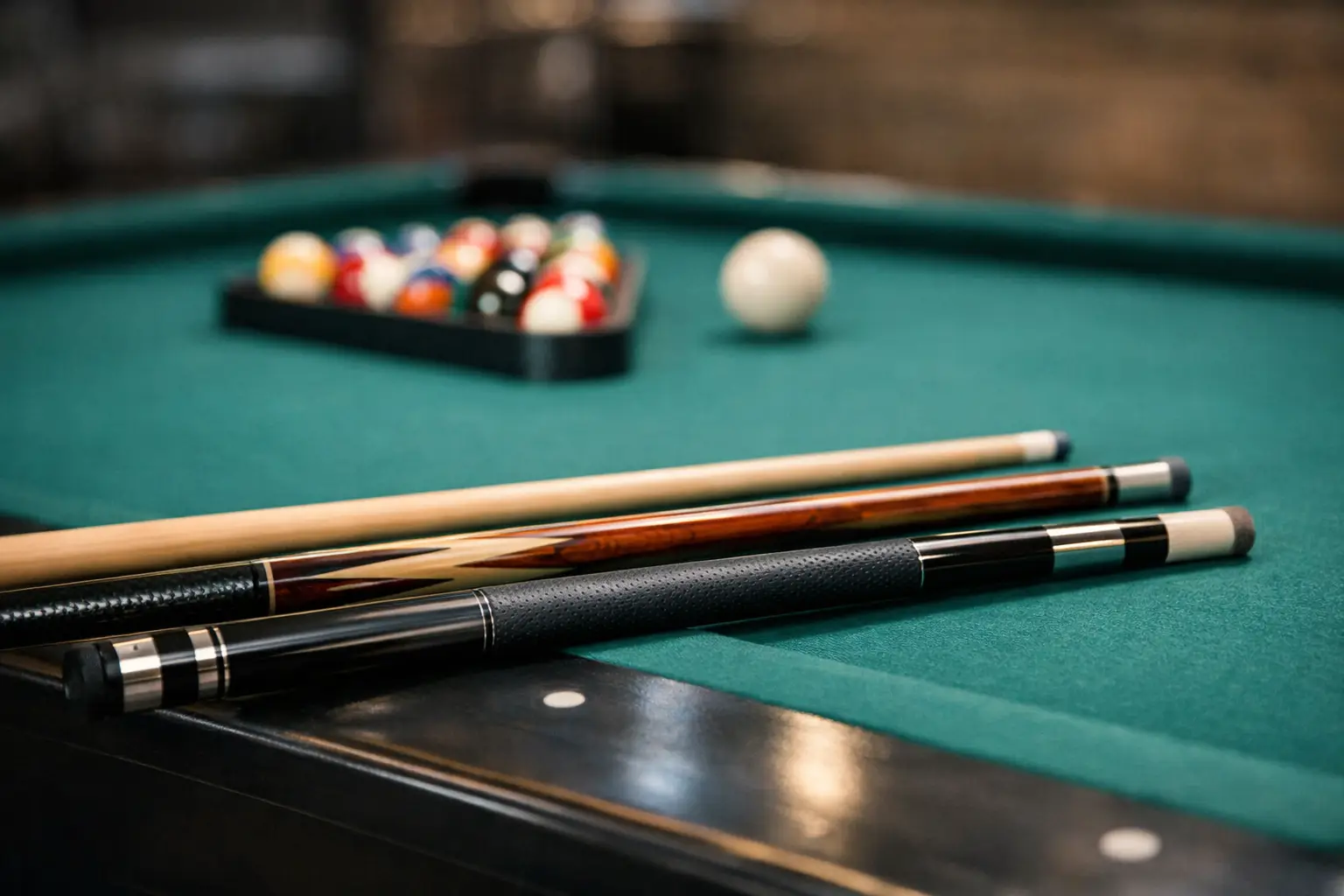
You can spot a serious player before the first rack is over. Not by the stance alone, and not by the stroke alone. It shows up in the equipment choices – especially the pool cues they trust when the pressure climbs and the table gets tight. A real performance cue does more than look clean in a case. It has to transfer energy with authority, stay stable through the shot, and give your hand the same answer every time.
That is where a lot of players get stuck. The market is crowded with cues that promise feel, balance, and precision, but too many of them are built around tradition first and measurable performance second. If you care about consistency, deflection, power delivery, and long-session comfort, the right cue is not a cosmetic decision. It is a competitive one.
What separates high-performance pool cues
The biggest difference between average and high-performance pool cues is not one feature. It is how the entire cue works as a system. Shaft material, taper, tip hardness, butt construction, joint style, weight distribution, and extension options all affect the hit.
Players often start by talking about feel because that is the language pool has always used. Feel matters, but it can also hide what is really happening. A cue that feels soft may be bleeding energy. A cue that feels stiff may actually be giving you better cue ball clarity. The better question is simple – does the cue help you repeat the shot with less guesswork?
That is why modern performance cues have shifted toward engineered consistency. Carbon shafts, precision joints, adjustable weight systems, and more stable butt designs are not gimmicks when they are done right. They reduce unwanted variation. And in cue sports, variation is the enemy.
Why shaft technology changes everything
If there is one part of pool cues that most directly changes play, it is the shaft. This is where deflection, stiffness, spin response, and bridge-hand smoothness come to life.
Traditional maple shafts still have loyal players, and for some stroke styles they can offer a familiar hit that feels more natural. But they are also more vulnerable to climate changes, warping, and subtle inconsistency over time. That may not matter to a casual player knocking balls around on weekends. It matters a lot if you are training seriously, competing, or simply expecting the same response every session.
Carbon shafts changed the conversation because they solve several old problems at once. They are more resistant to environmental shifts, they stay slick through the bridge with less maintenance, and they can be engineered for more controlled stiffness and lower deflection. That does not mean every carbon shaft plays the same. Some are too harsh. Some feel hollow. Some are built more for marketing than performance. But when the construction is dialed in, carbon gives you a cleaner signal through contact.
That cleaner signal matters on touch shots just as much as power shots. A lot of players think shaft tech is mainly about breaking or heavy spin. It is not. It is about confidence on the thin cut, the slow drag draw, the inside english shot where cue ball reaction has to be exact.
Low deflection is not magic
Low-deflection design helps reduce cue ball squirt when you apply side spin, but it does not remove the need for skill. You still need a sound stroke and proper aim compensation. What it does give you is a more predictable platform. For advanced players, that means fewer corrections under pressure. For improving players, it can shorten the learning curve.
There is a trade-off, though. Some players raised on classic maple setups need an adjustment period. The cue ball may react more directly than expected, and that can expose stroke flaws fast. That is not a bad thing. It is feedback.
The butt matters more than people admit
A lot of cue talk gets trapped in shaft discussions, but the butt section plays a major role in overall balance, energy transfer, and comfort. On cheaper cues, the butt is often treated like decoration wrapped around weight bolts. On serious equipment, it is part of the performance architecture.
Balance point changes how the cue moves through your stroke. A more forward-balanced cue can feel cleaner for some players, especially on longer shots where cue delivery needs to stay on line. A more rear-weighted setup may suit players who like a different tempo or stronger sense of grip-end control. Neither is universally better. It depends on mechanics, timing, and preference.
Customization is where modern cue design starts separating itself from old fixed setups. Changeable weights, extension compatibility, multiple joint choices, and advanced butt geometry give players more control over how the cue behaves. That is not about collecting features for bragging rights. It is about tuning the cue to your game instead of adapting your game to a generic build.
Pool cues and tip selection
The tip is the last thing touching the cue ball, so yes, it matters. A lot. But players also overestimate what a tip can fix. A new tip cannot rescue a poor shaft, unstable construction, or bad fundamentals.
Still, the right tip changes the hit in ways you feel immediately. Softer tips tend to grip the cue ball well and can feel more forgiving on spin shots, but they usually require more maintenance and can mushroom faster. Harder tips tend to offer a crisper hit, more direct energy transfer, and better shape retention, but some players find them less forgiving on finesse shots.
For aggressive players who want a sharper response, a medium-hard to hard tip often makes sense. For players who prioritize touch and cue ball manipulation above all, medium or medium-soft can be the better lane. The key is matching the tip to both your stroke speed and your priorities. If you are trying to force a slow, feel-based game through a setup built for explosive power, the cue will always feel slightly out of phase.
What to look for when buying pool cues
If you are shopping seriously, ignore the flashy inlays for a minute. Start with performance fundamentals.
First, look at shaft material and engineering. Ask how stable it is, how it handles deflection, and whether it delivers the response you want under spin. Then examine the joint. Joint design affects hit character, feedback, and long-term reliability. After that, focus on balance and weight adjustability. A cue that is close but not dialed in can still leave shots on the table.
You should also think about maintenance and playing conditions. If you travel, compete in different rooms, or deal with humidity swings, material stability becomes a bigger priority. If you mostly play league in one familiar room, you may tolerate more variation for the sake of a traditional feel. Again, it depends.
A cue should also fit your ambitions. If you are building toward tournament play, buying a short-term cue just because it is cheaper often costs more later. You end up relearning timing, feel, and aim references when you upgrade. Serious players are usually better served by buying closer to their endgame setup now.
Do not confuse expensive with elite
Price alone does not make a cue dangerous. There are overpriced cues that lean hard on heritage and cosmetics while delivering very little technological advantage. There are also modern performance builds that punch far above their price because the money went into materials and engineering instead of ornament.
That is where challenger brands have started taking ground. Players want cues that look modern, play clean, and deliver professional-level features without luxury-brand inflation. ON CYBORG speaks directly to that lane with a performance-first mindset built around precision, carbon tech, and customization.
The wrong cue costs more than money
When players talk about a bad cue, they usually mention missed shots. That is only part of the damage. The wrong cue can train bad compensation habits. You start steering shots, overcorrecting for squirt, babying power, or changing stroke tempo to work around the equipment. Over time, those adjustments become part of your game.
That is why upgrading is not just about gaining power or looking sharper. It is about removing friction between what you intend and what the cue delivers. The best cues do not fight you. They amplify repeatability.
And repeatability is where matches are won. Not on the one hero shot everyone remembers, but on the fifth stop shot, the eighth controlled draw, the thin cut down the rail that has to fall exactly like it did in practice. Pool rewards players who can make the cue disappear and let execution take over.
The future of pool cues is already here
Cue design is moving in one direction – more precision, more stability, more tunability, and less tolerance for inconsistency. That does not erase tradition. There will always be players who love the hit of old-school maple and fixed-weight builds. But the center of performance has shifted.
Today’s serious player has better options. Carbon construction, advanced butt design, modular weighting, and cleaner material systems are not fringe concepts anymore. They are part of the new standard for players who expect gear to perform under pressure, not just look the part in a catalog.
If your current cue leaves you guessing, second-guessing, or adjusting more than you should, pay attention. The cue is talking. And the right answer is not another compromise. It is a setup built to hit harder, stay truer, and keep up with the player you are becoming.