

Blog
Pool Cue Customization Options That Matter

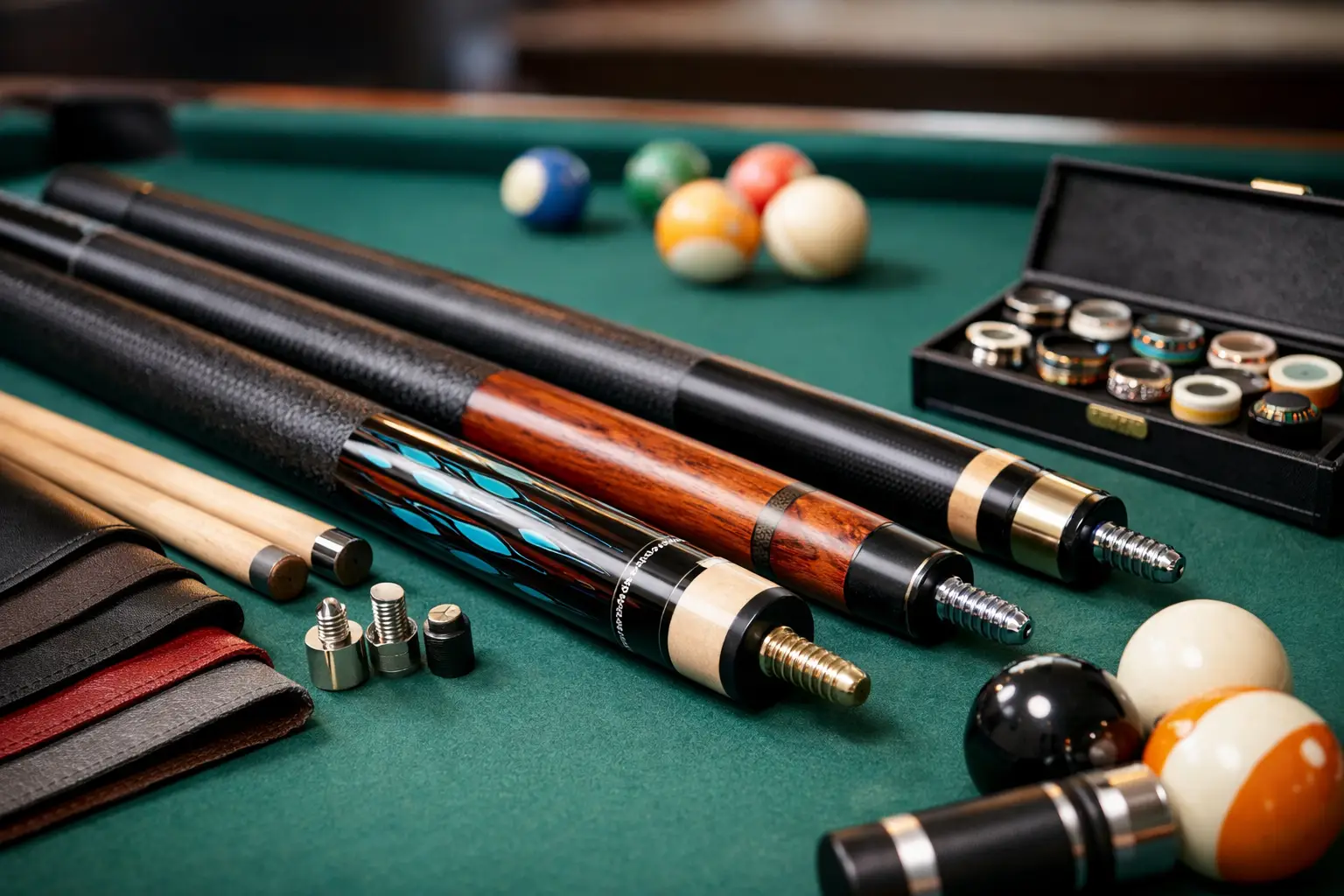
A cue can look deadly and still play wrong. You feel it on the first few racks – the hit is too stiff, the balance drifts, the grip fights your hand, or the tip never gives you the response you expect. That is why pool cue customization options are not cosmetic extras for serious players. They are performance decisions.
The right build turns a cue into a weapon that matches your stroke, tempo, and shot selection. The wrong build leaves power on the table and adds variables you do not need. If you care about consistency, customization is not hype. It is how you remove guesswork.
The pool cue customization options that change performance
Not every option carries the same weight. Some upgrades affect feel more than results, while others can completely change how a cue delivers energy through the ball. If you are building or refining a cue, start with the parts that directly influence deflection, feedback, balance, and control.
Shaft material and construction
This is where the personality of a cue begins. A traditional maple shaft can offer familiar feedback and a softer, more organic hit. Many players love that. But carbon fiber has changed the conversation because it is built for repeatability. It stays more consistent across humidity and temperature swings, resists warping, and often delivers a cleaner, more stable response.
For players chasing precision under pressure, carbon usually wins on consistency alone. It can also reduce maintenance and keep the shaft surface fast through long sessions. The trade-off is feel. Some players still prefer the more natural feedback of wood, especially if they grew up on it. There is no universal winner here. There is only the build that best serves your game.
Tip hardness and tip style
If the shaft is the engine, the tip is the contact patch. Tip hardness changes the way the cue transfers force and spin. Softer tips tend to grip the cue ball longer, which can help with feel and english. Harder tips usually hold shape better and can deliver a crisper, more direct hit.
That does not mean soft equals control and hard equals power in every case. Stroke mechanics matter. A player with a compact, repeatable stroke may love a harder tip because it gives a sharp, predictable response. A player who leans on touch shots and finesse may want more dwell and feel. Layered tips versus single-layer tips also change consistency, compression, and long-term shape retention.
A lot of players chase magic in the wrong place. The truth is simpler. Pick a tip that matches how you actually strike the cue ball, not how you wish you played on your best day.
Ferrule design and diameter
Shaft diameter changes aim perception, bridge comfort, and front-end mass. A slimmer shaft can feel more precise and easier to deliver through tight cueing, especially for players who use a lot of spin. A thicker shaft may feel more stable and familiar, especially on power shots.
Ferrule materials and size also influence hit characteristics. Some builds are engineered to keep front-end mass down, which can help reduce cue ball squirt. Others are tuned for a different feel at impact. These are smaller changes than tip or shaft material, but advanced players often notice them right away.
Butt design is not just about looks
A lot of cue buyers focus on the front end and forget the butt entirely. That is a mistake. Butt construction affects balance, comfort, and how confident the cue feels in motion.
Weight and balance point
A cue that is technically high-end can still feel wrong if the balance is off for your stroke. Some players want more forward balance for a connected, driving feel through the shot. Others prefer a more neutral or rear-weighted setup that feels quicker in the hand.
Changeable weight systems matter because they let you tune the cue instead of adapting your mechanics around a fixed build. This is especially useful if your game changes across disciplines, table speeds, or match conditions. Heavier is not automatically stronger, and lighter is not automatically more precise. What matters is whether the cue stays on line and returns the same feel shot after shot.
Grip options
Wrapless, linen, leather, rubberized textures – each one changes hand feel and confidence. Some players want direct connection with the butt so they can read every vibration. Others want a more secure surface that stays planted through pressure shots.
Climate and sweat matter more than most players admit. If your hand gets slick late in long sessions, grip material stops being a style choice and becomes a control feature. The cleanest answer is the one that lets your back hand stay relaxed while still feeling locked in.
Butt shape and contour
Subtle changes in butt diameter or contour can affect how naturally the cue settles into your grip. A more ergonomic or engineered butt design can reduce tension and help the cue sit the same way every time. That sounds minor until you are deep into a match and one extra bit of hand tension starts leaking into your delivery.
This is one area where modern design has pushed past old-school assumptions. Performance geometry is real. When the butt is shaped with purpose, comfort becomes repeatability.
Joint options and why they matter
Among all pool cue customization options, the joint is one of the most misunderstood. Players often reduce it to compatibility, but the joint plays a role in hit feel, energy transfer, and feedback.
A wood-to-wood style connection can feel more natural and unified. Metal-based joint systems can feel firmer and more defined. Pin type, joint face, and fit all contribute to how the cue comes alive in your hand. Some players want a solid, rigid strike. Others want a little more resonance and touch.
There is also the practical side. If you want flexibility to swap shafts or build around a future upgrade path, joint choice matters early. The smartest customization is not just about how the cue plays now. It is about whether the platform gives you room to evolve.
Extensions, accessories, and match-day adaptability
Customization should not stop at the basic cue build. Extensions, protective gear, and support accessories all change how the cue performs in real play.
A quality extension gives you reach without wrecking your mechanics. For players who hate the bridge or want more stability on long shots, that can be a major advantage. But extension weight and mounting style matter. A bad extension can make the cue feel clumsy fast.
Gloves are another point where ego gets in the way of performance. If your stroke gets cleaner and more repeatable with a glove, use one. The same goes for chalk systems that keep contact clean and reduce mess. Serious players know consistency is built from every point of contact, not just the cue itself.
Aesthetics still matter – just not first
Let us be honest. Appearance is part of the game. Visual identity matters, and a custom cue should look like it belongs in your case. Finish, color, ring work, inlays, and modern design details can make a cue feel personal and elite.
But appearance should follow function. The best-looking cue in the room is still a miss if the specs fight your stroke. Build the performance core first, then choose the visual package that fits your style. That is how serious players separate flex from execution.
How to choose the right pool cue customization options
Start with how you actually play. Not what looks advanced. Not what your favorite player uses. Not what sounds expensive.
If you want lower maintenance, weather resistance, and highly repeatable performance, a carbon shaft should be high on your list. If hit feel is your obsession and you love traditional feedback, wood may still be the better fit. If you struggle with cue ball control, look hard at tip hardness, shaft diameter, and front-end design before you obsess over decorative details.
If your cue feels unstable or awkward over long sessions, revisit butt balance, grip texture, and total weight. If you plan to upgrade later, make sure your joint choice does not box you in. And if you play multiple disciplines or varied table conditions, modular features like weight systems and extensions can give you a real competitive edge.
The strongest setup is not the one with the most options. It is the one where every option has a job.
That is the real standard for modern cue building. Precision over clutter. Engineering over superstition. If you are serious about performance, your cue should not be a random collection of parts. It should be tuned to your game like it was built for takeover.