

Blog
Carbon Fiber Pool Shaft Benefits That Matter

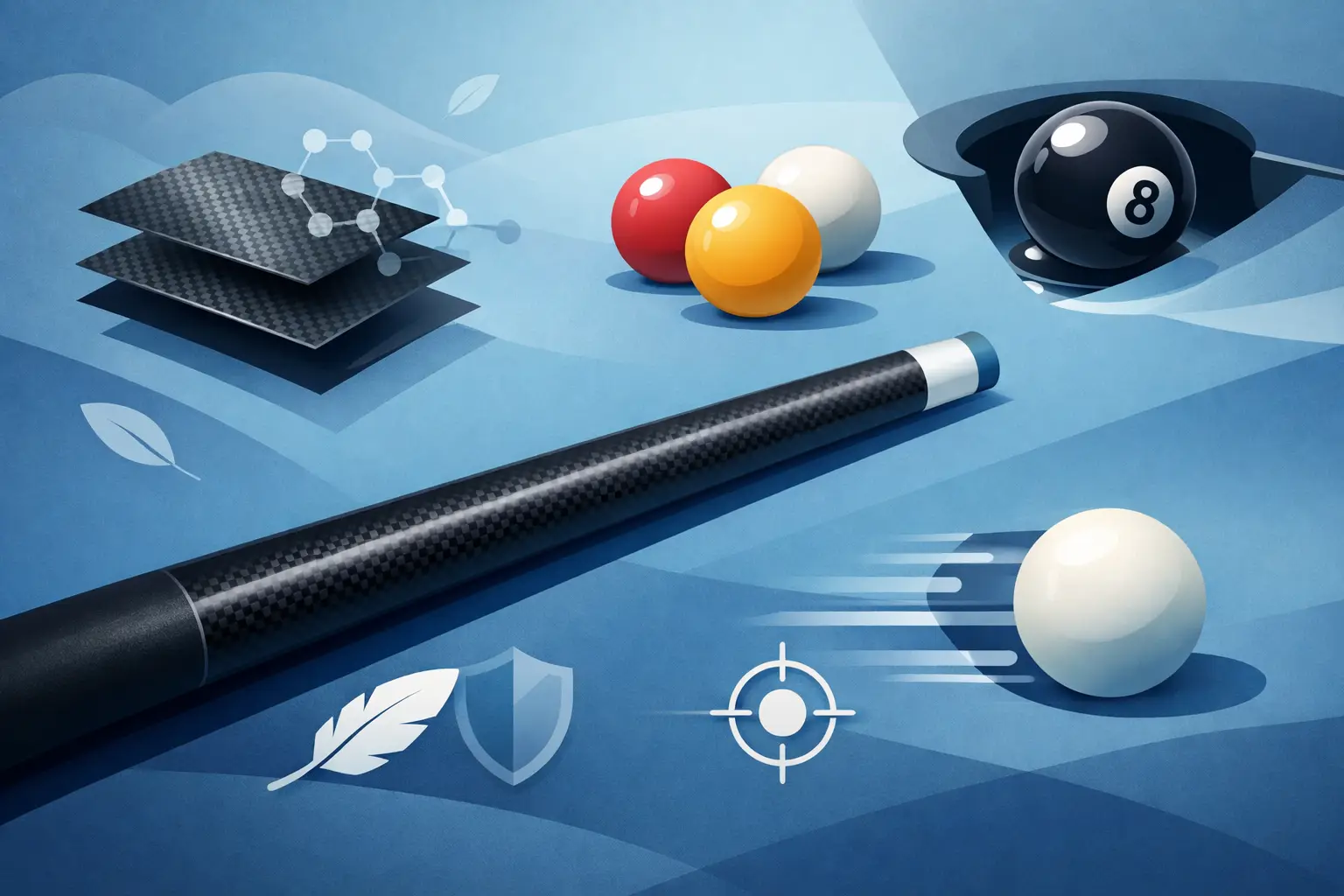
The miss that keeps showing up is usually not your stroke. It is the tiny inconsistency your shaft keeps feeding into the shot. That is where carbon fiber pool shaft benefits become real, not theoretical. When players switch from traditional wood to a well-built carbon shaft, they are usually chasing one thing – repeatable performance under pressure.
That is the whole point. Serious players do not need gear that looks advanced. They need gear that stays stable, hits clean, and keeps reacting the same way from rack one to the last pressure ball.
Why carbon fiber pool shaft benefits get so much attention
Carbon shafts earned their place because they attack the problems competitive players feel most: deflection, maintenance, weather sensitivity, and inconsistency over time. A good wood shaft can still play great. Plenty of strong players prove that every day. But wood is a natural material, and natural materials move, age, and react.
Carbon fiber is built for control. It is engineered, not hoped for. That gives manufacturers tighter tolerances and gives players a more predictable hit. If your game depends on exact cue ball paths, exact spin transfer, and exact speed control, that matters fast.
The biggest mistake is assuming every carbon shaft plays the same. It does not. Taper, front-end mass, wall construction, ferrule design, tip pairing, and joint fit still decide whether a shaft feels elite or just expensive. But when the build is right, the advantages are hard to ignore.
Carbon fiber pool shaft benefits on the table
The first major gain is consistency. Carbon does not react to humidity and temperature swings the way wood does. If you travel, play league in different rooms, or bounce between dry air and muggy air, this is not a small detail. A shaft that stays true lets your stroke stay honest.
The second gain is lower maintenance. Wood shafts need more care to stay smooth and clean. Carbon shafts are easier to wipe down and keep ready. That cleaner surface matters for bridge comfort and stroke confidence. Nothing kills feel faster than drag in your bridge hand.
Then there is deflection. Most players considering carbon are really asking one question: will cue ball compensation get easier? In many cases, yes. A strong low-deflection carbon shaft can help reduce the amount of adjustment needed when using side spin. That does not mean english becomes free. You still need touch and knowledge. But a more efficient shaft can make the cue ball path easier to trust.
Durability is another major edge. Carbon shafts are built to take serious use. They resist dents better than wood, and that matters if you actually play often instead of babying your cue in a case. For tournament players, league grinders, and dedicated room regulars, durability is not hype. It is value.
The real performance difference: cue ball control
This is where the takeover starts. Carbon is not just about surviving longer. It is about delivering a cleaner signal from stroke to cue ball.
With a quality carbon shaft, many players notice a crisper response. The hit often feels more direct and less muddy. That can translate into tighter speed control, more confidence on spin shots, and better feedback on contact quality. If you miss-hit, the shaft tends to tell you immediately.
That extra honesty can be a trade-off. Players who grew up on softer, more forgiving wood shafts sometimes describe carbon as too sharp at first. The feel can seem stiffer or more immediate, especially on touch shots. For some players, that learning curve lasts a few sessions. For others, it takes longer. The upside is that once you adapt, precision usually improves.
Draw shots and power spin are another area where carbon often shines. Because the shaft remains stable and efficient through acceleration, aggressive cueing can feel more controlled. You are not fighting the shaft. You are loading the cue ball and trusting the delivery.
Stability is a weapon, not a luxury
Pool is a game of tiny margins. A shaft that changes feel from one week to the next costs you more than money. It costs you decisions.
Wood can warp, swell, dry out, or simply feel different based on the room. Carbon fiber dramatically reduces those variables. That is one of the biggest carbon fiber pool shaft benefits for competitive players. The less your equipment drifts, the more your patterns, aim points, and spin references stay locked in.
This is especially valuable for players who train seriously. If you are building muscle memory, you need a platform that does not move under you. Repetition only pays off when your equipment keeps the deal.
For players in mixed climates, this advantage becomes even more obvious. One weekend you are in a cold event hall, the next in a humid pool room, the next on a long road trip. A shaft that stays stable is not just convenient. It protects your game from outside noise.
Cleaner, smoother, faster between shots
Not every benefit is dramatic. Some are practical, and practical wins matches.
Carbon shafts tend to stay smoother with less effort. Chalk dust, hand oils, and room grime are easier to manage. That means less time maintaining your gear and less irritation during long sessions. A slick, clean shaft helps your bridge stay consistent, especially under pressure when any resistance feels bigger than it is.
This is one reason so many players never go back after switching. The day-to-day experience is simply easier. Your gear feels ready when you pull it out. No sanding rituals. No constant worry. Just wipe it down and get to work.
For players who put in volume, that convenience becomes part of performance. A shaft you trust and enjoy using gets more table time. More table time means more improvement.
Is carbon fiber better for every player?
Not automatically. That is the honest answer.
If you love the classic feedback of wood and your current shaft matches your game perfectly, switching may not turn you into a different player overnight. Carbon is an advantage, not magic. Stroke quality still rules everything.
Budget matters too. A premium carbon shaft costs more upfront than many entry-level wood options. If you are brand new to the game, spending heavily before developing fundamentals may not be the smartest move. But for committed players, the long-term durability and consistency often make the investment easier to justify.
Feel preference also matters. Some carbon shafts are very stiff and highly responsive. Others are tuned to feel closer to wood. That is why construction details matter so much. The right shaft is not just carbon. It is carbon built for the kind of hit you want.
What serious players should look for
If you are shopping based on performance, ignore empty hype and study the build. Front-end design affects deflection. Taper influences comfort and stroke timing. Tip diameter changes precision and forgiveness. Joint compatibility decides how the shaft integrates with your butt. Tip and ferrule setup shape feel more than many players expect.
A good carbon shaft should not only be strong. It should feel balanced, transmit feedback clearly, and stay predictable across soft touch shots and power shots alike. That is the sweet spot.
This is where specialized brands stand apart. The best performance-driven makers are not selling carbon because it sounds futuristic. They are engineering for response, control, and repeatability. That is the difference between a trend product and real competitive equipment. Brands like ON CYBORG lean into that performance-first mindset because serious players are not shopping for nostalgia. They are shopping for an edge.
The biggest benefit is confidence you can verify
The strongest equipment upgrades do not just look good in the case. They show up in your decisions. You aim cleaner. You commit faster. You trust your spin. You stop second-guessing whether the shaft or the room changed on you.
That is the real power behind carbon fiber pool shaft benefits. Less maintenance. More durability. Better stability. Cleaner action through the bridge. Often lower deflection. And, for the right player, a more modern transfer of intent from hand to cue ball.
No shaft fixes a bad stroke. But the right shaft removes excuses, removes variables, and gives your game a more advanced platform to grow on. If you are serious about precision, consistency, and pressure-proof performance, carbon is not a gimmick. It is a shift in what your gear can deliver.
The future of cue performance is not about tradition versus technology. It is about choosing the setup that keeps showing up when the match gets tight.