

Blog
Soft vs Hard Cue Tips: Which Wins?

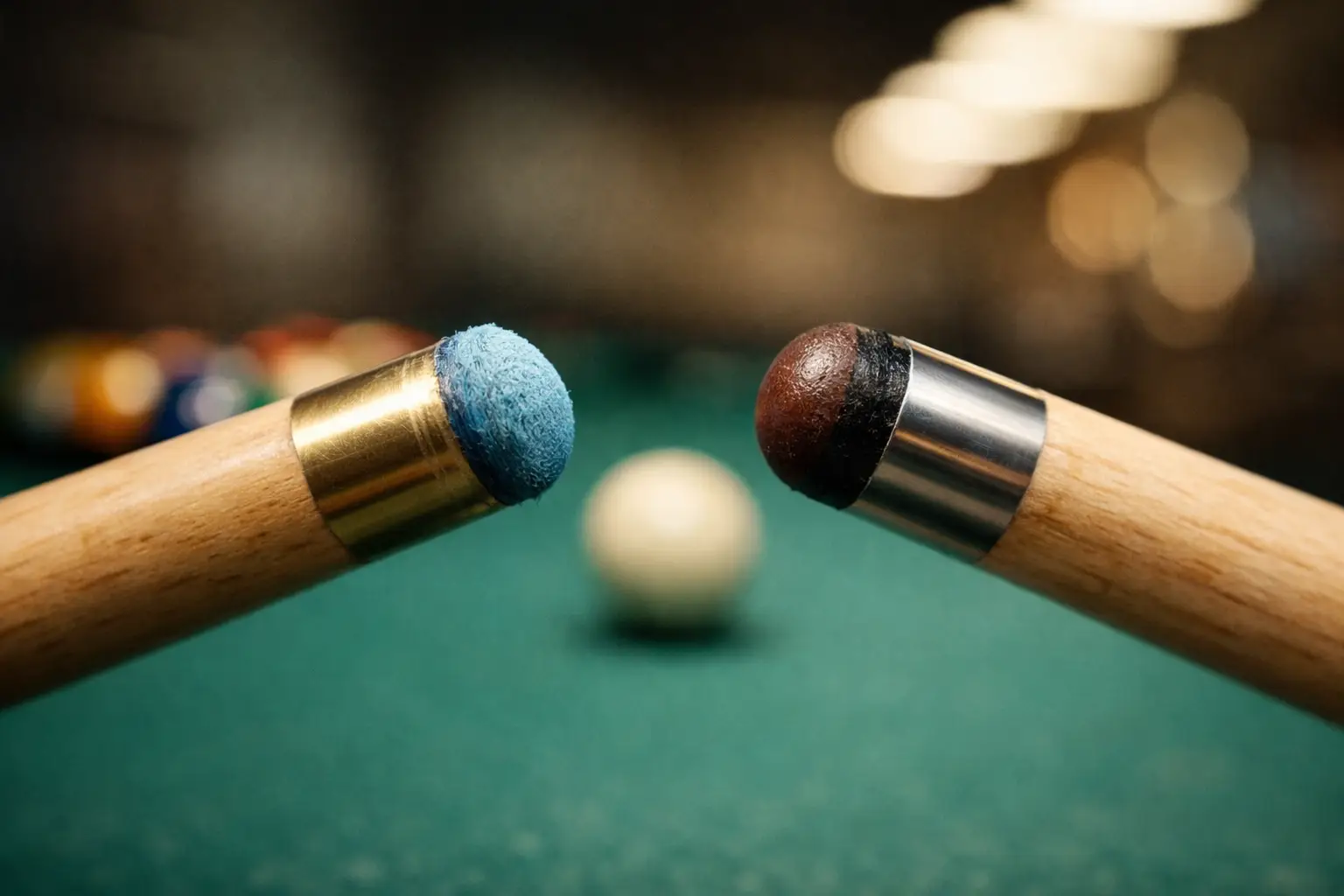
Miss one touch shot with the wrong tip and the whole rack feels off. That is why soft vs hard cue tips is not some minor gear debate. It is a performance decision that changes feedback, spin transfer, maintenance, and how your cue responds when the pressure is on.
Serious players feel this immediately. One tip gives you a cushioned, grippy hit that makes finesse shots feel loaded with control. Another gives you a firmer, faster response that keeps the strike clean and direct. Neither is automatically better. The real question is what kind of hit helps you deliver your best stroke more often.
Soft vs Hard Cue Tips: What Actually Changes
The biggest difference is compression. A soft tip compresses more at impact, while a hard tip compresses less. That single detail affects almost everything you feel through the cue.
With a soft tip, contact can feel slightly muted and more elastic. Many players describe it as a fuller hit with easier access to spin, especially on touch shots and cue ball manipulation. The trade-off is that soft tips tend to mushroom faster, wear down sooner, and demand more maintenance to keep their shape and surface consistent.
A hard tip feels sharper and more immediate. Energy transfer is more direct, which many players like for power shots, break-like firmness, and a cleaner, more precise response. The trade-off is that hard tips can feel less forgiving if your stroke is inconsistent, and some players struggle to generate the same confidence on extreme English unless their technique is dialed in.
This is where equipment stops being theory. The tip is the final contact point between your intent and the cue ball. If that interface does not match your stroke, the rest of your setup has to work harder.
Who Usually Plays Better With Soft Cue Tips
Soft tips often suit players who prioritize cue ball movement, finesse, and touch. If your game is built on spin-heavy position routes, slow-roll precision, and delicate speed control, a softer tip can feel like it gives you a wider operating window.
That does not mean it creates magic spin on its own. Good mechanics still rule. But a soft tip can make spin feel easier to access because the hit feels more adhesive and the feedback more padded. For players who like to feel the cue ball stay on the tip for a fraction longer, that sensation inspires confidence.
Soft tips also appeal to players who prefer a quieter, less harsh impact. On tight, tactical racks where speed control matters more than raw punch, that softer response can be a major advantage. Many rotation players and touch-oriented shotmakers lean this way for exactly that reason.
The downside shows up over time. Soft tips glaze less but deform more. If you do not stay on top of shaping and scuffing, performance drops. For players who want low-maintenance gear, that can become annoying fast.
Where soft tips can frustrate you
If you hit firm often, break harder than average with your playing cue, or simply like a crisp strike, a soft tip can start to feel too spongy. Some players also feel that very soft tips become inconsistent as they age, especially if humidity or heavy play changes the surface and edge profile.
Who Usually Plays Better With Hard Cue Tips
Hard tips are built for players who want speed off the cue, a more defined hit, and less shape change over time. If your stroke is compact, repeatable, and confident, a hard tip can feel brutally efficient.
This is why many advanced players like harder tips for long-term consistency. They hold their shape better, require less frequent maintenance, and usually deliver a more stable response over a longer lifespan. If you hate babysitting your equipment, that matters.
Hard tips also shine for players who prefer center-ball or near-center-ball precision over exaggerated spin. On straight shots, punchy draw, and power control, a firmer tip can feel cleaner and more exact. You get less cushioning and more truth. If your stroke is good, that is a weapon.
The catch is simple. A hard tip tends to expose flaws. If your contact point wanders or your delivery gets jabby under pressure, the hit can feel unforgiving. Some players interpret that as less control, when it is really less masking.
Where hard tips can frustrate you
If your game lives on feel and touch, a hard tip may seem too rigid. Some players do not like the acoustic feedback or the reduced sense of grip on finesse spin shots. Others simply never bond with the hit, even if the results on paper are solid.
Soft vs Hard Cue Tips for Spin, Power, and Control
This is where the debate gets heated, and where oversimplified advice usually falls apart.
For spin, soft tips often feel better. That is not the same as saying they always generate more spin in a measurable way. The bigger difference is confidence. A lot of players trust a softer hit when they need to move the cue ball around traffic or load up side spin at controlled speed. That trust changes execution.
For power, hard tips usually have the edge in feel. The strike is faster, firmer, and more efficient to players who want a direct response. You feel less absorbed energy and more immediate transfer. On force-follow, power draw, and aggressive shotmaking, that can be exactly what you want.
For control, it depends on what control means to you. If control means touch, spin feel, and speed modulation, soft can win. If control means repeatability, shape retention, and a crisp, predictable hit over time, hard can win. The better choice is the one that supports your version of control under match pressure.
Medium Tips Exist for a Reason
A lot of players land in the middle because extremes are not always necessary. Medium and medium-hard tips exist for one reason: balance.
They can offer some of the feel and spin confidence of a softer tip without the same maintenance burden. At the same time, they can deliver more stability and shape retention than a soft tip without feeling as rigid as a hard one. For all-around players, that middle ground is often the smartest move.
If you are undecided, medium is not the safe choice because it is boring. It is the smart choice because it reveals what you actually want more of. From there, you can move softer or harder with a clearer sense of purpose.
How to Choose Between Soft vs Hard Cue Tips
Start with your stroke, not your wishlist. Players often buy tips for the game they imagine instead of the one they actually play.
If you are a touch-first player, like heavy cue ball action, and do not mind occasional maintenance, soft makes sense. If you value crisp response, durability, and a more exacting hit, hard is a serious option. If your game changes across disciplines or table conditions, medium may be the most efficient answer.
Also consider your shaft, taper, and cue construction. A stiffer carbon shaft paired with a very hard tip creates a much different feel than a more flexible setup with a medium or soft tip. The total system matters. Tip choice does not live in isolation.
Table speed matters too. On slick, fast cloth, some players prefer a firmer response to keep the hit clean. On slower conditions, others want the added touch sensation of a softer tip. Climate, chalk habits, and shot selection all influence the result.
A simple way to test your fit
Do not judge a tip by one practice session. Give it enough table time to test soft draw, controlled follow, off-center hits, long straight shots, and pressure-speed shots. Pay attention to what your cue ball does, but also to what your stroke starts doing. The right tip often improves trust before it improves statistics.
The Real Answer on Soft vs Hard Cue Tips
There is no universal winner, only a better match. Soft tips favor feel, finesse, and spin confidence. Hard tips favor precision, durability, and direct energy transfer. Medium sits in the middle for players who want balance without sacrificing too much on either side.
The strongest setup is the one that turns your natural stroke into repeatable results. That is the whole game. A brand like ON CYBORG understands this better than most because high-performance gear is not about hype alone. It is about building a cue system that responds like a weapon when the match tightens.
Choose the tip that makes your stroke more certain, your misses easier to diagnose, and your best shots easier to repeat. When your gear stops fighting your game, the table gets a lot smaller.