

Blog
Cue Shaft Diameter Explained for Players

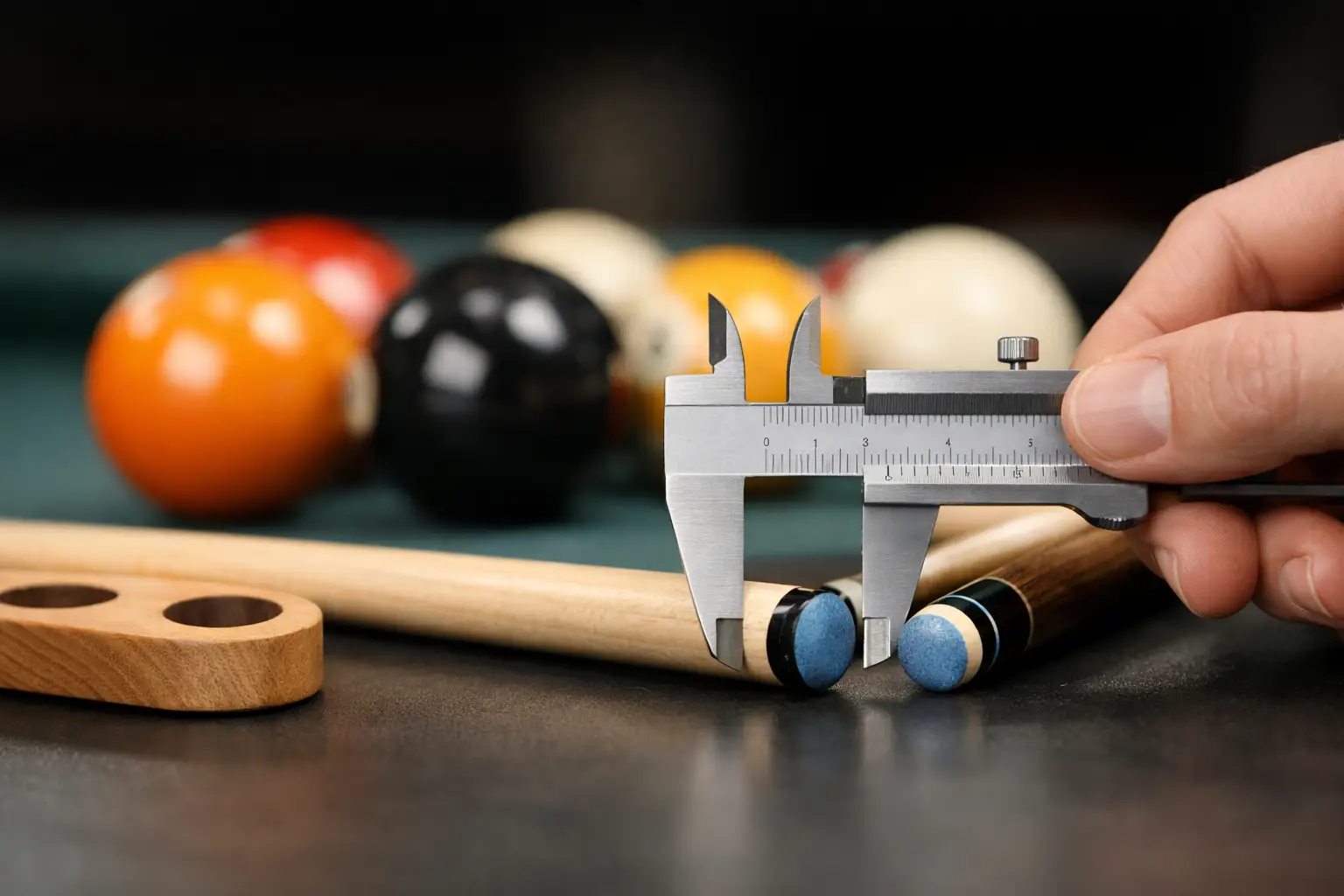
Miss a thin cut by a hair, over-spin a draw shot, or feel like your cue ball reaction changes from one shaft to the next, and one spec usually gets blamed fast – tip size. Cue shaft diameter explained in plain terms is really about how much front-end mass, feel, feedback, and forgiveness you want at impact.
That number on the spec sheet is not decoration. It changes how the cue looks down the line, how confidently you address the cue ball, how easy it is to apply side spin, and how stable the shaft feels when you hit with speed. For serious players, diameter is not a minor preference. It is a performance setting.
Cue shaft diameter explained: what the number actually means
When players talk about shaft diameter, they usually mean the diameter of the shaft at the tip end, measured in millimeters. Common pool shaft diameters run from about 10.5 mm up to 13 mm, with a few specialty options outside that range. Carom and other cue sports can live in different ranges, but the principle stays the same.
A smaller diameter gives you a slimmer front end. A larger diameter gives you a thicker one. Sounds simple. The real story is in what that thickness changes.
Smaller diameters often feel more precise and more surgical. Many players like them for spin-heavy games because the smaller visual profile can make it easier to see exact cue ball contact. Larger diameters tend to feel more solid and stable, especially on firmer shots. They usually inspire confidence for players who want a bigger visual picture at address and a little more built-in forgiveness.
Diameter alone does not control everything, of course. Taper, construction, ferrule design, tip hardness, and shaft material all matter. A carbon shaft and a traditional maple shaft at the same diameter will not feel identical. But diameter is still one of the fastest ways to change the personality of a cue.
How cue shaft diameter changes performance
The biggest mistake players make is treating diameter like a comfort-only choice. It is comfort, yes. It is also cue ball behavior.
Smaller diameters
A shaft in the 10.5 mm to 11.8 mm range usually appeals to players chasing maximum touch and cue ball manipulation. The slimmer profile can help with sighting, especially on finesse shots and spin work. Many players report that a smaller shaft makes the cue ball feel easier to move around the table with less effort.
There is a trade-off. A smaller diameter can feel less forgiving if your stroke is loose or if you tend to hit off-center by accident. It can also feel less planted on power shots, depending on the shaft build. For some players, that extra responsiveness feels like freedom. For others, it feels nervous.
Mid-range diameters
The 11.75 mm to 12.4 mm zone is where many all-around players land. This range usually balances precision and stability well. You get enough slimness for accurate spin work, but enough body in the front end to keep the shaft from feeling too delicate.
If you play multiple disciplines, switch between control shots and power shots often, or just want one setup that does nearly everything well, this range makes a lot of sense. It is the performance middle ground, and middle ground is not a compromise when it wins matches.
Larger diameters
A shaft around 12.5 mm to 13 mm typically feels fuller, stronger, and more traditional. Many players like that thicker look because it settles the eye and gives the stroke a sense of authority. Break cues and some powerful playing setups often live in this territory for a reason.
The trade-off here is finesse. Larger diameters can feel less surgical for extreme spin players, and some players find them a little bulky when they are trying to feather the cue ball on touch shots. But if you value a strong hit, visual confidence, and a stable front end, bigger can be better.
Why diameter affects deflection and feel
This is where spec-sheet reading turns into real equipment knowledge. Shaft diameter influences front-end mass, and front-end mass plays into cue ball deflection. In simple terms, when you hit the cue ball off-center with English, the cue ball does not go exactly where the cue points. Some shafts resist that effect better than others.
A smaller diameter often means less material near the tip, which can help reduce deflection. That is one reason low-deflection players often lean smaller. But diameter is only one part of the equation. Internal construction matters a lot, especially in carbon shafts engineered for low deflection.
Feel is another battlefield. Smaller diameters tend to transmit a sharper, more immediate sense of contact. Larger diameters often feel denser and calmer. Neither is automatically superior. The right one is the one that turns your best stroke into repeatable results.
Choosing the right diameter for your game
The cleanest way to pick a shaft diameter is to stop asking what is best and start asking what kind of player you really are.
If you rely on touch, move the cue ball aggressively, and like a modern, highly responsive hit, you will probably prefer the smaller side. If your stroke is compact, accurate, and spin-focused, a slimmer shaft can feel like a weapon.
If you want balance, play varied patterns, or compete in different situations where no single shot type dominates, a mid-diameter shaft is usually the smartest call. It gives you offense and control without pushing too far in either direction.
If you prioritize stability, play with a more traditional visual preference, or hit a lot of firm stun and power shots, a larger diameter can fit your game better. It can also help newer competitive players who want a little more confidence in the picture they see over the cue ball.
Your bridge matters too. Players with a very closed, snug bridge sometimes love a slimmer shaft. Players who prefer a more open bridge or heavier stroke may like the extra substance of a larger diameter.
Cue shaft diameter explained for pool vs. carom
Pool players and carom players often need different things from a shaft. In pool, extreme cue ball movement, side spin, and varying shot speeds make diameter a major preference point. A lot of pool players spend time chasing the sweet spot between spin access and shot stability.
Carom players may look at diameter through a different lens because the demands of three-cushion and other carom disciplines change impact dynamics and control priorities. The best choice depends on stroke style, table conditions, and how direct or compact your delivery is. There is no universal champion spec across every cue sport.
That is why copying a pro’s diameter rarely works by itself. Their stroke mechanics, timing, and cue construction may be completely different from yours.
Common mistakes when selecting shaft diameter
The first mistake is choosing the smallest diameter available because it sounds more advanced. Slim does not automatically mean elite. If your fundamentals are still developing, too little forgiveness can expose every flaw.
The second mistake is judging diameter in isolation. A 12 mm carbon shaft can feel dramatically different from a 12 mm wood shaft. Taper and internal construction can change stiffness, hit, and feedback enough to make the same diameter play like a different category.
The third mistake is changing too many variables at once. If you switch diameter, tip hardness, shaft material, and cue weight all in one move, you will not know what actually helped or hurt your game.
The performance-first way to test diameter
If you can test different sizes, do it with a purpose. Hit stop shots, long straight-ins, soft spin shots, firm draw, and inside-English shots. Pay attention to two things: what the shaft makes possible, and what it makes repeatable.
That distinction matters. Plenty of shafts can produce one spectacular shot. The right diameter lets you produce your game on command.
For serious players, modern performance gear has raised the ceiling. Advanced carbon designs, precision tapers, and tighter manufacturing have made shaft diameter more meaningful, not less. ON CYBORG is part of that next wave – performance built for players who care about numbers because numbers become results.
A cue shaft should not fight your eye, your bridge, or your stroke. It should line up with how you attack the table. Smaller, mid, or larger – each diameter has a job. Pick the one that turns your intentions into clean action, because the best spec is the one you stop thinking about once the match starts.