

Blog
Billiard Gloves: Do You Really Need One?

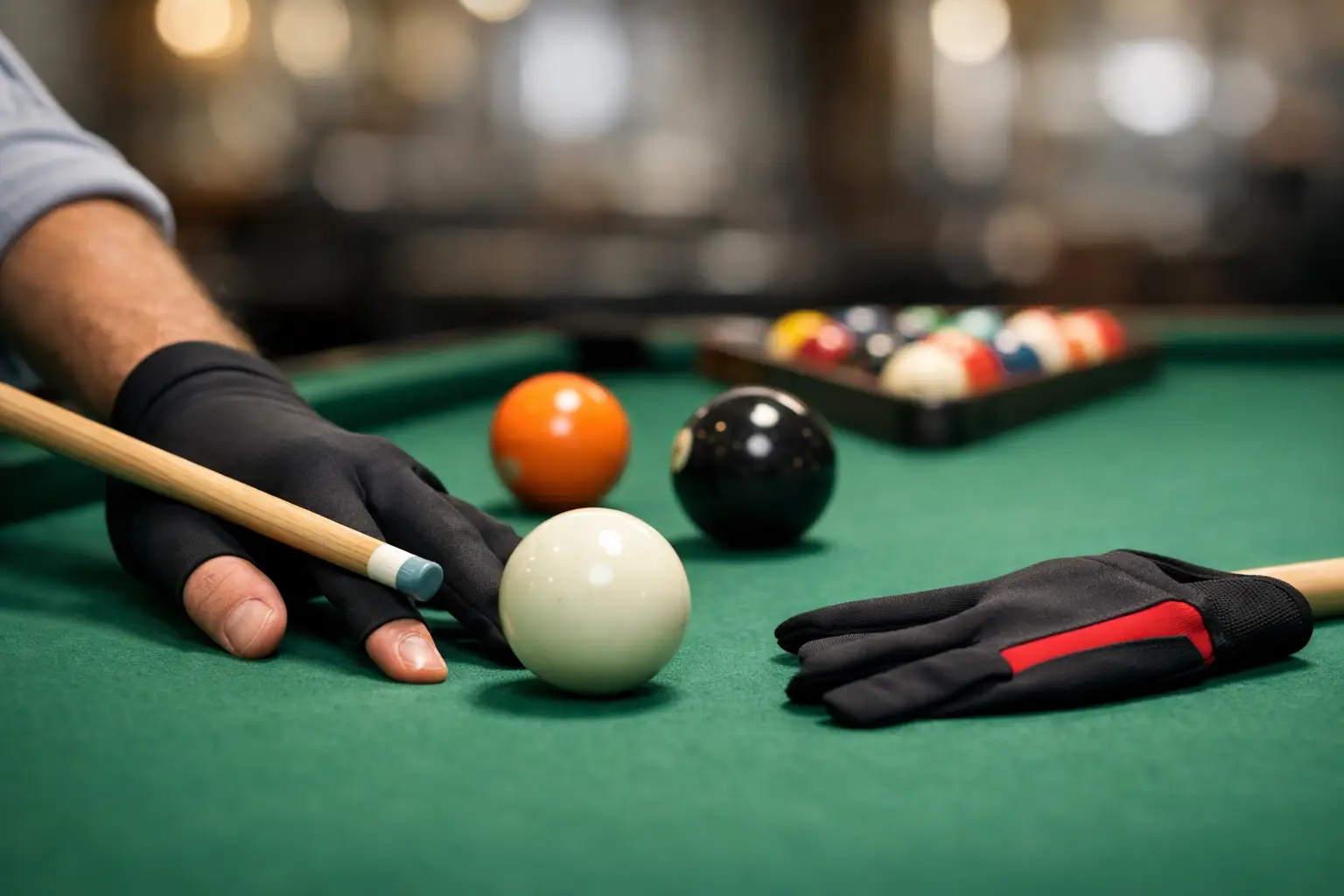
The miss usually starts before the tip ever reaches the cue ball. Your line is right, your speed feels right, but your bridge hand grabs the shaft for a split second and the stroke comes out dirty. That is exactly why billiard gloves exist. For serious players, they are not a fashion accessory. They are a low-cost performance upgrade that removes friction, protects consistency, and keeps your cue moving like it should.
A lot of players resist gloves because they think a clean hand and a little powder should be enough. Sometimes that is true. But if you play long sessions, compete in humid rooms, or switch between venues with different table conditions, your hand is one variable you should stop leaving to chance. Precision players do not build a setup around luck.
What billiard gloves actually do
At the simplest level, billiard gloves create a smoother, more predictable contact point between your bridge hand and the shaft. That matters because even tiny changes in friction can alter timing, cue delivery, and confidence. The better your mechanics, the more obvious that difference becomes.
A glove does three things at once. It reduces drag during the stroke, it keeps sweat and skin oil off the shaft, and it helps your bridge feel the same from shot one to shot two hundred. That last part is the real weapon. In cue sports, repeatability wins.
Players who use carbon shafts often notice this even more. Carbon already gives you a slicker, more stable feel than many traditional finishes, but it still has to pass through your bridge hand cleanly. If your hand gets damp or sticky, premium shaft technology can only do so much. The glove keeps the system fast.
Who benefits most from billiard gloves
Not every player needs one every time they play. That is the truth. But certain players gain an immediate edge.
If your hands sweat under pressure, you are a prime candidate. If you play in pool halls where humidity changes by the hour, a glove can save your stroke. If you play tournaments and your touch changes after a few racks, it can help even more. And if you are serious enough to care about cue shaft cleanliness, a glove reduces the constant buildup that forces extra wiping and maintenance.
There is also a skill-level factor. Newer players sometimes think gloves are only for pros. In reality, developing players can benefit because a glove removes one source of inconsistency while they build fundamentals. Advanced players benefit for a different reason – they can actually feel small disruptions, and they do not tolerate them.
The biggest winners are players with a long, fluid stroke. The longer the shaft travels across the bridge hand, the more friction matters. Short jabby strokes can hide that problem. Smooth players expose it immediately.
When a glove helps – and when it doesn’t
A glove is not magic. It will not fix poor alignment, a collapsing bridge, or a decelerating stroke. If your fundamentals are off, no accessory is going to rescue your game.
But when your mechanics are sound, a glove can remove noise from the system. It is especially useful in hot rooms, under tournament lights, during marathon practice sessions, and anytime your cue starts feeling slower than normal. It is also a smart move if you switch between pool and carom, where touch and cue travel need to stay ultra consistent.
There are players who genuinely do not need one every session. If you play in a dry climate, have naturally dry hands, and use a shaft finish that already glides well for you, bare-hand play may feel great. Some players simply prefer direct contact and never struggle with stickiness. That is a legit preference.
The real question is not whether every player must wear a glove. The question is whether you want your stroke dependent on room conditions. Most competitive players know the answer.
Fit changes everything
Bad gloves are worse than no glove. If the material bunches, shifts, or stretches too much across the fingers, you trade one problem for another. The whole point is stable, low-friction contact. Loose fabric kills that fast.
A proper billiard glove should fit like performance gear, not like a casual accessory. It needs to stay tight across the bridge fingers and back of the hand without cutting off movement. You want freedom in the wrist, secure contact in the fingers, and zero extra material catching during the stroke.
Seams matter too. Cheap construction creates pressure points and uneven glide. Better gloves keep the contact area clean and controlled, especially across the index finger and thumb channel where shaft movement is most exposed.
If you are between sizes, the smarter move is usually the tighter option unless the brand runs unusually small. Gloves loosen over time. A glove that starts slightly snug often becomes perfect after a few sessions.
Material matters more than most players think
Not all glove fabrics perform the same way. Some prioritize softness but wear out quickly. Some feel slick at first but lose their edge once they absorb sweat. Others are durable but too stiff, which makes your bridge feel mechanical instead of natural.
The best billiard gloves balance speed, breathability, and structure. You want material that keeps the shaft moving fast while still giving your hand enough control to build a confident bridge. If the glove feels slippery in a bad way, your hand can start feeling disconnected. If it grips too much, you are back where you started.
Breathability is huge for serious sessions. A glove that traps heat can become a problem after an hour, especially in competition. You want a fabric that stays light, dries quickly, and does not turn into dead weight under pressure.
Durability also matters if you practice a lot. Competitive players burn through weak gloves fast. The contact zones should hold shape, the stitching should stay clean, and the wrist closure should not quit halfway through the season.
Left hand, right hand, and bridge style
Most gloves are built for the bridge hand, not the grip hand. Right-handed players usually wear a glove on the left hand. Left-handed players usually wear it on the right. Sounds obvious, but players still order the wrong orientation all the time.
Your bridge style also affects what feels best. Open-bridge players often notice glove performance more because the shaft slides directly across the hand surface. Closed-bridge players still benefit, but the feel depends more on how tightly they lock the loop and how much cue travel they create.
If you switch bridge styles often, a glove with consistent finger tension becomes more important. The more variables you introduce into your stroke, the more you need your equipment to stay locked in.
Clean shaft, cleaner stroke
There is another reason high-level players wear gloves that has nothing to do with comfort. A glove helps keep the shaft cleaner. Sweat, natural oils, chalk dust, and room grime all collect faster than most players realize. Once that buildup starts, glide changes. Feel changes. Confidence follows.
This is especially relevant for players investing in advanced cue technology. A high-performance shaft should not be fighting contamination from your bridge hand all session. Gloves act like a barrier between your skin and the equipment, which means less maintenance and more stable performance over time.
For players who obsess over precision, that is not a small benefit. It is one more way to protect the cue’s intended feel.
Should you wear a billiard glove in competition?
If you practice with one, compete with one. That should be non-negotiable. Match play is the worst time to introduce friction variables or change how the cue moves through your bridge.
If you never practice with one, do not force it just because the stakes are high. A glove should feel like an extension of your game, not a panic move. Test it in training, use it in long sessions, and learn how it responds when your hand heats up. Then decide.
The strongest approach is simple: build a repeatable system and keep it intact under pressure. That is how serious players separate equipment confidence from guesswork.
A billiard glove is not about looking the part. It is about removing drag, protecting touch, and keeping your stroke in attack mode when conditions start fighting back. If your standard is cleaner movement and more consistent delivery, the answer is easy. Stop letting your bridge hand freelance.