

Blog
Cue Shaft Taper Guide for Serious Players

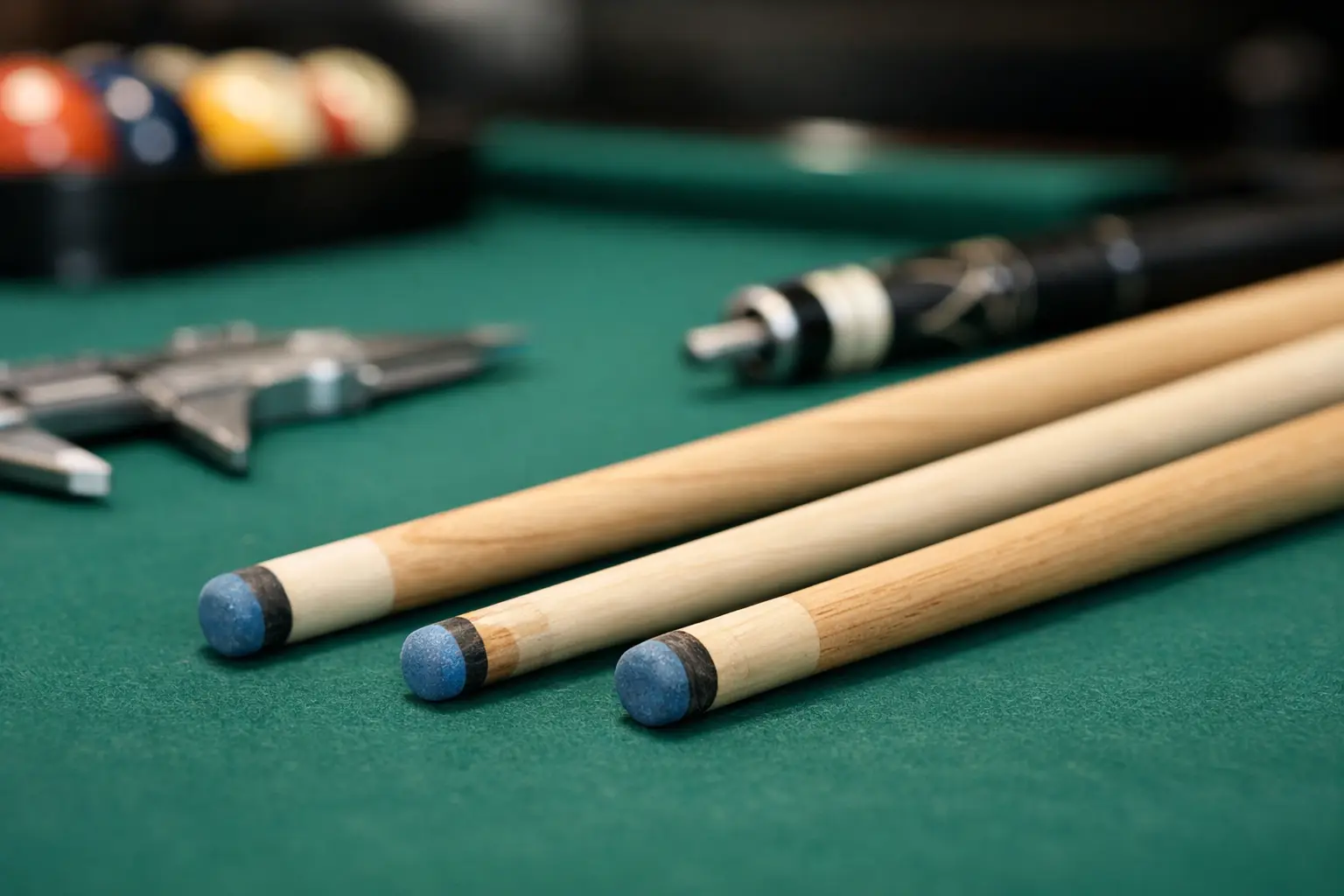
A cue can look perfect on the wall and still feel wrong the second you get down on a pressure shot. That usually comes back to one thing players ignore for too long – taper. This cue shaft taper guide is built for players who care about hit, feedback, bridge feel, and repeatable delivery, not just cosmetic specs.
Taper changes how the shaft moves through your bridge hand, how stable it feels under acceleration, and how much confidence you get when you need to send the cue ball exactly where your eyes called it. Tip diameter matters. Ferrule matters. Material matters. But taper is where a shaft starts feeling like a weapon instead of just another piece of gear.
What a cue shaft taper guide should actually explain
A lot of taper advice gets watered down into vague phrases like smooth stroke or better control. That does not help a serious player. A useful cue shaft taper guide should explain how the shaft diameter changes from the tip toward the joint, and why that shape affects your mechanics in real play.
Taper is not just a design detail. It determines how much of the shaft stays close to the tip diameter before widening, how the shaft sits in the bridge, and how the front end responds when you add speed or spin. Some tapers stay slimmer longer. Others build thickness faster. That difference changes the entire personality of the cue.
If you have ever picked up two shafts with the same tip size and still thought one felt faster, stiffer, cleaner, or more forgiving, taper is one of the first places to look.
The three taper families that matter
Most players will run into three general taper styles: pro taper, conical taper, and variations that land somewhere in between. Brands may use their own names, but the behavior usually fits one of these categories.
Pro taper
Pro taper is the familiar choice for many pool players. A longer section of the shaft remains close to the tip diameter before the shaft starts increasing more noticeably. In the bridge hand, that creates a smoother, more uniform feel. If you use a long bridge or move the cue through your hand with a lot of travel, pro taper often feels faster and less restrictive.
This style tends to suit players who want easy cueing, fluid stroke mechanics, and comfort on spin-heavy shots. It can also feel more natural for players coming from modern low-deflection pool shafts. The trade-off is that some players want a little more front-end firmness or a more locked-in feel under power. Pro taper can feel almost too slick if your preference leans toward rigid feedback.
Conical taper
Conical taper increases in diameter more steadily from the tip toward the joint. You feel more substance sooner. Many carom players know this profile well, and some pool players love it too, especially those who prefer a firmer, more direct response.
A conical shaft can feel more solid in the bridge and more structurally assertive on punchier strokes. It often appeals to players who want stronger feedback and less of that whippy sensation some softer-feeling shafts produce. The trade-off is comfort. If you are used to a long, loose bridge stroke, conical taper can feel thicker earlier and less forgiving in hand.
Hybrid or modified taper
This is where modern engineering gets interesting. Some shafts blend the smooth bridge travel of a pro taper with added reinforcement or a faster rise in diameter farther back. That can create a balance between mobility and firmness.
For advanced players, hybrid taper often makes the most sense because real-world performance is rarely about extremes. You may want the shaft to glide on finesse shots but still stay composed when you load up a draw stroke or power through a break-style hit in rotation. A smart hybrid design chases both.
How taper affects your game
Taper is not just feel for feel’s sake. It shows up in execution.
On touch shots, a slimmer-feeling front section can help the cue move more freely through the bridge. That matters when you are feathering the cue and trying to deliver with minimal tension. On power shots, a shaft with more immediate build in diameter can feel more stable and authoritative. That matters when speed starts exposing flaws in your mechanics.
Spin players should pay close attention here. If you live on side spin, draw, and power follow, taper influences whether the shaft feels predictable under load. Some players want a shaft that disappears in the hand. Others want one that reminds them exactly where it is at all times. Neither is automatically right. It depends on how you generate cue speed and how much feedback helps you stay accurate.
Bridge style also matters. Closed-bridge players often tolerate or even prefer a slightly fuller feel. Open-bridge players may be more sensitive to how quickly the shaft expands behind the tip area. If your shaft always feels like it starts dragging halfway through the stroke, your taper may be fighting your bridge.
Choosing the right cue shaft taper guide for your style
The fastest way to choose a taper is to stop thinking in labels and start thinking in stroke behavior.
If your game is built on long, fluid delivery and high cue-ball creativity, a pro-style taper usually gives you the cleanest runway. If your stroke is compact, punchy, and built around firm contact, a conical or stronger hybrid taper may feel more accurate. If you play multiple disciplines, or your shot speed changes a lot from one rack to the next, a balanced taper is often the smart move.
Your level matters too, but not in the way people assume. Beginners do not always need the most forgiving taper. Sometimes they need the taper that gives the clearest feedback, because feel teaches mechanics. More advanced players, meanwhile, may prefer a shaft that gets out of the way and lets trained habits do the work.
That is why there is no universal best taper. There is only the best taper for your delivery pattern, bridge length, preferred shot speed, and feedback preference.
Carbon shafts changed the taper conversation
With traditional wood shafts, taper and material feel were often tangled together. With carbon fiber, designers have more control over stiffness, consistency, and front-end behavior. That means taper choice becomes even more intentional.
A well-engineered carbon shaft can hold a very precise profile and repeat that profile shot after shot, match after match. No seasonal swelling. No grain inconsistency changing the hand feel. You get cleaner data from your own stroke because the shaft stays true.
That is one reason serious players are moving harder toward advanced shaft construction. When the material is more stable, taper becomes a sharper performance tool, not a rough approximation. For a brand built around engineered precision like ON CYBORG, that is where the future gets aggressive – not just selling a shaft, but delivering a profile that performs exactly how it was designed to perform.
Common mistakes when judging taper
The biggest mistake is testing taper with a few warm-up strokes and calling it done. Taper shows itself over a session, not five seconds. It matters on soft cut shots, loaded draw, stun control, and pressure strokes when your grip tightens without permission.
Another mistake is confusing taper with tip size. A 12.5 mm shaft with one taper can feel dramatically different from a 12.5 mm shaft with another. Players chase diameter because it is easy to compare on paper, but taper is often the deeper reason one shaft feels alive and another feels off.
Players also ignore discipline-specific needs. A pool player focused on low-deflection performance may want one response profile, while a carom player may prioritize a very different type of stiffness and bridge interaction. If you switch games, your ideal taper may change with them.
What to test before you commit
When you evaluate a shaft, pay attention to where the cue starts feeling wider in your bridge hand. Notice whether the stroke stays free on long follow-through shots. Hit a few power draws and see if the front end feels planted or unstable. Then shoot soft spin shots and check whether the shaft still feels precise when you reduce speed.
The right taper should make your stroke feel more repeatable, not more dramatic. You should not need to fight it. You should not need to rethink your bridge every few shots. The shaft should support your mechanics and amplify your best patterns.
If a taper feels amazing on one shot type but keeps costing you on others, that is not elite fit. It is a mismatch with occasional highlights.
The real goal
Serious players spend hours chasing tip hardness, cue weight, balance point, and chalk quality, then treat taper like a background spec. That is a mistake. Taper shapes how the cue enters your process on every single shot.
The right profile can make your bridge calmer, your delivery cleaner, and your confidence stronger under pressure. Not because it is magic, but because it matches the machine behind the cue – you. Choose a taper that lets your stroke show up with authority, and the cue stops feeling like equipment. It starts feeling like intent.