

Blog
Best Cue Shaft for Low Deflection

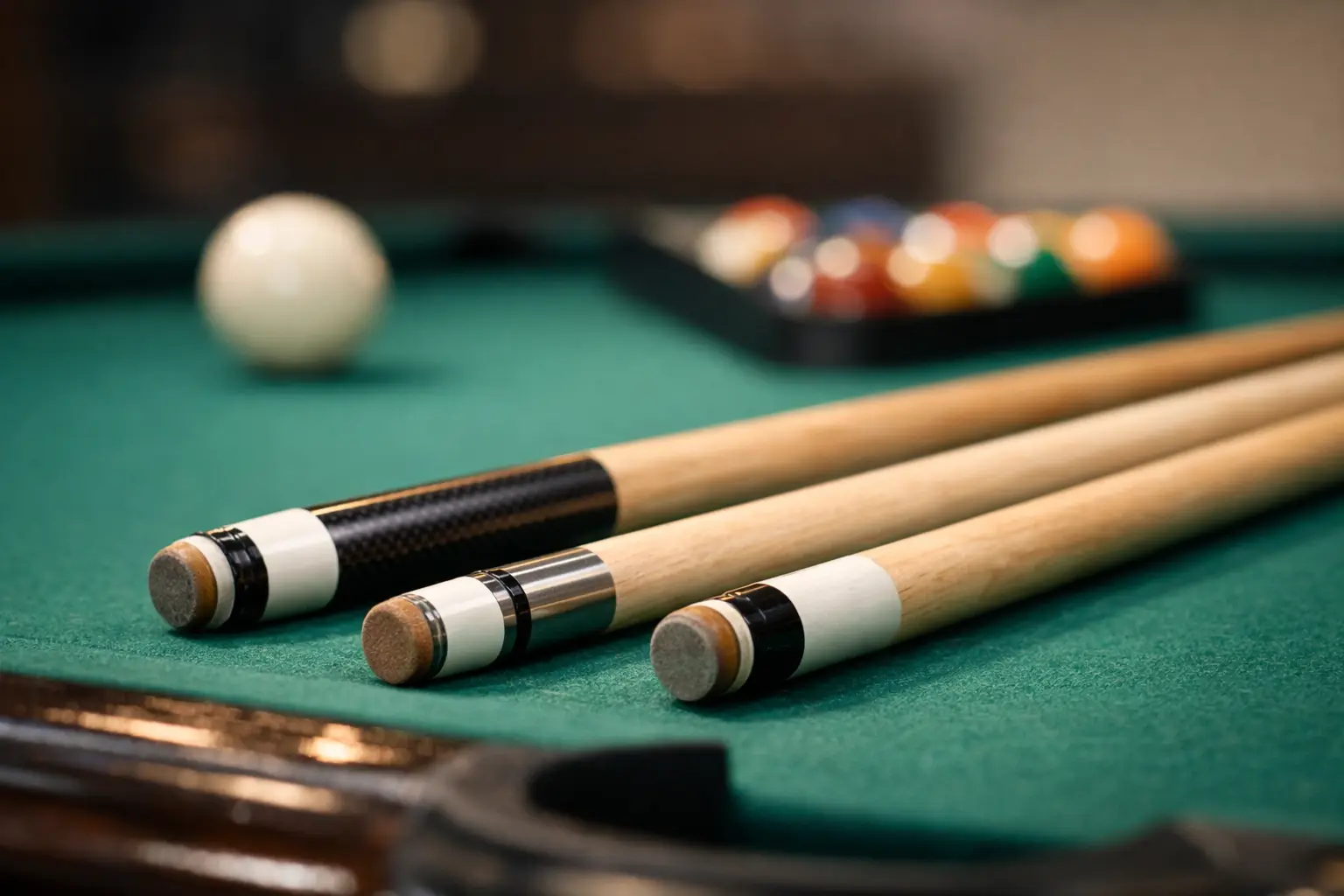
Miss a shot by half a diamond with outside english, and the truth hits fast – your stroke is not always the only thing moving the cue ball off line. If you are hunting for the best cue shaft for low deflection, you are really looking for one thing: a shaft that lets your aiming survive spin, pressure, and match speed.
That matters more than ever now because shaft technology is no longer small-step improvement. Modern low deflection shafts, especially carbon fiber builds, have changed what serious players can expect from consistency. But the right answer is not just “buy the stiffest shaft” or “buy carbon and call it a day.” The best choice depends on how you deliver the cue, how much spin you use, and how much feedback you want in your hands.
What makes the best cue shaft for low deflection?
Low deflection is about reducing cue ball squirt when you apply side spin. In plain language, the cue ball gets pushed off the natural line of aim at impact. A lower-deflection shaft reduces that sideways push, so compensation becomes smaller and more predictable.
That does not mean zero adjustment. Every shaft deflects to some degree. The real win is repeatability. If a shaft responds the same way every time, your brain builds trust faster, and your stroke can stay aggressive instead of defensive.
The best cue shaft for low deflection usually combines a few design traits. Front-end mass is kept down. The tip and ferrule area are engineered to be lighter and more efficient. Taper affects how the shaft moves through the bridge and how stable it feels under acceleration. Material choice also matters – maple and carbon do not transmit hit, vibration, or stiffness the same way.
Carbon vs wood for low deflection
This is where the market splits.
Traditional low deflection maple shafts still have fans for good reason. They often deliver a more organic feel, a little more audible feedback, and a hit many long-time players trust. If you came up on wood and care about touch shots, soft-speed cue ball movement, and classic response, a great maple shaft can still perform at a high level.
But carbon fiber has pushed the category forward hard. A premium carbon shaft is usually more stable across temperature and humidity changes, easier to keep clean, and more uniform from shot to shot. For competitive players, that consistency is not hype. It is an edge. The shaft stays true, the finish stays slick, and the hit profile tends to remain more predictable over time.
There is a trade-off. Some players find carbon too crisp or too rigid at first. Others love that exact feeling because it gives them a cleaner sense of precision. Neither side is wrong. If your game is built on spin control, punchy delivery, and a confident stroke under pressure, carbon is often the faster path to dependable low-deflection performance.
Why front-end design matters more than marketing
A lot of players shop by label, then by price, then by whatever pro is using. That is the slow way to buy a shaft.
The fast way is to look at front-end engineering. Lower front-end mass generally means less cue ball squirt. That is why ferrule design, tip pad structure, internal construction, and even wall thickness can matter so much. Two shafts can look similar on paper and feel completely different when you load them with side spin.
This is also why “low deflection” is not a single experience. One shaft may feel very stable on firm shots but less alive on finesse shots. Another might feel smoother through the bridge but produce a hit that takes a week to trust. The real test is how the shaft behaves on the shots you actually shoot – long cuts with left or right english, inside-spin position routes, and pressure shots where overcompensation kills the rack.
Shaft diameter changes the whole conversation
If you want the best cue shaft for low deflection, do not ignore diameter. Players love to argue material, but diameter changes aim comfort, spin access, and perceived accuracy fast.
A thinner shaft, such as 11.8 mm or 12.0 mm, can make it easier to visualize exact tip contact and apply spin with confidence. Many advanced players like the more surgical feel. It can feel faster, sharper, and more connected to cue ball manipulation.
A slightly thicker shaft, like 12.4 mm or 12.5 mm, often gives a fuller hit and a little more forgiveness in feel. For some players, that extra substance helps with stroke stability and confidence on power shots. If your mechanics are compact and direct, a thinner shaft may feel like a weapon. If your game leans on rhythm and strong timing, a mid-diameter shaft may perform better over a long session.
There is no universal winner here. The best diameter is the one that lets you find center cue ball and spin contact without tension creeping into your bridge hand.
Taper, stiffness, and feel under fire
Taper affects more than comfort. It changes how a shaft bends, how it recovers, and how it feels through your bridge on delivery.
A pro taper gives a longer straight section and often feels smoother for players who use a longer bridge. It can create a cleaner, freer stroke. A more conical or stiffer-feeling front end may offer a punchier, more direct hit that some players prefer for precision and power.
Stiffness is another area where players get trapped by extremes. Too soft, and the shaft can feel vague when you try to power spin the cue ball. Too stiff, and touch can feel overly sharp if you are not used to it. The sweet spot is a shaft that stays stable under acceleration but still gives enough feedback for speed control.
That balance is where engineered carbon shafts have become so dangerous to the old standard. The best ones do not just reduce deflection. They deliver a more controlled hit profile without the maintenance burden of wood.
Tip choice can make a great shaft feel average
Players will spend serious money on a shaft and then overlook the tip. That is a mistake.
A soft tip can increase dwell-feel and help some players feel more connected on spin shots, but it may mushroom faster and feel less precise on harder hits. A hard tip usually gives a crisper response and stronger energy transfer, but if it is too hard for your touch, it can make the shaft feel unforgiving.
Medium and medium-hard tips are the performance center for many players because they preserve feel without turning every hit into a guess. If you are testing shafts, keep the tip variable in mind. Sometimes what you think is shaft performance is really tip behavior.
Who should choose carbon immediately?
If you play in changing climates, practice often, hate shaft maintenance, or want modern consistency with serious low-deflection performance, carbon should be at the top of your list. It is especially strong for players who use side spin as a regular part of their pattern play, not just as a bailout option.
That is where a performance-first brand like ON CYBORG fits the current game. Serious players want advanced materials, sharp engineering, and gear that plays as hard as it looks. In the low-deflection category, that mindset is not cosmetic. It is practical.
How to tell if a shaft is actually right for your game
Forget one rack. Test the shaft on the shots that expose truth.
Hit long straight-ins with outside english and watch how much compensation you need. Play thin cuts with inside spin and track whether your misses are consistent. Shoot soft stun and drag shots to judge touch. Then fire power draw and firm follow to see whether the shaft stays composed or starts feeling disconnected.
Also pay attention to adaptation time. A great shaft does not need to feel familiar in five minutes, but it should start making sense quickly. If your results tighten up after a short adjustment period, that is a strong sign. If every shot feels like negotiation, it probably is not your match.
The real answer to “best cue shaft for low deflection”
The best cue shaft for low deflection is the one that reduces cue ball squirt without stripping away your confidence, touch, or timing. For many modern players, that points straight to carbon fiber. The category has become the high-performance standard because it delivers cleaner consistency, lower maintenance, and a hit built for aggressive precision.
Still, the right shaft is not won by trend alone. You need the right diameter, the right taper, and a feel profile that matches your stroke. Low deflection is not just about less movement. It is about more control when the rack gets tight and the pressure spikes.
Choose the shaft that lets you aim boldly, spin freely, and trust the result. That is when your equipment stops holding the game back and starts helping you take it over.