

Blog
Premium Billiard Accessories That Change Play

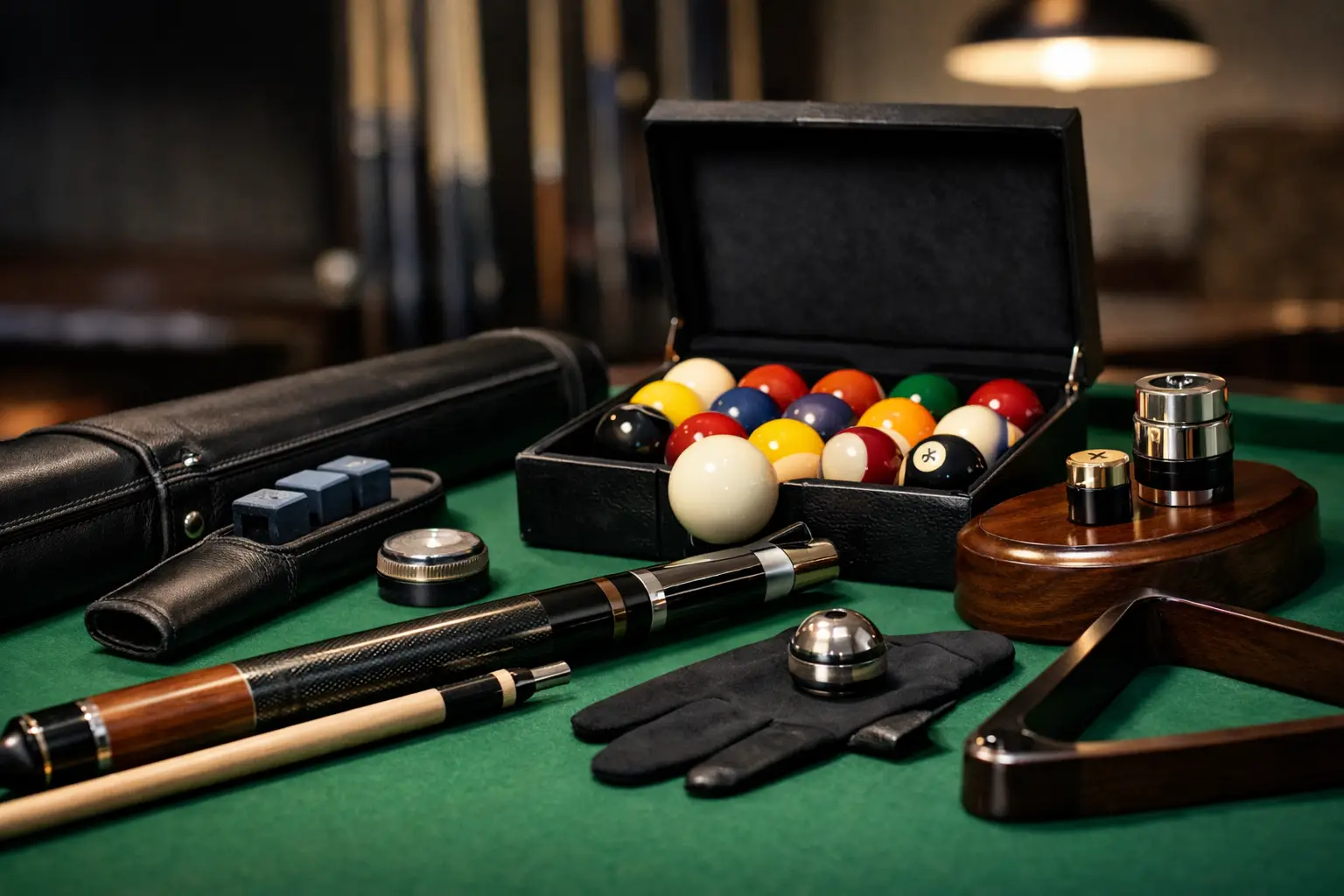
A match can turn on one bad stroke, but serious players know the truth runs deeper than that. Misses are often built long before the shot – in a glazed tip, dirty shaft, cheap glove, dead extension, or chalk that leaves your bridge hand looking like a workshop floor. That is where premium billiard accessories stop being extras and start becoming part of your weapon system.
The difference is not cosmetic. Better accessories change how a cue moves through your fingers, how the tip grips the cue ball, how weight transfers through impact, and how stable your setup feels under pressure. If you play often, compete regularly, or simply hate leaving performance on the table, the right upgrade stack matters.
What premium billiard accessories really do
A lot of players hear the word premium and think overpriced. That is fair – some gear is all branding and no bite. But in cue sports, accessories sit at the contact points between player, cue, and cue ball. Small gains there can feel massive.
A better glove reduces friction and keeps your stroke repeatable when conditions change. Advanced chalk can improve grip while cutting down mess. High-grade cue tips alter feel, spin transfer, and forgiveness. Extensions and weight systems can shift cue balance in a way that makes your stroke more natural instead of forced. These are not showroom details. They are performance variables.
That also means there is no universal best setup. The right accessory depends on whether you are a touch player, a power breaker, a carom specialist, or someone building a more stable all-around game. Premium should mean engineered for a result, not just dressed up for a higher price tag.
The premium billiard accessories that earn their spot
If you want the biggest impact first, start with the items you use every rack. Accessories that affect contact, control, and consistency pay off faster than novelty add-ons.
Cue tips decide more than most players admit
Tip choice is one of the fastest ways to change the entire personality of a cue. Softer tips can offer more bite and feedback, while harder tips often hold shape longer and transfer energy with a crisper hit. Layered premium tips usually bring better consistency from one shot to the next, which matters far more than raw feel during long sessions.
The trade-off is simple. A tip that feels incredible for finesse shots might not be your favorite under break-speed force. A tip that stays firm and stable may feel too sharp for players who rely on touch. Premium here means tighter tolerances, better material quality, and less variation over time.
Chalk is either helping your game or polluting it
Players still underestimate chalk because it is cheap compared with cues and shafts. That is a mistake. Poor chalk can cake, smear, dust the table, and still fail when you need it most. Better chalk is about adhesion, cleanliness, and predictability.
For serious players, anti-mess performance is not a luxury. It keeps hands cleaner, cloth cleaner, and pre-shot routine cleaner. If your chalk is constantly on your fingers, shaft, case, and shirt, it is affecting more than appearance. It is interfering with confidence.
Gloves are about repeatability, not style
A billiard glove earns its place when humidity rises, nerves kick in, or room conditions get ugly. The real value is not comfort alone. It is stroke consistency.
Premium gloves usually fit better, breathe better, and maintain a smoother bridge path over longer sessions. Cheap gloves can bunch at the fingers, stretch out, or create drag where you need release. If your stroke changes with sweat or temperature, a glove is not optional equipment. It is control insurance.
Extensions and weight systems change cue behavior
Some players avoid these because they think customization is for gear obsessives. In reality, extension length and weight tuning can solve practical problems fast. If your cue feels too short in certain positions, an extension helps maintain mechanics instead of forcing you into awkward reach. If your cue feels too front-heavy or too light through the stroke, a weight system can move balance toward your natural timing.
This is where premium engineering shows up clearly. Well-made systems install securely, keep feedback intact, and avoid the loose, rattling feel that ruins trust.
Why advanced materials matter
Not every accessory needs exotic construction, but material quality separates serious gear from throwaway gear. Carbon components, high-stability composites, and precision-machined fittings are not there for marketing flair alone. They are there to reduce inconsistency.
Take carbon-based add-ons and cue components. They are valued because they resist warping, stay stable through temperature changes, and support a more predictable response. The same logic applies to cleaner chalk formulations, denser layered tips, and gloves designed around friction control rather than generic fabric.
For performance-minded players, durability matters because replacement cycles matter. Premium billiard accessories should not just perform better on day one. They should keep performing after travel, pressure, and repetition.
The trap of buying premium for the wrong reason
There is a difference between expensive gear and game-ready gear. The wrong accessory can still be premium on paper and completely wrong for your stroke.
If you naturally play with a soft, smooth tempo, a setup built for explosive power may feel harsh and disconnected. If you break hard and attack racks, ultra-soft feedback-focused components may feel unstable. If you play in clean climate-controlled rooms, your glove needs may be minimal. If you travel through different venues, glove quality becomes much more important.
The smart move is to buy around your pressure points. What fails first in your current setup? Is your tip mushrooming too fast? Is your bridge hand sticking? Is your chalk making a mess? Is your cue balance fighting your delivery? Start there. Real upgrades solve a problem you can feel.
How serious players build an accessory setup
The strongest setup is usually layered, not flashy. First comes contact quality – tip and chalk. Then stroke consistency – glove and shaft care. Then cue behavior – extension, weight tuning, and fit details.
This order matters because a player with poor contact and inconsistent slide will not suddenly become dangerous with a premium extension. Accessories should support fundamentals, not distract from them.
That is also why spec-driven brands resonate with competitive players. You want to know what the material is, how the part is built, what the fit options are, and what result it is designed to produce. A futuristic look is a bonus. Measurable advantage is the reason to buy.
For players chasing that edge, this is where a brand like ON CYBORG fits the moment. The appeal is not just premium styling. It is performance-first construction, carbon-focused innovation, and accessories built for players who want more control, more power, less mess, and more say in how their gear performs.
Premium billiard accessories and match confidence
Confidence in billiards is often talked about like mindset alone. That is only half the story. Confidence also comes from repetition without surprises.
When your tip holds shape, your chalk grips cleanly, your glove slides the same way every set, and your cue balance feels locked in, you stop negotiating with your equipment. That frees attention for speed control, shot selection, and pressure decisions. The less mental bandwidth your gear demands, the more dangerous you become.
That does not mean accessories replace practice. They do not. A premium glove will not fix bad alignment, and expensive chalk will not cure bad cue-ball control. But once your mechanics are serious, equipment inconsistency becomes more expensive than quality gear.
What to upgrade first if you want real change
If your budget is limited, begin with the accessory that touches every shot. For most players, that means a tip, chalk, or glove. Those upgrades are felt immediately and expose whether your current setup is helping or holding you back.
After that, look at customization. If your cue almost feels right but not fully dialed, weight tuning or an extension can close that gap. If you compete often, prioritize durability and cleanliness over novelty. Gear that survives travel and stays consistent under pressure earns premium status the hard way.
The bottom line is simple. The best accessories are not there to decorate your case. They are there to make your cue more precise, your stroke more repeatable, and your performance more ruthless. Buy like a player who expects results, because the right setup does not just look advanced – it plays that way when the set gets tight.