

Blog
Carbon Cue Extension System: Is It Worth It?

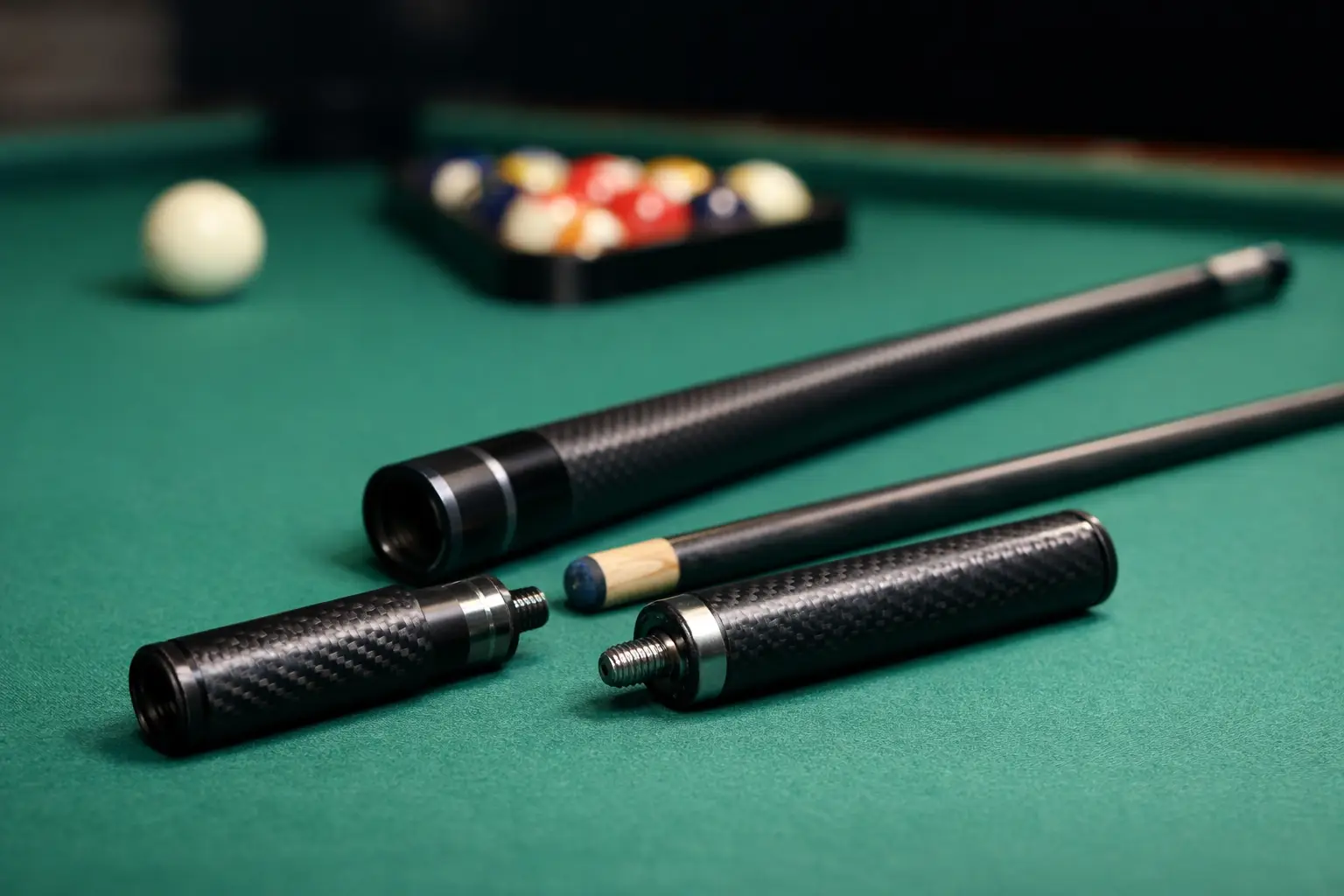
One missed shot can come down to one ugly stretch. You know the moment – bridge hand maxed out, stance broken, cue path compromised, and the table suddenly feels two feet longer than it should. That is exactly where a carbon cue extension system stops being a nice extra and starts acting like match equipment.
For serious players, extension gear is not about convenience. It is about keeping your mechanics intact when the table tries to force bad form. A good system gives you reach without turning your cue into a clumsy pole. A bad one solves one problem and creates three more – balance drift, sloppy connection, and a hit that feels dead when you need precision most.
What a carbon cue extension system actually changes
The headline benefit is obvious: more reach. But that is not the full story. The real value is that a carbon cue extension system lets you stay closer to your normal stroke pattern on shots that usually push you out of structure.
When the extension is engineered well, you can keep your chest position cleaner, your grip more natural, and your cue delivery more repeatable. That matters on pressure shots, long cuts, thin safeties, and any position play where half a tip of error turns into a full-table problem.
Carbon matters because the material solves a core extension problem. Traditional extensions can add noticeable weight and lag to the back end of the cue. That extra mass can make the cue feel slow to start, slow to stop, and harder to control through the line. Carbon construction keeps strength high while cutting unnecessary bulk. You get length without paying the full penalty in handling.
That does not mean every carbon extension feels the same. Tube design, wall thickness, connection hardware, and overall fit all affect how the cue performs once the extension is attached. The best systems feel like part of the cue. The worst feel bolted on.
Why advanced players care about cue balance
Reach gets the attention. Balance wins matches.
Every player has a feel point. Some like a slightly forward cue that tracks with authority. Others want a more neutral setup that stays quick through finesse shots. Add an extension and that equation changes instantly. If the design is poor, your cue can become rear-heavy, unstable, or weirdly delayed in transition.
That is why the strongest carbon cue extension system designs focus on more than length. They are built to preserve usable balance, maintain a secure joint feel, and avoid the rattly, disconnected sensation that shows up with lower-grade accessories.
This is especially important for players using carbon shafts, low-deflection setups, or customized butt weights. If you have already spent time dialing in how your cue moves through the stroke, you should not throw that away with an extension that feels like an afterthought.
A serious system respects the full cue build. It works with the cue, not against it.
Where a carbon cue extension system helps most
The obvious use case is the long reach shot, but that is only the beginning. Extensions shine when the alternative is technical compromise.
On rotation tables, they help when cue ball position drifts just far enough off ideal that your stance gets stretched out. In straight pool and one-pocket, they matter on tactical shots where control beats power and body stability matters more than ever. In carom, where precision and table access can define the inning, added reach can preserve stroke quality on otherwise awkward lines.
There is also a speed factor. Not cue speed – game speed. When your extension installs quickly and feels trustworthy, you waste less mental energy deciding whether to force the shot, grab the mechanical bridge, or reset your whole approach. Faster decisions with less compromise create cleaner rhythm. Good players feel that immediately.
The mechanical bridge still has its place. Some shots demand it. But there is a wide middle ground where an extension is faster, more natural, and far more connected to your standard stroke than a bridge ever will be.
The trade-off: more reach is not free
Let us keep it real. An extension changes the cue. Even a great one does.
The cue may feel slightly slower in tight touch shots. Grip timing can shift. On some power shots, especially if the extension is longer than you normally use, you may need a short adjustment period to keep acceleration smooth. Players who rely on very specific back-hand timing often notice this first.
That is not a reason to avoid a carbon cue extension system. It is a reason to choose one with the right length and connection style for your game.
Some players want a short extension for occasional rescue shots and minimal balance change. Others want a longer option because they regularly play on larger tables or prefer staying off the mechanical bridge whenever possible. Neither choice is automatically better. It depends on how often you use it, how sensitive you are to cue balance, and whether your style leans more touch or power.
The wrong move is buying purely on length. The smarter move is buying for total performance.
What to look for in a carbon cue extension system
Start with connection security. If the extension has any play, wobble, or questionable threading, walk away. A loose fit does not just feel cheap – it interrupts confidence. Under pressure, that is fatal.
Next comes weight discipline. Carbon should help keep the extension strong without making the cue feel like a barbell at the butt. Lightweight is good, but not if the structure feels hollow or flimsy. The target is controlled strength, not empty minimalism.
Then look at integration. A serious extension system should match the cue’s design logic. That includes joint compatibility, visual alignment, and how naturally it fits into the player’s routine. Fast install matters. Reliable install matters more.
Finally, think about how the extension works with the rest of your setup. If you are already playing a high-performance cue with carbon shaft technology, tuned weight options, and a specific butt feel, your extension should belong in that ecosystem. This is where premium billiards equipment separates itself from generic accessories.
A good cue deserves a good extension. A high-performance cue demands one.
Carbon cue extension system and modern cue tech
The reason carbon extensions hit differently now is simple: cue technology has moved. Players are no longer satisfied with basic add-ons that only solve one problem. They expect a full system – shaft, butt, grip feel, weighting, and accessories working together as one competitive package.
That is why a carbon cue extension system makes the most sense in a modern equipment lineup. Carbon shafts brought cleaner consistency, lower maintenance, and a sharper response profile. Advanced butts brought more customization through weights and construction. Extensions had to catch up.
Now they can.
When built right, carbon gives extension systems the speed, rigidity, and cleaner engineering profile serious players want. It fits the direction the sport is already going – more precision, less drag, fewer compromises.
That is exactly why performance-driven brands like ON CYBORG push carbon across the equipment stack. The point is not to look futuristic. The point is to play ahead of the table.
Who should buy one and who can wait
If you play regularly, compete, or obsess over cue feel, a carbon extension system makes sense sooner than later. It is especially valuable if you hate using the mechanical bridge, play on larger tables, or run into reach issues often enough that they are costing you patterns.
If you are a casual player who only occasionally needs extra length, the value depends on how much you care about feel and consistency. You may not need a top-tier system right away. But if you already invest in performance gear elsewhere, a cheap extension becomes the weak link fast.
That is the real dividing line. Not skill level alone, but standards. Players with high standards notice low-grade gear instantly.
And once you feel an extension that keeps your cue alive instead of weighing it down, it is hard to go back.
The strongest equipment upgrades are not always the flashiest ones. Sometimes the win comes from removing one bad compromise from your game. A carbon cue extension system does exactly that – it gives you more table without asking you to sacrifice your stroke.