

Blog
Best Chalk for Pool Cues That Wins

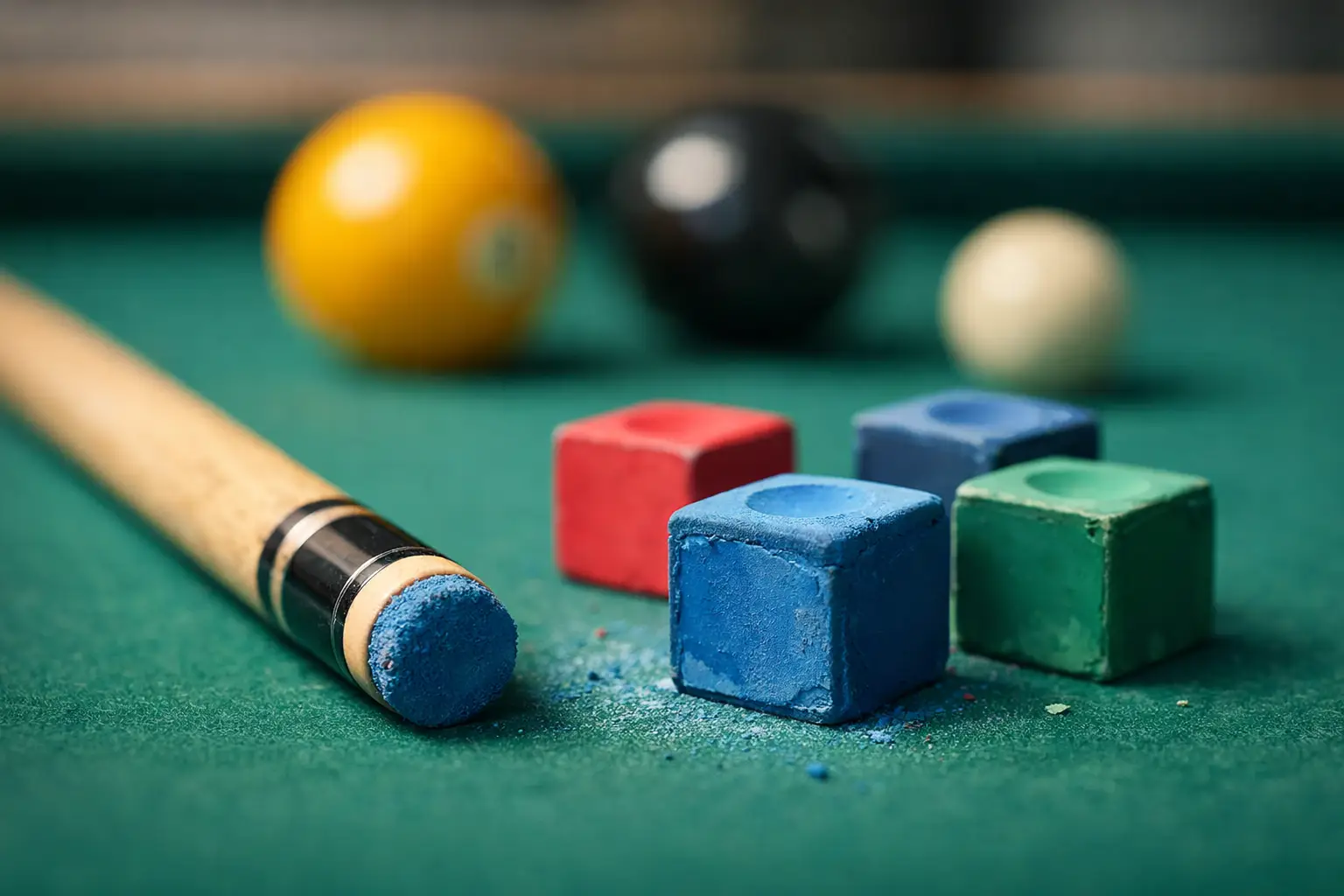
Miss one high-spin shot under pressure and suddenly chalk stops feeling like a cheap accessory. It feels like equipment. That is why the search for the best chalk for pool cues is not about color, brand hype, or whatever cube happens to be on the rail. It is about friction, consistency, cleanliness, and whether your cue tip performs the same on the first rack and the last.
Serious players already know the truth – chalk can either support your stroke or quietly sabotage it. Bad chalk cakes up, drops dust everywhere, misleads you into overtrusting the tip, and turns routine side spin into a gamble. Good chalk gives you predictable contact and lets your cue tip do its job without turning your case, shaft, and table into a mess.
What makes the best chalk for pool cues?
The best chalk is not simply the one that feels the grittiest. It is the one that transfers evenly to the tip, stays there long enough to matter, and reduces miscues when you move away from center ball. That sounds simple, but the trade-offs are real.
Softer chalks usually grip fast and feel confident on spin-heavy shots, but they can leave more residue on the cue ball and cloth. Harder chalks stay cleaner and last longer, but some players feel they need to reapply more carefully to get the same confidence. Premium formulas try to solve both problems at once by balancing adhesion with cleanliness.
That balance matters even more now because players are using better gear. Precision-cut layered tips, carbon shafts, and low-deflection setups make inconsistencies easier to notice. Once your equipment gets sharper, weak points stand out. Chalk is one of them.
Best chalk for pool cues by playing style
There is no single cube that dominates every player and every table. The right pick depends on how you play, how often you chalk, and how much mess you can tolerate.
For aggressive spin players
If your game lives on side spin, draw, and force-follow, you want chalk that grabs the tip quickly and gives you confidence off center. Premium chalks with a softer, stickier feel tend to perform well here because they coat the tip more thoroughly. The upside is obvious – more trust when the shot gets loaded. The downside is also obvious – more residue if the formula is too loose.
For this player, the best chalk for pool cues usually favors adhesion first and cleanliness second. Not because mess does not matter, but because a miscue costs more than extra wiping.
For league and tournament grinders
If you are playing long sessions, moving through multiple racks, and managing nerves, consistency matters more than flash. You need chalk that behaves the same every time you apply it. Not great one rack and flaky the next.
This is where premium low-mess chalk often wins. It keeps your bridge hand cleaner, your shaft cleaner, and your routine tighter. Over a long day, that is not a small edge. It is fatigue management.
For value-focused players
Not everyone needs the most expensive cube on the market. If your stroke is solid, you chalk regularly, and you mostly stay near center with occasional controlled english, a dependable mid-tier chalk may be enough. The key is not the price tag. The key is whether it applies evenly and avoids glazing the tip.
Cheap chalk becomes expensive when it costs racks.
Premium vs standard chalk
This is where opinions get loud. Some players swear premium chalk changed their game. Others say chalk is chalk and shotmaking matters more. Both sides have a point.
A great stroke will always matter more than any accessory. But premium chalk can still create a measurable difference, especially for advanced players who use spin deliberately and demand repeatable cue ball paths. The difference is rarely magic. It is more subtle and more useful than that.
Premium chalk tends to improve three things. It grips the tip more evenly, stays on longer, and sheds less debris onto the table. If you play often, those gains stack up. Your cue ball stays cleaner, your shaft needs less attention, and your pre-shot routine becomes simpler.
Standard chalk still has a place. It is affordable, easy to find, and completely workable for casual play or backup use. But if you are already investing in high-performance tips and shafts, basic chalk can become the weakest link in the chain.
How to judge chalk like a serious player
Ignore branding for a minute and test chalk in real conditions. Hit center-ball shots, then move into controlled draw, outside english, and thin cuts with spin. Pay attention to what happens over time, not just on the first few hits.
Look at tip coverage
Good chalk should spread evenly across the contact surface. If it skips, clumps, or creates patchy coverage, it is not giving your tip a stable working layer. That inconsistency shows up when you least want it.
Watch the cue ball and cloth
Some residue is normal. Excessive transfer is not. If your cue ball starts getting marked fast or the table rail looks dusted after one session, the formula may be too dirty for regular play.
Track miscues honestly
Do not blame every miscue on chalk. Sometimes the issue is tip condition, bad contact, or a rushed stroke. But if you switch chalk and suddenly off-center shots feel more reliable with the same cue and same tip, that tells you something real.
Check how often you need to reapply
There is no prize for using less chalk if confidence drops. Still, a high-performing formula should not disappear instantly. The best products let you maintain trust without over-chalking every shot.
The chalk and tip connection
Chalk does not work alone. It works with your tip. A soft layered tip and a hard break tip do not need the same support, and players often overlook that.
Soft and medium tips usually hold chalk more naturally, so almost any quality formula can perform well. Harder tips are less forgiving. They often benefit more from chalk with stronger adhesion because the contact surface gives you less margin for error on spin shots.
Tip maintenance also changes everything. If your tip is glazed, mushroomed, or poorly shaped, even the best chalk for pool cues will not fully save you. Chalk is a performance amplifier, not a repair tool. Give it a healthy tip and it can shine. Give it a neglected one and you are asking it to carry too much.
Clean play matters more than players admit
A lot of players talk about grip and miscues, but cleanliness is the hidden category. Dirty chalk leaves marks on the cue ball, gets into the cloth, builds up on your shaft, and adds friction where you do not want it.
That matters for feel. It also matters for maintenance. Carbon fiber shafts have changed expectations because players want low-maintenance performance with less drag and less fuss. A messy chalk works against that whole setup. If your gear is built for speed, precision, and clean delivery, your chalk should match the system.
This is one reason serious players are moving toward cleaner, engineered chalk formulas. They want the confidence of premium grip without the old-school cloud of blue dust following every rack. That is not vanity. That is equipment discipline.
Is the most expensive option always the best chalk for pool cues?
No. Expensive chalk can be excellent, but price alone does not guarantee fit. Some premium formulas feel too soft for players who prefer a drier, cleaner application. Others are exceptional for spin but hard to justify if you mostly play straightforward patterns and re-chalk often anyway.
The real question is not what costs the most. It is what gives you the most trust per session. For some players, that is a top-tier low-residue chalk. For others, it is a reliable mid-range option that fits their routine and budget.
If you compete, practice hard, or build your setup around performance parts, this is one area worth testing seriously. ON CYBORG players already understand that details create separation. Chalk is a detail that touches every single shot.
How to choose your chalk without overthinking it
Start with your game. If you use a lot of english and want maximum confidence, choose a premium chalk known for strong adhesion. If you hate residue and want a cleaner table experience, prioritize low-mess formulas. If budget matters most, choose a consistent standard chalk from a proven maker and pair it with good tip maintenance.
Then test it for a week, not five minutes. Real performance shows up across sessions, under pressure, and on the shots you usually miss by a hair.
The best chalk is the one that disappears from your mind because your tip feels ready, your shaft stays clean, and your cue ball obeys. When that happens, stop chasing the label and start cashing the runs.