

Blog
Break Cues That Hit Harder and Stay True

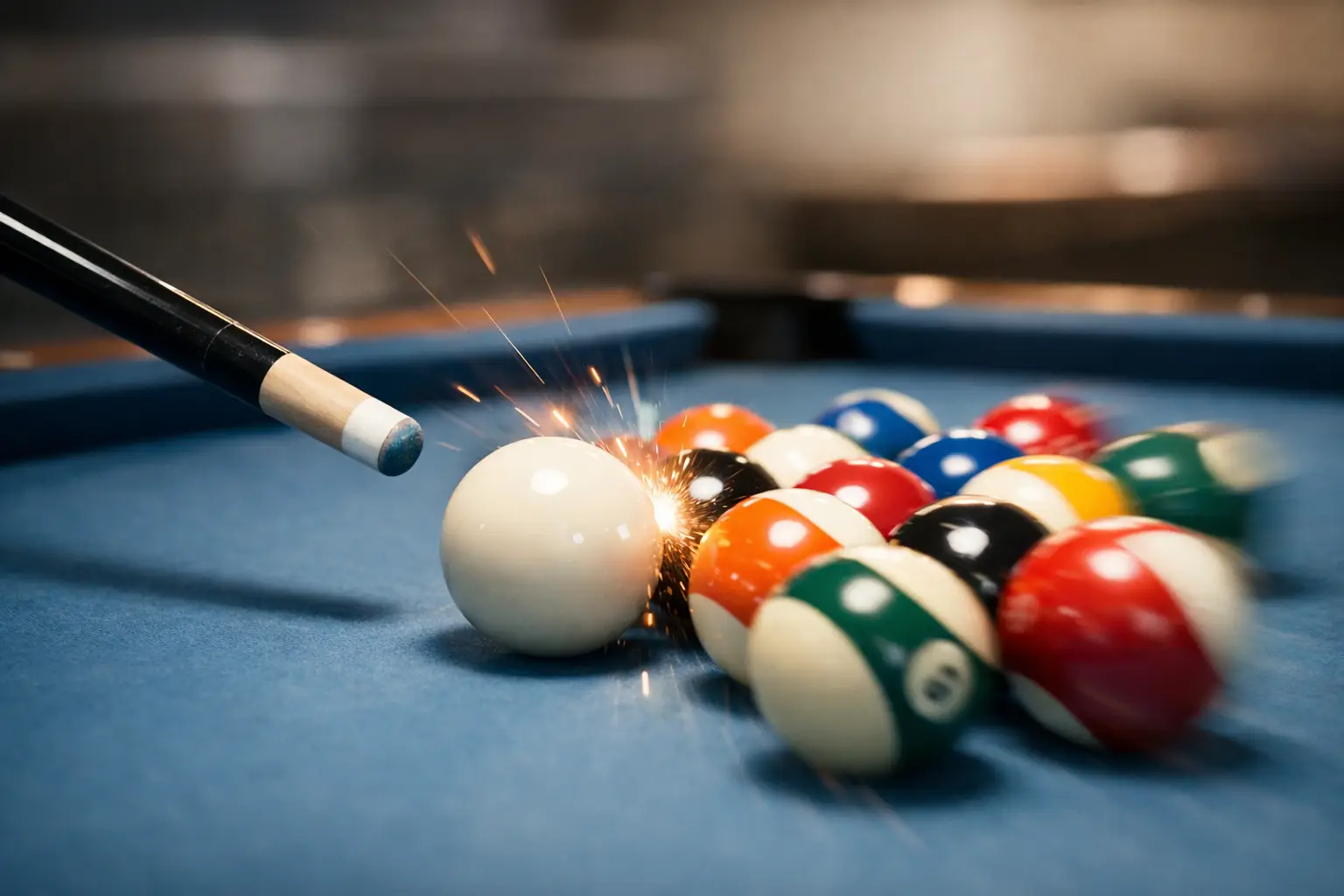
One bad break can cost a rack before the runout even starts. That is why break cues matter more than most players admit. If your playing cue is built for touch, spin, and finesse, your break cue should be built for violence you can actually control – maximum energy, cleaner transfer, and a hit that stays repeatable under pressure.
A real break shot is not just about swinging harder. It is about how efficiently the cue delivers force into the cue ball, how stable the shaft stays through contact, and whether the cue helps you hit the head ball square instead of spraying energy all over the table. The difference between an average break and a dangerous one usually comes down to equipment working with your mechanics instead of fighting them.
What break cues are built to do
Break cues exist for one job: turn your stroke into fast, direct energy. That sounds simple, but the build is very different from a standard playing cue. A break cue is usually stiffer, often uses a harder tip, and is engineered to reduce wasted flex at the moment of impact.
That stiffer hit is the whole point. On a break, you are not trying to load the cue ball with delicate spin and hold angles across multiple rails. You are trying to drive through the rack with authority while keeping the cue ball under control. A break cue that transfers energy cleanly gives you a better chance of opening the rack, pocketing a ball, and staying at the table.
The best ones also hold up better over time. Breaking is abuse. Repeated high-force impacts punish joints, shafts, ferrules, and tips. A cue designed specifically for that punishment is not a luxury purchase for serious players. It is the right tool for a brutal task.
Why a playing cue is the wrong weapon for the break
A lot of players start by breaking with whatever cue is already in their case. It works until it does not. Softer tips mushroom. Shafts that feel great for position play can feel vague or unstable on a power break. Even worse, using your playing cue for every break adds wear to the cue you rely on most.
There is also a performance ceiling. A playing cue may let you hit the rack hard enough, but hard enough is not the same as optimized. Break cues are tuned for a more direct response. Less energy gets lost in flex and compression, which means more of your effort reaches the rack.
That does not mean every player needs the heaviest or harshest cue they can find. It depends on your break style. If your timing is clean and your cue-ball accuracy is strong, a balanced break cue with controlled stiffness may outperform an ultra-rigid sledgehammer. Raw force without center-ball contact is just noise.
The specs that actually change the break
Shaft stiffness and material
This is where the cue starts to separate itself. A stiff shaft resists unwanted deflection during the break stroke and helps create a more direct hit. Carbon construction has become a major factor here because it offers high rigidity, consistency, and durability in a package that handles repeated impact better than many traditional builds.
That said, material alone is not magic. A poorly designed carbon shaft can still feel dead or overly harsh. What matters is the full system – taper, wall construction, joint fit, and overall balance. Good engineering wins over hype every time.
Tip hardness
Break cue tips are typically much harder than playing cue tips. That hardness reduces compression at impact, which helps transfer more energy into the cue ball. The hit feels sharper, faster, and more immediate.
There is a trade-off. Very hard tips can feel less forgiving if your contact is off-center. For players with a controlled, repeatable break, that is a benefit, not a problem. For players still developing their timing, a break cue may reveal flaws more clearly than it hides them.
Weight and balance
More weight does not automatically mean more power. That myth needs to go. A cue that is too heavy can slow your stroke and kill timing. A cue that is too light can feel wild if your mechanics are not compact and explosive.
The sweet spot depends on how you generate speed. Some players want a heavier rear feel to drive through the cue ball. Others want a faster, more athletic setup that lets them accelerate cleanly. Adjustable weight systems matter because they let you tune the cue to your stroke instead of forcing your stroke to adapt to the cue.
Joint and construction quality
On the break, weak construction gets exposed fast. Joint fit, butt construction, and overall cue integrity affect how solid the hit feels and how consistently the cue performs. A loose or poorly matched joint can make a cue feel hollow, disconnected, or unstable when you need the exact opposite.
High-level break cues are built to stay locked in under stress. That solid feedback is not just a feel issue. It helps repeatability, and repeatability is what turns a big break into a weapon instead of a gamble.
How to choose break cues for your game
Start with honesty. Not ego. If your current break is mostly arm speed and chaos, do not shop for the most punishing setup on the market and expect instant results. Choose a cue that helps you hit square, stay balanced, and control the cue ball first.
If you already break with good timing and solid accuracy, then it makes sense to chase more efficient transfer, more speed, and a stronger spread. This is where premium break cues start to justify themselves. Better materials, tighter tolerances, and more advanced construction can give advanced players measurable gains.
Your game matters too. Nine-ball breakers often want explosive speed with cue-ball control in the center of the table. Eight-ball players may prioritize rack spread and predictability across a tighter cluster pattern. The best break cue for one format is not always the best for another.
A quick test is simple: pay attention to cue-ball behavior after impact. If the cue ball pops, flies, or drifts unpredictably, the issue may be your mechanics, the setup, or the cue itself. The right break cue helps make good contact feel easier to repeat.
When a premium break cue is worth it
A premium break cue is worth it when your break is already a real part of your game plan. If you compete regularly, play long sessions, or care about squeezing advantage out of every rack, the upgrade is not cosmetic. It is functional.
This is especially true if you want modern performance features. Carbon shafts, adjustable weight systems, advanced butt construction, and high-durability components are not there for marketing theater. When executed well, they create a cue that feels faster, cleaner, and more stable under maximum effort.
That is the space where brands like ON CYBORG push hardest – engineered power, aggressive performance, and next-generation materials aimed at players who want more than a generic breaker. Not everyone needs that level of build. Competitive players usually know when they do.
The mistake players make after buying one
They expect the cue to do the work.
A stronger break cue will not fix poor contact or bad fundamentals. What it will do is punish inconsistency less politely. That is a good thing. It gives you clearer feedback. Once your timing matches the cue, the payoff shows up fast: stronger spread, more made balls, and fewer wasted openings.
The smartest move is to treat a new break cue like performance equipment, not a lucky charm. Test different weights. Watch cue-ball control. Adjust your bridge length and timing. Give the cue a real break-in period with your mechanics.
Break cues are about pressure, not just power
The break is the first statement in the rack. It sets pace, control, and psychological pressure. When your opponent knows you can crack the rack open and leave yourself a shot, the match changes. They feel it immediately.
That is why the best break cues are not just built to hit hard. They are built to hit hard on demand. Same stance. Same timing. Same strike. Again and again. Power matters. Predictable power wins.
If your current break feels inconsistent, if your playing cue is taking punishment it was never meant to handle, or if you know your opening shot should be producing more, then the answer is not more effort. It is better transfer, better construction, and a cue built for the most violent shot in pool. Get the weapon that matches the moment, and let the rack feel it.