

Blog
3D Cue Butt Design That Changes the Hit

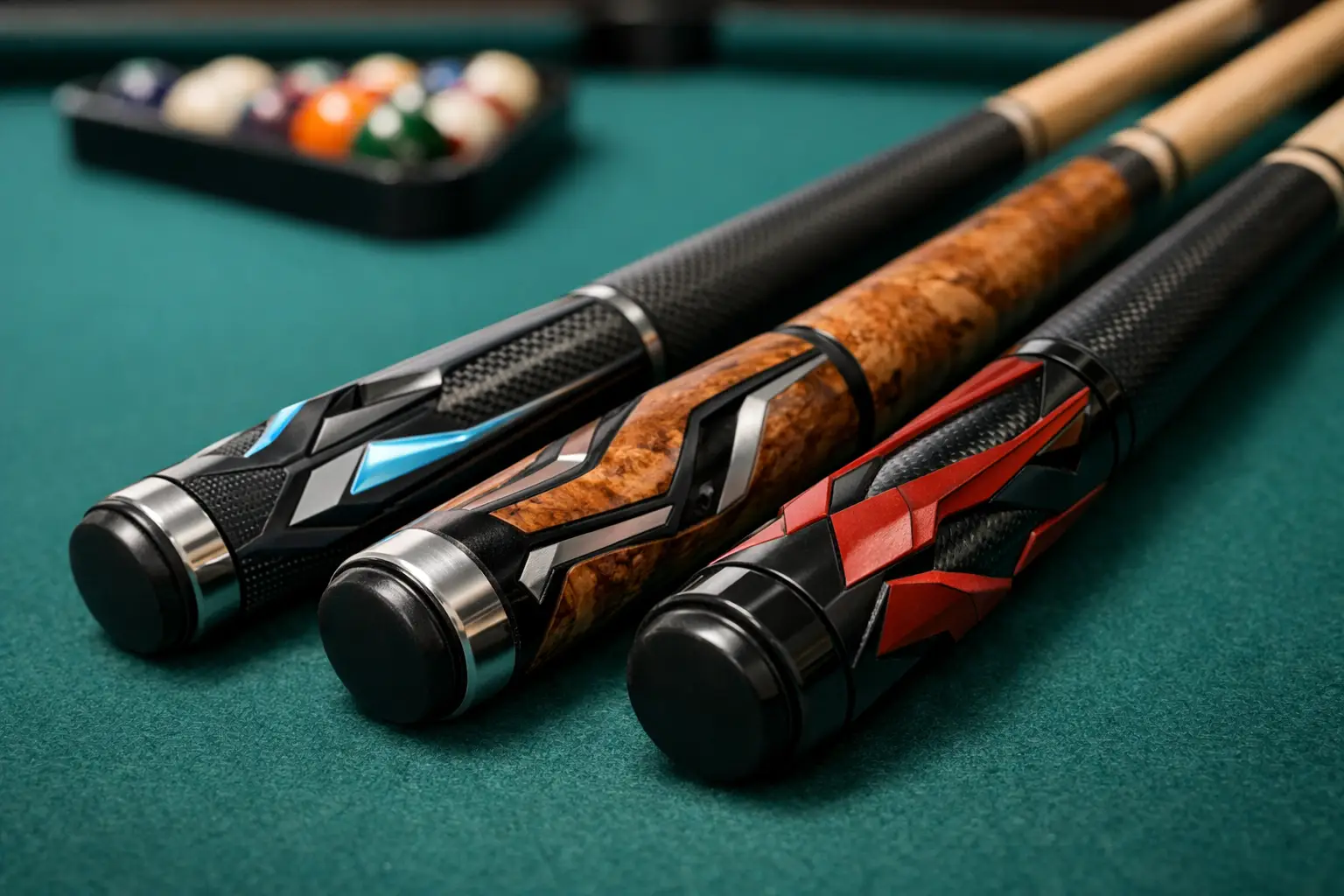
A cue can look sharp on the wall and still disappear under pressure. Serious players know the difference the moment the set gets tight. That is where 3d cue butt design stops being a style choice and starts acting like a performance system.
For years, cue talk centered on shafts, tips, and taper. Fair enough – those parts matter. But the butt is where balance, grip confidence, vibration control, and weight distribution come together. Change the structure there, and the whole cue starts speaking a different language. Faster response. Cleaner feedback. Less dead feeling in the hand. More control when the match starts leaning on you.
What 3D cue butt design actually changes
Traditional cue butts are often built around familiar shapes, decorative inlays, and standard weight layouts. They can play well, but many were designed from convention first and engineering second. 3D cue butt design flips that order. It treats the butt as a tuned component, not a passive handle.
That matters because the butt does more than give you something to hold. It influences where the cue wants to settle during the stroke, how energy moves through the body, and how stable the cue feels when you accelerate. If the rear section is too dull, the cue can feel sleepy. If it is too lively or badly balanced, the stroke can get jumpy. The right design hits a harder target – power without chaos.
A 3D-built butt also opens up geometry that is difficult to achieve with older construction methods. That can mean more precise internal weight channels, stronger structural transitions, and grip contours that feel intentional instead of generic. For the player, the result is simple: the cue feels more dialed in.
Why serious players notice the difference fast
Good players adapt to almost anything. Great gear means they do not have to. That is the edge.
When a cue butt is engineered in three dimensions instead of shaped by habit, the balance point becomes more deliberate. This is a big deal for players who care about timing and cue delivery. A better-balanced cue can make the stroke feel calmer on soft touch shots and more explosive on power shots without forcing you to fight the rear end.
Feedback is another difference-maker. Not every player wants the same feel. Some want more direct information through the hand. Others want a cleaner, more muted response. 3D cue butt construction gives brands more control over that tuning. Internal structure, wall thickness, and material transitions can all affect how the hit reports back to the player.
Then there is consistency. A cue that feels right once is not enough. Competitive players want repeatable performance. Precision-led construction helps reduce the little inconsistencies that show up in cheaper butts – uneven weighting, vague grip feel, and dead spots that make one stroke feel different from the next.
3D cue butt design and balance tuning
Balance is not a spec sheet trophy. It is what you feel when the cue stops fighting you.
In practical terms, 3D cue butt design allows more exact control over where mass sits inside the cue. That means a brand can tune for a more forward, neutral, or rear-biased balance depending on the intended play style. A player who likes a quick, lively cue may want a different setup than someone who values a planted, deliberate stroke.
This is where customization gets serious. Adjustable weight systems are not new, but they become more meaningful when the butt itself is designed to support them properly. If the internal architecture is engineered with weight placement in mind, changes feel cleaner and more useful. You are not just adding ounces. You are shaping how the cue moves through the stroke.
That said, there is no single best balance. Pool, carom, break play, and jump play all ask for different things. Even within pool, a finesse player and a power player may want opposite cue reactions. The advantage of a modern butt design is not that it forces one answer. It gives you more precise control over your own answer.
The grip factor most players underestimate
Players talk a lot about low deflection and tip hardness. They should also talk more about what the back hand is doing.
Grip security is not just about texture. It is about shape, contour, and how naturally the cue indexes in your hand. A strong 3D cue butt design can create profiles that reduce slipping, improve hand placement, and help the cue feel more stable under acceleration. That becomes even more valuable in long sessions, humid rooms, or pressure moments when tension creeps into the grip.
There is a trade-off here. A more sculpted or aggressive rear profile will feel incredible to some players and too specific to others. If you prefer a classic, neutral hold, an overly styled butt can feel busy. But when the shape is done right, it gives the hand a cleaner relationship with the cue. Less guessing. More connection.
Materials, structure, and the modern cue feel
A next-generation butt design is not only about outer shape. The material story matters just as much.
Modern performance cues increasingly combine advanced composites, precision-machined components, and modular hardware to create a more stable platform. When paired with a well-designed butt, those materials can improve stiffness, reduce unwanted vibration, and help preserve a consistent feel across different playing conditions.
This is one reason advanced players are moving away from outdated assumptions about what a premium cue has to look like. Old-school beauty still has its place. But serious competitors are asking harder questions now. Does the cue transfer power efficiently? Does it stay consistent? Does it let me tune the setup to my game? If the answer is yes, the futuristic look starts making a lot more sense.
Brands built around high-performance billiards, including ON CYBORG, lean into this shift for a reason. Players are no longer buying cues only for tradition. They are buying weapons.
Where 3D cue butt design helps most in real play
The benefits show up in different ways depending on the discipline and the player.
In rotation games, a well-balanced butt can improve rhythm and cue delivery, especially on touch shots where oversteering is a problem. In straight pool and one pocket, that cleaner feedback can help players trust speed control and hold lines more confidently. In carom, where precision and repeatable contact are everything, butt stability becomes even more valuable.
For power players, the payoff often shows up on break and aggressive cue ball movement. A properly engineered butt can help the cue stay composed when force goes up. That does not mean every 3D design automatically hits harder. Bad engineering is still bad engineering. But a good one can produce a stronger, cleaner transfer of energy without making the cue feel wild.
If there is a limit, it is this: design alone will not fix poor fundamentals. No cue can rescue a broken stroke. What it can do is remove equipment drag, sharpen response, and let skill come through with less interference.
How to judge a 3D cue butt design before you buy
Ignore hype for a minute and think like a player.
Start with balance and intended use. Is the butt designed for all-around play, or is it leaning toward power and speed? Then consider adjustability. If the cue offers weight changes, joint options, or extensions, ask whether those features are integrated with purpose or just added for marketing.
Next, look at grip shape and rear-hand comfort. Pictures can sell style, but only design logic sells performance. A good butt should look like it was built to improve control, not just to appear futuristic. Finally, think about compatibility with the rest of the cue. Butt design works best when it is part of a complete system with the shaft, joint, and weight setup working together.
That is the real standard. Not flashy lines. Not claims by themselves. Performance architecture.
The future of cue design is already here
Cue technology is moving in one direction – more precision, more tuning, more engineered advantage. 3D cue butt design fits that future because it treats the butt as an active part of performance instead of a decorative afterthought.
For serious players, that shift is not cosmetic. It is competitive. The cue in your hand should give you cleaner control, stronger feedback, and better balance under real match conditions. If it does not, it is behind.
The smart move is to stop thinking about the butt as the quiet end of the cue. In modern billiards, it is one of the loudest statements your equipment can make. Choose one that speaks with authority.