

Blog
Best Break Cue for Power: What Wins

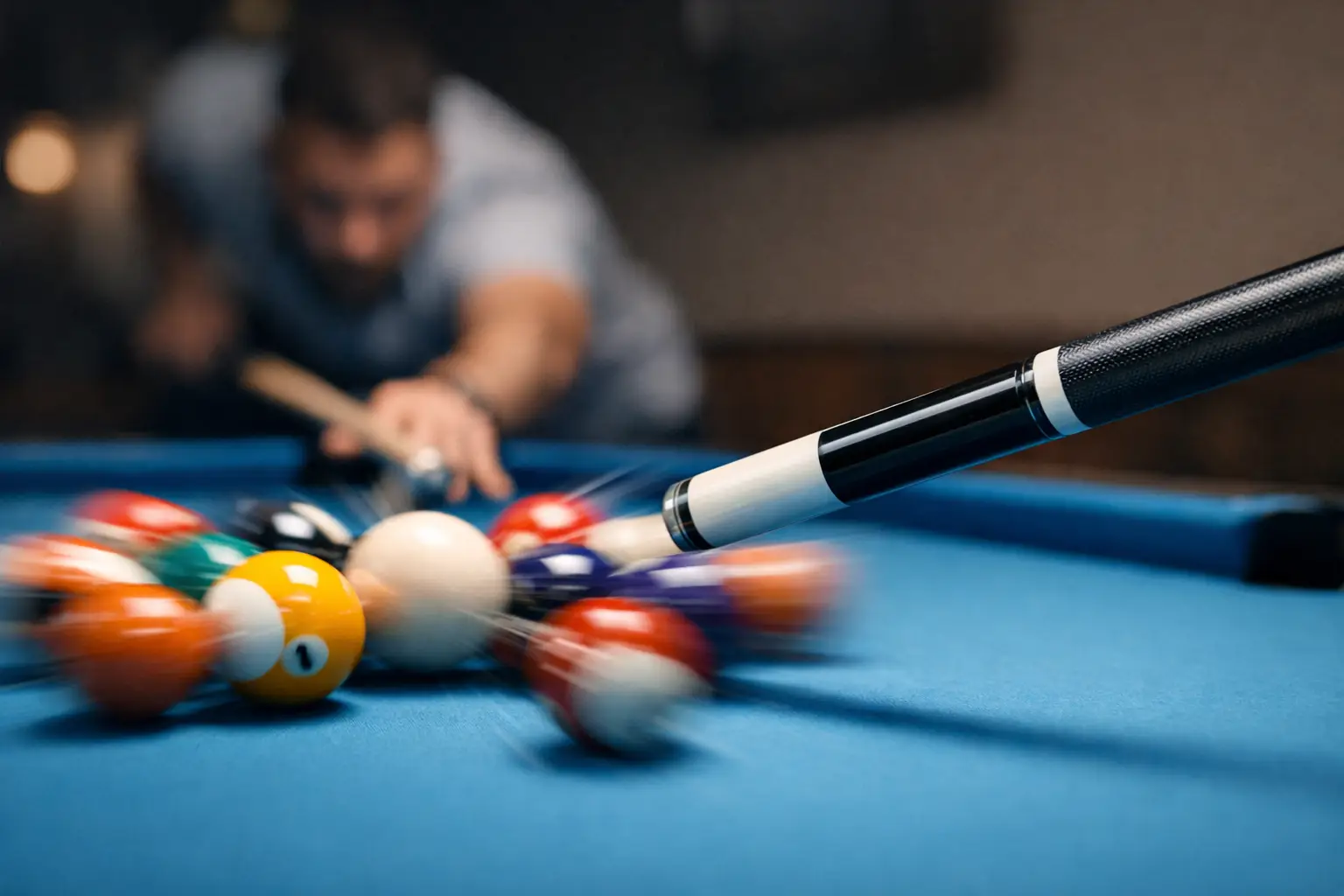
The rack does not care about hype. It reacts to speed, energy transfer, contact quality, and how cleanly your cue delivers force. If you are hunting for the best break cue for power, the real question is not which cue looks the most aggressive. It is which build lets you generate brutal cue ball speed without losing the hit, the line, or the rack spread.
Power alone is cheap. Useful power is what wins.
What actually makes the best break cue for power?
A true power break cue is built to move energy fast and waste as little of it as possible at impact. That usually means a stiffer shaft, a harder tip, a butt design that stays stable through acceleration, and a balance point that matches your break mechanics. The strongest break cues feel explosive, but they also feel controlled. If the cue jumps off line, rattles in your hand, or makes center-ball contact harder, the extra force is not helping you.
This is where serious players separate marketing from performance. A break cue should not feel like a playing cue with louder graphics. It should be purpose-built for one job – crushing the rack with repeatable speed.
Shaft stiffness matters more than most players admit
If your goal is maximum transfer, stiffness is a major factor. A softer shaft can feel lively, but on the break, too much flex can blur timing and reduce the directness of the hit. That is why many high-performance break cues lean toward carbon fiber or very stiff wood constructions. Carbon has become a takeover material here for a reason. It stays consistent, resists environmental changes, and delivers a fast, sharp response that strong breakers usually love.
That does not mean every player should automatically pick the stiffest cue on the market. Some players with a compact break stroke actually produce more speed with a cue that gives them a little more feel. But if you are building around raw attack, a stiff shaft is usually part of the formula.
Tip hardness is non-negotiable
For break performance, the tip cannot be an afterthought. A hard or extra-hard tip is standard because it compresses less and sends more energy into the cue ball. Softer tips absorb too much and are better suited to finesse, spin, and touch shots.
Phenolic has long been the classic answer for pure break violence, and it still has a place. It produces a crisp, explosive hit and very little energy loss. The trade-off is feel. Some players find it too harsh, and depending on rules or personal preference, they may want a legal alternative with slightly more grip and feedback. Modern hard composite break tips can be the sweet spot – still fast, still punishing, but with a little more control at contact.
Weight is not the cheat code
A lot of players assume the best break cue for power must be the heaviest cue available. That sounds logical, but it is only half the story. A heavier cue can add momentum, yet if it slows your arm speed or throws off your timing, you may actually lose power. Many advanced players break best in the 18.5 to 19.5 ounce range because they can accelerate that setup faster and hit center more consistently.
The real answer is personal speed plus stability. If 21 ounces feels like a sledgehammer and your cue ball starts flying off the table, that is not power. That is inefficient force. If 18 ounces feels too light and unstable at impact, you are giving up authority. The best break cue is often the one with adjustable weight options so you can tune it to your mechanics instead of adapting your mechanics to a fixed setup.
Balance changes how power feels
Two cues can weigh the same and break completely differently. Balance point is a huge part of that. A cue with more forward balance can feel like it drives through the rack. A more rear-balanced cue may feel faster through the stroke and easier to whip. Neither is automatically better.
If you have a long, athletic break stroke, you may prefer a cue that carries weight forward and stays planted through impact. If your break is short and explosive, rear balance might help you create speed without feeling sluggish. This is where test hits matter more than spec sheets.
Grip, butt design, and construction are part of the power package
The butt is not just decoration. On a break cue, butt construction affects feedback, stability, and how confidently you can attack the rack. A rigid butt with clean energy transmission can make the whole cue feel like a single weapon instead of two parts bolted together.
Grip preference matters too. Some players want no wrap at all for a cleaner, harder feel. Others prefer a grip surface that locks the hand in during maximum acceleration. If your hand shifts on the break, you are bleeding consistency. A secure hold lets you swing harder with less compensation.
Modern build details like precision joints, carbon extensions, and engineered butt geometry are not gimmicks when they are done right. They change how the cue loads, releases, and stays on line. That is why performance-focused brands obsess over more than just weight and tip.
The cue ball does not lie: control is part of power
A monster break that sends the cue ball three rails is not elite. The best power breakers know that keeping the cue ball in the center of the table is part of the job. If your break cue is too wild, too stiff for your timing, or too heavy to control, your spread might look dramatic while your position suffers.
This is the trade-off many buyers miss. The hardest-hitting cue is not always the best match. The best one gives you enough force to open the rack and enough predictability to stay in control. That combination is what turns power into runnable layouts.
Who should prioritize a carbon break cue?
If you play often, travel for events, or want consistent hit characteristics in changing conditions, carbon is hard to beat. It offers a very direct strike, excellent durability, and less sensitivity to temperature and humidity than traditional wood shafts. For players who want a next-generation feel and a cleaner transfer of force, carbon belongs near the top of the list.
Wood still has fans, especially among players who want a more traditional hit or slightly softer feedback. But if your brief is simple – more speed, more stability, less variation – carbon enters the conversation fast.
How to choose your best break cue for power
Start with your break style, not someone else’s. If you rely on full-body acceleration and long follow-through, look for stiffness, strong forward stability, and a hard tip that can handle violence without mush. If your break is compact and quick, focus on speed-friendly weight, a balance point that does not drag, and a tip that gives you confidence on center-ball contact.
Then think about adjustability. Swappable weights and modular components matter because power is not static. Your stroke changes. Your tables change. Even your format changes. Nine-ball, ten-ball, and eight-ball can reward slightly different break behavior.
Finally, pay attention to fatigue. A cue that feels incredible for ten breaks but starts fighting you after an hour is not the answer. Real performance holds up deep into a session and under pressure.
What serious players should avoid
Do not buy based on loud claims alone. The break cue market is full of power language, but explosive branding does not guarantee explosive transfer. Avoid cues that feel unstable, overly harsh, or disconnected in the hands. Avoid setups that force you to overhit just to get results. And avoid copying a pro’s specs without understanding whether your mechanics match theirs.
A bad fit usually shows up fast. Miscues increase. Cue ball control disappears. Your timing gets rushed. The rack may still open sometimes, but the result is chaotic rather than repeatable. That is not takeover-level equipment. That is guesswork.
For players who want premium billiards gear built around engineered force, precision construction, and modern materials, ON CYBORG sits squarely in that performance lane. The mission is simple: hit harder, hit cleaner, and keep the advantage light on the wallet.
The real standard for a power break cue
The best break cue for power is not the one with the most extreme spec in a single category. It is the cue that lets you create maximum speed, strike the cue ball cleanly, and keep the hit repeatable under pressure. Stiff shaft. Hard tip. Dialed weight. Correct balance. Stable construction. Those are the ingredients.
When all of them line up with your mechanics, the break stops feeling random. It starts feeling inevitable.
If you are choosing your next weapon, do not ask which cue promises the most power. Ask which cue lets you deliver it on command.