

Blog
What Cue Weight for Break Works Best?

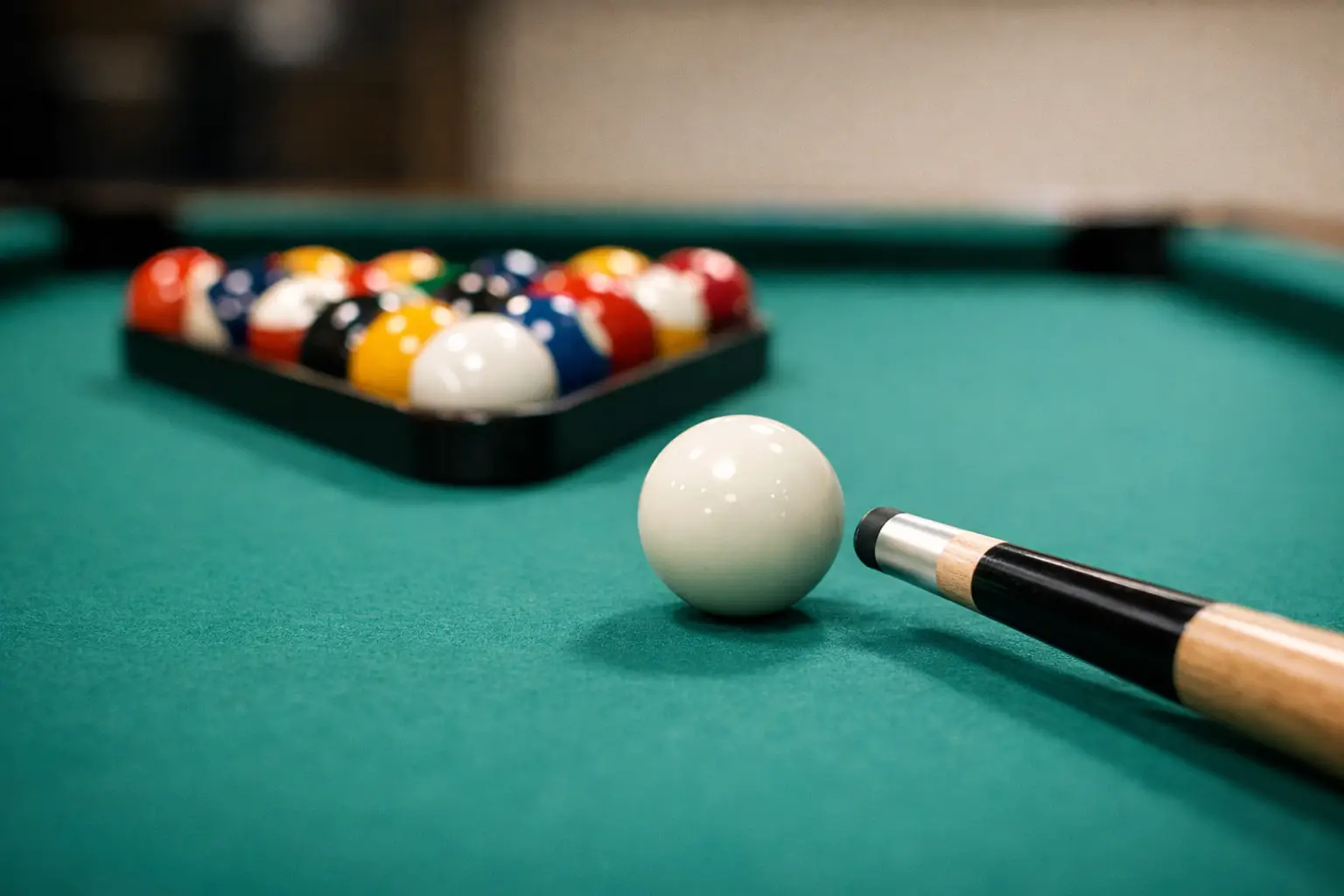
Smashing the rack is not a strength contest. It is a timing test. Ask ten serious players what cue weight for break works best, and you will hear the same range over and over – usually 18 to 21 ounces, with strong opinions on both ends. The real answer is less dramatic and more useful: the right break cue weight is the one that lets you hit the head ball square at full commitment, over and over.
That matters more than raw mass. A heavier cue can feel powerful, but if it slows your arm or throws off your accuracy, the rack will tell on you immediately. A lighter cue can generate impressive cue speed, but if it gets wild in your hands, you are trading violence for chaos. The break is where speed, stability, and center-ball contact have to work as one machine.
What cue weight for break is best for most players?
For most pool players, 19 ounces is the sweet spot. It is heavy enough to feel planted through the hit, light enough to accelerate, and familiar enough that it does not force a complete rebuild of your timing. That is why so many players land there after experimenting.
If you are choosing blind and want the highest-probability starting point, start at 19. From there, adjust based on how your break actually behaves, not how a number sounds on paper. The rack is the only judge that matters.
An 18-ounce break cue usually fits players with a fast, athletic stroke who want maximum cue speed. A 20- or 21-ounce cue tends to suit players who prefer a more compact, controlled motion and want the cue to feel like it drives through the rack with less effort. Neither camp is automatically right. The break is personal because tempo is personal.
Why cue weight changes your break
Cue weight changes more than power. It changes how the cue loads in your back swing, how quickly it reaches peak speed, and how stable it feels at impact. That affects the two outcomes that decide whether your break is dangerous or harmless – cue ball control and solid contact.
A lighter cue often helps players swing faster. That can increase energy transfer, especially if you already have a quick arm. But lighter setups can also get loose under pressure. If your cue ball starts flying off the table or scratching too often, the problem may not be your aim. It may be that your break cue is moving faster than your mechanics can control.
A heavier cue tends to smooth out the motion. Many players feel more connected to the shot with extra weight in the butt because the cue tracks with less twitchiness. The trade-off is obvious. More weight can reduce cue speed if you have to muscle it, and muscling a break is the fastest way to lose the rack before the second shot.
This is why smart players stop chasing myths like heavier equals stronger. Stronger is what produces a better spread while keeping the cue ball alive in the center of the table. Sometimes that comes from dropping an ounce, not adding one.
The real ranges: 18, 19, 20, and 21 ounces
18-ounce break cues
This is the speed class. If your stroke is explosive and loose in a good way, 18 ounces can feel electric. Players who like to attack the rack with acceleration often love this range because the cue gets up to speed fast and does not fight the hand.
The danger is overcooking the shot. If you already struggle with squaring the head ball or keeping the cue ball from jumping, 18 ounces may amplify the problem. It rewards clean mechanics. It exposes sloppy ones.
19-ounce break cues
This is the all-around weapon. It offers a balanced mix of speed, feedback, and control. For advanced hobbyists, league players, and tournament regulars, 19 ounces is often the easiest weight to trust under pressure.
It also transitions well if your playing cue sits around 19 ounces. That familiarity can matter more than people admit. On the break, confidence shortens hesitation, and hesitation kills energy transfer.
20-ounce break cues
This is where stability starts to take priority. A 20-ounce cue can feel more solid through impact, especially for players with a shorter backswing or a punchier hit. If your break gets jumpy with lighter cues, this extra ounce can calm the motion down.
It is a strong option for players who care less about top-end speed and more about striking the rack cleanly every time. That is not playing safe. That is playing smart.
21-ounce break cues
This is the heavy artillery range, and it is not for everyone. Some players swear by 21 ounces because it gives them a massive, grounded feel and helps them stay compact. Others feel locked up by it and lose too much speed.
If your break is built on leverage and body timing rather than arm speed, 21 can work. But if you need whip and acceleration to create power, this range may feel like dragging a hammer through the shot.
What cue weight for break if you want more power?
If you want more power, do not automatically go heavier. First ask where your current break is leaking energy. Most players lose power in one of three places: poor contact on the head ball, deceleration into impact, or cue ball instability after the hit.
A heavier cue can help if your current setup feels too light and twitchy. It can improve your sense of connection and let you deliver the hit with more authority. But if you are already slowing down to manage the extra mass, you are not gaining real power. You are just carrying more material.
A lighter cue can help if you are naturally quick and can keep your mechanics tight at speed. In that case, less weight may actually create a harder break because your timing stays sharp and the cue arrives faster. Power is not just force. It is force delivered cleanly.
Match the break cue to your breaking style
The best break cue weight is tied to how you attack the rack. Players with a long, flowing stroke often do well with lighter or mid-weight cues because they generate speed naturally. Players with a short, compact, punch-driven break may prefer a bit more weight because it gives the cue a denser, more planted feel.
Table conditions matter too. On tighter equipment, where making a ball and controlling the cue ball are everything, many players lean toward control over max speed. On looser tables, you may get away with more aggression. Even the rack quality changes the equation. A perfect rack rewards precision. A bad rack can tempt players into overswinging, which usually makes things worse.
That is where adjustable weight systems start to make sense. Serious players do not need one-size-fits-all gear. They need a cue that can be tuned to the table, the format, and the feel of the day. High-performance equipment should adapt like a weapon system, not sit there like a dead stick.
How to test your ideal break cue weight
Do not test by feel alone. Test by result. Hit a set of breaks with 18, 19, and 20 ounces if possible, and track three things: how often you hit the head ball square, where the cue ball finishes, and how consistently the rack opens.
Ignore the one thunder break that makes you feel like a hero. Look at the average. The right cue weight will produce repeatable damage. You should feel free to attack without feeling like the cue is outrunning you.
Pay attention to your body after a long session. A weight that feels amazing for ten breaks may feel slow or stressful after fifty. Tournament gear has to survive pressure and repetition. If your arm starts compensating as fatigue builds, the cue is not really working for you.
The shaft and tip matter almost as much as weight
Weight is only one part of the break equation. Shaft stiffness, taper, tip hardness, and butt balance all shape how the cue delivers energy. A stiff carbon shaft with a hard break tip can make a 19-ounce cue feel radically different from a softer, more traditional build at the same listed weight.
That is why advanced players stop thinking in ounces alone. Total cue design matters. Balance point can make a 20-ounce cue feel quicker than a poorly balanced 19. Construction matters. Material matters. Engineering matters.
A modern break cue should feel brutally efficient, not just heavy. That is where performance-focused design separates serious gear from generic gear. ON CYBORG builds around that exact mindset – speed, control, and engineered impact, not empty spec-sheet noise.
The best answer is the one you can repeat
If you are still asking what cue weight for break is right, start at 19 ounces and let results push you up or down. Go lighter if you are accurate and want more speed. Go heavier if you need more stability and can still accelerate cleanly.
The best break cue does not win because it sounds powerful. It wins because it turns your timing into action, your contact into spread, and your confidence into a first-shot advantage. Build your break around repeatable destruction, and the rack will start breaking for you instead of against you.
When the cue feels like an extension of your intent, stop searching and start owning the opening shot.